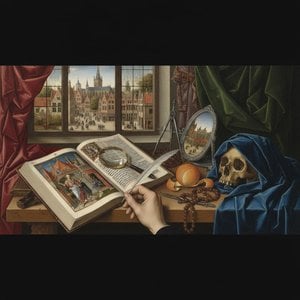
Biografija umetnika
Življenje Osvetljeno: Svet Jana van Eycka
Jan van Eyck, ime tesno povezano z začetkom zgodnje nizozemske slike in revolucionarno uporabo oljne barve, ostaja skrivnostna figura kljub njegovemu ogromnemu vplivu na umetnostno zgodovino. Rojen okoli leta 1390 v Maastrihu, ki se danes nahaja na Nizozemskem, je Van Eyck prišel iz družine, globoko ukoreninjene v umetniški tradiciji – njegov starejši brat Hubert je prav tako deloval kot slikar, čeprav podrobnosti o njegovem delu ostajajo nejasne. Čeprav so natančne biografske podrobnosti, zlasti glede njegovih začetnih let, redke, je jasno, da je Jan imel prirojeni talent in hitro pridobil ugled v umetniških krogih svoje dobe. Že leta 1422 je že ustanovil delavnico v Hagi, zaposloval pomočnike in sprejemal naročila, ki so napovedovala njegovo mojstrstvo. Ta zgodnji uspeh ni temeljil le na umetniški spretnosti; Van Eyck je bil inteligenten in zaupanja vreden človek, kvalitete, ki ga bodo kmalu pripeljale do službe pri pomembnih pokroviteljih.
Služba Burgundiji: Diplomacija in Umetniško Razcvetenje
Prelomni trenutek v karieri Van Eycka je prišel z njegovo imenovanjem na burgundski dvor, najprej pod Johnom III. Brezsrčni in kasneje Filipom Dobrim. To ni bila le ureditev pokroviteljstva; Van Eycku so zaupali diplomatske misije, kar kaže na samozavest vojvode v njegovo diskretnost in intelekt. Ta potovanja po Evropi – vključno s popotovanji v Portugalsko in Španijo – so ga izpostavila različnim kulturam in umetniškim vplivom, ki so subtilno oblikovali njegov razvijajoči se slog. Dvor je zagotovil ne le finančno varnost, ampak tudi dostop do virov, ki mu je omogočala, da se ukvarja z ambicioznimi projekti in s tem prestopal meje umetniškega dosegljivosti. Ni bil le slikar *za* burgundsko elito; postal je sestavni del njihovega sveta, odražal in izboljševal njihov prestiž s svojo umetnostjo. Ta edinstvena pozicija mu je omogočila raven umetniške svobode, ki jo redko doživljajo slikarji tiste dobe, kar je omogočalo eksperimentiranje in inovacije, ki bodo za vedno spremenile potek slikanja.
Alkemija Olja: Revolucija Tehnike
Čeprav ni izumil oljne barve – njena uporaba predzati Van Eycka – je nedvomno njen mojster perfekcionist. Pred njegovimi inovacijami je bila tempera prevladujoča tehnika, ki ponujala omejene zmeševalne možnosti in relativno matni zaključek. Van Eyck je izkoristil polni potencial oljne barve s skrbnim nanašanjem prosojnih slojev, kar je omogočilo doslej neznano raven podrobnosti, sijaja in realizma. Ta tehnika je omogočila subtilne gradacije tonov, bogatejše barve in ustvarjanje tekstur, ki so posnemale življenje samega. Učinek je bil transformativen; površine so se zdela sveteti iz notranjosti, tkanine so imele opazno taktilnost, portreti pa niso zajemali le podobe, ampak tudi psihološko globino. Njegovo mojstrstvo ni bilo zgolj tehnično – bil je to alkimističen proces, ki je pigmente spreminjal v nekaj, kar je spominjalo na živo realnost. Ta inovacija ni ostala neopažena; postala je temelj za generacije slikarjev, ki so sledili, in temeljna sprememba pokrajine zahodne umetnosti.
Delo in Trajni Zapuščina
Van Eyckova umetniška zapuščina je utrjena s relativno majhnim, a izjemno vplivnim korpusom dela. Gentska oltarja (1432), monumentalna poliptih, stoji kot njegovo najambicioznejše podjetje – kompleksen gobelin verske simbolike in tehnične briljantnosti. Prav tako priznan je Portret Giovannija Arnolfinija in njegove žene (1434), revolucionarno delo v portreturi, proslavljeno zaradi realizma, izjemne podrobnosti in skrivnostne simbolike. Med drugimi pomembnimi deli sta Dresdenski triptih, ki prikazuje njegovo spretnost pri upodabljanju verskih prizorov z izjemno jasnostjo, ter osupljiv Mož v modrem turbanu, priča njegove sposobnosti zajeti posameznikovo podobo. Ta dela niso le vizualne reprezentacije; so okna v drug svet – svet natančno upodobljen s skoraj obsesivno pozornostjo do podrobnosti. Van Eyckov vpliv sega daleč onkraj teh ikoničnih del, oblikuje razvoj zgodnje nizozemske slike in navdihuje neshtetne umetnike skozi stoletja. Umrl je leta 1441 v Bruggeju in za sabo pustil zapuščino, ki še danes odzvanja, opominjajoč nas na moč umetnosti pri osvetljevanju človeške izkušnje.



 Predogled
 Preklop na tiskanine
 Pošlji
 Deli
Deli
 Podrobnosti o delu

 Prenesi
 Podobni izdelki
 Rentgenski posnetek
 Predvajaj diaporama
 Statistika

 Razviljaj več






































 Možnost stekla je na voljo le za velikosti pod 110 cm