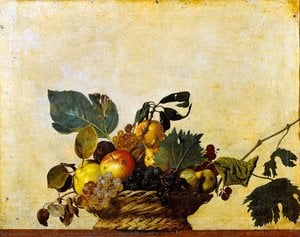
The Botanical Visionary of Leiden
In the heart of the Dutch Golden Age, amidst the bustling intellectual and commercial energy of Leiden, Jan Mortel breathed life into the ephemeral beauty of the natural world. Born around 1652 to a family deeply embedded in the literary and communicative arts—his father, Johannes Mortel, was a respected printer and publisher—Mortel grew up in an environment where precision and detail were paramount. This early exposure to the meticulous world of printing likely nurtured his later obsession with the minute textures of petals, the translucent skin of ripening fruit, and the delicate anatomy of insects. His journey into the mastery of light and form began under the tutelage of Jan Porcellis van Delden, a renowned marine painter whose influence instilled in Mortel a profound respect for atmospheric depth and the subtle interplay of shadow and illumination.
By 1675, Mortel had achieved professional distinction by joining the prestigious Leiden Guild of St. Luke, a milestone that solidified his standing within the Dutch art market. His life was one of stability and dedication to his craft; he married Maria van Voorhees in 1680, building a domestic foundation that allowed him to focus entirely on his botanical pursuits. While many of his contemporaries sought fame through sweeping landscapes or dramatic mythological narratives, Mortel found his calling in the quiet, concentrated drama of the still life. He possessed a rare ability to transform a simple arrangement of flora into a profound meditation on existence, capturing not just the physical likeness of his subjects, but their very essence.
A Symphony of Flora and Fauna
The artistry of Jan Mortel is defined by an extraordinary level of botanical accuracy blended with a Baroque sense of opulence. His compositions are rarely mere collections of objects; rather, they are carefully orchestrated dramas where every element plays a role in a larger narrative of life and decay. He frequently combined lush, vibrant flowers with succulent fruits, often punctuating these arrangements with the unexpected presence of insects and butterflies. These small, living details served as more than just decorative flourishes; they acted as memento mori, subtle reminders of the fleeting nature of beauty and the inevitable passage of time.
Mortel’s technical prowess was deeply informed by the masters who preceded him. His work often reflects the influence of Abraham Mignon and the legendary Jan Davidsz de Heem, whose mastery of the still-life genre set the standard for the era. In many instances, Mortel’s paintings can be seen as exquisite tributes to these predecessors, capturing their complex compositions with a renewed sense of clarity and light. His ability to render the velvety texture of a rose petal or the glistening dewdrop on a leaf speaks to a level of observation that bordered on the scientific, making his work as much a record of nature as it is an expression of art.
Legacy within the Hortus Botanicus
One of the most significant achievements of Mortel’s career arrived in 1690, when he was appointed the official artist for the Hortus Botanicus at Leiden University. This prestigious role placed him at the intersection of art and science, working closely with the botanical prefects to document the exotic and precious specimens housed within the university's famous gardens. This position allowed his work to transcend the boundaries of the studio, as he became a vital chronicler of the botanical wonders being studied during this era of scientific discovery. His intimate connection to the living plants of the Hortus undoubtedly enriched the vitality and authenticity found in his later masterpieces.
Though Jan Mortel passed away in 1719, leaving behind a legacy etched in pigment and light, his contribution to the Dutch Golden Age remains indelible. He did not merely paint flowers; he captured the pulse of life itself. Through his meticulous brushwork and his ability to find the monumental within the miniature, Mortel ensured that the delicate, vanishing moments of the natural world would endure long after the petals had fallen. His works continue to serve as a testament to a period when art and observation were inextricably linked, celebrating the profound beauty found in the smallest corners of the earth.



 Predogled
 Preklop na tiskanine
 Pošlji
 Deli
Deli
 Podrobnosti o delu

 Prenesi
 Podobni izdelki
 Rentgenski posnetek
 Predvajaj diaporama
 Statistika
 Razviljaj več