Predogled v realnem okolju Predogled v AR Kupite ročno slikano delo Preklop na digitalno sliko Pošlji
Podrobnosti o delu Priročnik Dodaj v priljubljene Prenesi sliko Podobni izdelki Rentgenski posnetek Predvajaj diaporama Q&A Statistika

Deesis

Discover Jan Gossaert’s ‘Deesis,’ a stunning 1527 Renaissance masterpiece! Admire its rich detail, dramatic lighting & profound religious symbolism in this exquisite oil painting.

Odkrijte Jana Gossaerta (Mabuse), flandrijskega slikarja iz 15. in 16. stoletja! Spoznajte njegov romanistični slog, religijske scene in portrete – ključno figuro renesančne umetnosti.

Giclée tisk / Umetniški tisk

Giclée ali platnati odtis muzejske kakovosti z hitro proizvodnjo in prilagodljivimi možnostmi končne obdelave. ( Kupite ročno slikano delo Preklop na digitalno sliko)

Corner sample of the P118B picture frame: izoblit polistiren, 5 cm wide and 3 cm thick
P118B €10
Corner sample of the P118H picture frame: izoblit polistiren, 5 cm wide and 3 cm thick
P118H €10
Corner sample of the P118W picture frame: izoblit polistiren, 5 cm wide and 3 cm thick
P118W €10
Corner sample of the P438Z picture frame: izoblit polistiren, 5.5 cm wide and 3.5 cm thick
P438Z €10
Corner sample of the P508JH picture frame: izoblit polistiren, 7 cm wide and 3.5 cm thick
P508JH €12
Corner sample of the P508YH picture frame: izoblit polistiren, 7 cm wide and 3.5 cm thick
P508YH €12
Corner sample of the P805H picture frame: izoblit polistiren, 5 cm wide and 3.5 cm thick
P805H €10
Corner sample of the P805Z picture frame: izoblit polistiren, 5 cm wide and 3.5 cm thick
P805Z €10
Corner sample of the P919BZ picture frame: izoblit polistiren, 7 cm wide and 3.5 cm thick
P919BZ €10
Corner sample of the P919G picture frame: izoblit polistiren, 7 cm wide and 3.5 cm thick
P919G €10
Corner sample of the P919XJ picture frame: izoblit polistiren, 7 cm wide and 3.5 cm thick
P919XJ €10
Corner sample of the P959ZH picture frame: izoblit polistiren, 5 cm wide and 3 cm thick
P959ZH €10
Corner sample of the P968JZ picture frame: izoblit polistiren, 6 cm wide and 4 cm thick
P968JZ €12
Corner sample of the W106C picture frame: masivno drevo, 5 cm wide and 3 cm thick
W106C €8
Corner sample of the W218G picture frame: masivno drevo, 5 cm wide and 3 cm thick
W218G €10
Corner sample of the W218JH picture frame: masivno drevo, 5 cm wide and 3 cm thick
W218JH €8
Corner sample of the W218Y picture frame: masivno drevo, 5 cm wide and 3 cm thick
W218Y €10
Corner sample of the W307PJ picture frame: masivno drevo, 6 cm wide and 3 cm thick
W307PJ €10
Corner sample of the W316G picture frame: masivno drevo, 6 cm wide and 3 cm thick
W316G €10
Corner sample of the W316PJ picture frame: masivno drevo, 6 cm wide and 3 cm thick
W316PJ €8
Corner sample of the W316Y picture frame: masivno drevo, 6 cm wide and 3 cm thick
W316Y €10
Corner sample of the W398PJ picture frame: masivno drevo, 5 cm wide and 3 cm thick
W398PJ €8
Corner sample of the W4111J picture frame: masivno drevo, 6.5 cm wide and 3.5 cm thick
W4111J €10
Corner sample of the W500HY picture frame: masivno drevo, 7 cm wide and 5 cm thick
W500HY €15
Corner sample of the W500JH picture frame: masivno drevo, 7 cm wide and 5 cm thick
W500JH €15
Corner sample of the W692G picture frame: masivno drevo, 8 cm wide and 4 cm thick
W692G €12
Corner sample of the W849H picture frame: masivno drevo, 5 cm wide and 3 cm thick
W849H €8
Corner sample of the W940BG picture frame: masivno drevo, 7.5 cm wide and 4.5 cm thick
W940BG €15
Corner sample of the W953PJ picture frame: masivno drevo, 6 cm wide and 3.5 cm thick
W953PJ €8

Standardna velikost
po meri
CM
INCH

Izberite eno od naših vnaprej določenih velikosti, ki ustrezajo prvotnim proporcijam umetničkega dela.

širina
višina

Vnesite širino in višino, ki jih potrebujete za svoj okvir ali steno. Tiskanje se lahko le odreže, vendar ga ni mogoče narediti večjega od slike, zato format z drugačno obliko pomeni izgubo dela slike. Pred tiskanjem vam pošljemo digitalni predogled za potrditev. Slika, prikazana na tej strani, ne prikazuje dejanskega izrezka — le predogled to omogoča.

Globalna dostava () v 2 tednih namesto standardnih 4/5 tednov. (30 oktober)

Brezplačna ekspresna dostava po vsem svetu
Visokokakovostno laneno platno
Popolno zavarovanje pošiljke
Garancija povračila carine in uvoznih davkov
Garancija popolnega barvnega ujemanja
100-dnevna politika vračil (le v primeru okvar)
Garancija 100% povračila denarja
Popust pri večjem naročilu

Skupna cena

€ 60

Deesis

Giclée tisk / Umetniški tisk

Velikost reprodukcije

-

Skupna cena

€ 60

Ključni podatki

  • Influences:
    • Italian Renaissance
    • Flemish tradition
  • Movement: Romanism / Northern Renaissance
  • Artist: Jan Gossaert (Mabuse)
  • Title: Deesis
  • Notable elements or techniques: Gold leaf, glazing, dramatic lighting

A Divine Encounter: The Sacred Majesty of Jan Gossaert’s Deesis

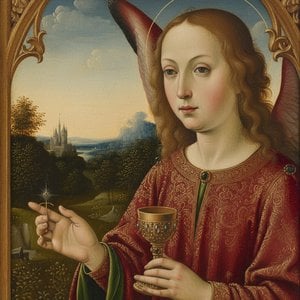
In the quiet, hallowed atmosphere of the early sixteenth century, few works captured the intersection of earthly realism and celestial glory as profoundly as Jan Gossaert’s Deesis. Created in 1527, this masterpiece serves as a breathtaking window into the soul of the Northern Renaissance. The painting presents a sacred triad: Christ at the apex, flanked by the Virgin Mary and St. John the Baptist. This traditional iconographic arrangement, known as the Deësis—or "supplication"—depicts the holy figures in a moment of eternal intercession for humanity. As one gazes upon the composition, there is an immediate sense of being drawn into a divine court, where the boundaries between the viewer and the heavens begin to dissolve.

The emotional resonance of the piece lies in its delicate balance of power and tenderness. Gossaert, often referred to by his evocative moniker Mabuse, masterfully utilizes a triangular composition to guide the eye upward toward the central figure of Christ. The lighting is nothing short of dramatic; a soft yet piercing radiance emanicates from the center, illuminating the faces of the saints with a glow that feels both physical and spiritual. This chiaroscuro effect creates deep, velvety shadows within the dark wooden arch that frames the scene, lending the work a sculptural weight and an air of profound mystery. For the collector or designer, this painting offers more than mere decoration; it provides a focal point of intense contemplation and quiet strength.

The Alchemy of Technique and Texture

To appreciate the Deesis is to marvel at the technical virtuosity of the Netherlandish tradition blended with the burgeoning influences of Italian Romanism. Gossaert was a pioneer, an artist who breathed the air of Rome and brought its classical elegance back to the Low Countries. In this work, we see the meticulous attention to detail characteristic of his Flemish roots—the heavy, tactile folds of the drapery, the subtle translucency of skin, and the rich, opulent textures of gold and deep crimson pigments. The use of oil on wood panel allows for a layering of glazes that gives the colors an inner luminosity, making the gold leaf appear to shimmer as if caught in a flickering candlelight.

Every brushstroke serves a purpose in building a sense of tangible reality. The organic shapes of the flowing robes and rounded, compassionate faces contrast beautifully with the rigid, geometric architecture of the arched frame. This interplay between the soft and the structured creates a rhythmic harmony that is deeply pleasing to the eye. For those seeking to incorporate such a piece into a curated interior, the painting’s rich palette of earth tones, golds, and deep reds offers a sophisticated foundation for any classical or transitional design scheme, bringing an aura of historical prestige and timeless elegance to a room.

A Legacy of Faith and Humanism

Beyond its aesthetic brilliance, the Deesis is a profound theological statement. It captures the precise moment in art history when the medieval preoccupation with symbolic representation began to embrace the humanistic focus on anatomical accuracy and spatial depth. The gestures within the painting—Mary’s prayerful tilt and John the Baptist’s outstretched hand—are not merely poses; they are silent prayers captured in oil. They represent the bridge between the mortal struggle and divine mercy.

Owning a high-quality reproduction of this work allows one to invite this spirit of reverence into the modern home. It is an invitation to slow down, to observe the intricate details of Gossaert’s genius, and to find beauty in the intersection of the human and the divine. Whether placed in a private study, a grand library, or a sophisticated living space, the Deesis stands as a testament to the enduring power of Renaissance mastery, offering an unparalleled sense of peace, history, and artistic splendor.

Vprašanja in odgovori

Kakšne so proporcije dela "Deesis" avtorja Jan Gossaert (Mabuse) in kakšna je njegova velikost?

"Deesis" avtorja Jan Gossaert (Mabuse) je delo v formatu Square z dimenzijami 133 x 122 cm.

Kakšna je priporočena nastavitev tiska za "Deesis" avtorja Jan Gossaert (Mabuse)?

Za tiskanje dela "Deesis" avtorja Jan Gossaert (Mabuse) priporočamo velikost Large v Square orientaciji.

Kje lahko kupim digitalno sliko dela "Deesis" avtorja Jan Gossaert (Mabuse)?

Digitalno različico dela "Deesis" avtorja Jan Gossaert (Mabuse) lahko naročite s klikom na prenos digitalne slike visoke ločljivosti na njegovi strani Visokoresolucijska digitalna slika.


Biografija umetnika

Pionir renesančne umetnosti: Življenje in dediščina Jana Gossaerta

V spreminjajočem se okolju zgodnjega šestnadentodecetnega stoletja je malo katerega umetnika je tako mojstrovito premostilo vrzel med natančno tradicijo Severa in razvijajočim se humanizmom Ljudine tako kot Jan Gossaert. Zgodovini znan pod silovito ime Mabuse, se je ta vizionarski slikar iz Maubeuge v Franciji pojavil kot stebren kamen romanističnega gibanja. Njegovo življenjsko del predstavlja globoko metamorfozo v nizozemski umetnosti, kjer se je ostra, taktilna realizem flamovskih mojstrov srečal z veličastno, kipobustno eleganco italijanske renesanse. Študirati Gossaerta pomeni biti priča tistega natančnega trenutka, ko je srednjoveško dušo začela objmati klasična svetloba antike.

Čeprav so natančni podatki o njegovem zgodnjem izobraževanju še vedno zaviti v meglo časa, je bil Gossaertov umetniški DNK globoko zakoreninjen v tradicijah Nizke zemlje. Široko je verbreženjšino prepričanje, da je svoje oblikovalne leta preživel pri osvajanjem tehnične dovršenosti mojstrov, kot sta Rogier van der Weyden in Hugo van der Goes. Od teh predhodnikov je podarila nepremočljivo predanost detajlu – način prikazovanja tekstur, tkanin in svetlobe, ki je gledalcu deloval skoraj oprijemljivo. Vendar pa Gossaert ni bil zgolj imitator preteklosti; posedoval je nezasito radovednost do novega, saj je s pogledom proti jugu v svoj domači slog vključil anatomsko natančnost in arhitekturno veličastnost italijanske renesanse.

Sinteza Severa in Juge

Mabuseov pravi genij leži v njegovi sposobnosti harmoniziranja dveh očitno različnih svetov. Njegov razvoj kot romanistični slikar je označil odklon od čisto gotične občutljivosti, ki je dolgo vladala na severu Evrope. Tam, kjer so se zgodnejši umetniki osredotočali na simbolno globino in duhovno ikonografijo, je Gossaert vnesel občutek fizične teže in klasične proporcije. Raziskoval je človeško obliko z novo, znanstveno močjo, s čimer so njegove figure v prostoru dobile kipobustno prisotnost, ki je bila za njegovo dobo revolucionarna.

Ta stilski razvoj je najbolj očit v njegovem ravnanju s svetlobo in atmosfero. V njegovih rokah svetloba ne osvetljuje scene le tako; ona jo oblikuje. Uporabljal je atmosfersko perspektivo za ustvarjanje obsežnih, poglobljenih pejzažev, ki se zdijo neskončno umikati v daljavino in svojim motivom nuditi dramatično prizorišče. Njegove kompozicije pogosto vključujejo kompleksno igra senc in sijaja, tehniko, ki religioznim in mitološkim scenam daje skoraj gledališko intenzivnost. Ta mojstrovina mu je omogočila navigacijo med občutljivo ravnovesjem globoke duhovne kontemplacije, ki jo je zahtevala religiozna naročila, in intelektualno veličastnost, ki so jo zahtevali humanistični učenjaki njegove dobe.

Velika dela in zgodovinski pomen

Gossaertova plodna kariera je bila podprta s strani prestižne mreže pokroviteljev, od bogatih trgovcev do visokih duhovnikov in nobility. Njegovo delo je bilo izjemno raznoliko, od monumentalnih oltarjev, ki so krasili katedre, do intimnih portretov, ki so zajemali psihološko bistvo svojih modelov. Med njegovimi najbolj trajnimi prispevki tvorijo:

  • Religijska ikonografija: Dela, kot je Deesis, dokazująjo njegovo sposobnost uporabe svetlobe in barve za vzbuditev globoke duhovne pobožnosti, pri čemer Krist prikazuje z veličastnostjo, ki je hkrati človeška in božanska.
  • Mitološke pripovednice: V delih, kot je Herkul in Dejanira, je Gossaert pokazal svoje vladanje s klasičnimi temami, pri čemer je uporabil moč starodavnega mita za premikanje meja severne anatomske slikarstva.
  • Portretna umetnost: Njegovi portreti stoji kot pomembna zgodovinska dokumenta, ki jih odlikuje natančen prikaz kostumov in dostojnost ter neustrašno pogled, ki odraža naraščajoči status posameznika v renesančni družbi.

Zgodovinskega pomena Jana Gossaerta ni mogoče precej podceniti. Deloval je kot vitalen posrednik, ki je klasične ideale Italije prenesel čez Alpe in jih trdno zasadil v plodno tla Nizke zemlje. Z zmenjavo natančnega ročnega dela flamovske tradicije in strukturnih inovacij rimske renesanse je pavedil pot prihodnjim generacijam severnih umetnikov. Njegova dediščina ostaja vrezana v samo tkivo umetnostne zgodovine, saj predstavlja zmagovalno dobo kulturne sinteze in umetniške ponovnega rojstva.

Jan Gossaert (Mabuse)

Jan Gossaert (Mabuse)

1478 - 1532 , Francija

Hitri podatki

  • Artistic Movement Or Style: Romanistično slikarstvo
  • Artists Who Influenced This Artist:
    • Andrea Mantegna
    • Leonardo da Vinci
  • Date Of Birth: Maubeuge, Francija
  • Date Of Death: 1532
  • Full Name: Jan Gossaert (Mabuse)
  • Nationality: Flavski
  • Notable Artworks:
    • Deesis
    • Hercules in Deianeira
    • Sveta družina
  • Place Of Birth: Francija