BREZPLAČNO POSVETOVANJE O UMETNOSTI
x
Acrylic On Canvas
WallArt
Symbolist Expressionism
1889
Early Medieval
74.0 x 60.0 cm
Kimbell Art MuseumGiclée ali platnati odtis muzejske kakovosti z hitro proizvodnjo in prilagodljivimi možnostmi končne obdelave.
Izberite eno od naših vnaprej določenih velikosti, ki ustrezajo prvotnim proporcijam umetničkega dela.
Svoje dimenzije lahko vnesete sami, da bodo ustrezne za določen okvir ali prostor. Če izbrana velikost ne bo skladna z razmerji izvirne slike, bomo umetniško delo orezali ali podaljšali s pomočjo ogledalnega odraza ali barvno polnega roba. Pred začetkom proizvodnje vam bomo poslali digitalni predogled za potrditev.
Upoštevajte, da predogled na zaslonu ne prikazuje dejanskega orezovanja ali podaljševanja. Le digitalni predogled bo natančno prikazal končno kompozicijo.
Čeprav so na voljo prilagojene velikosti, priporočamo izbiro dimenzije s predhodno določenega seznama, da ohranite prvotna razmerja.
Globalna dostava () v 2 tednih namesto standardnih 4/5 tednov. (2 julij)
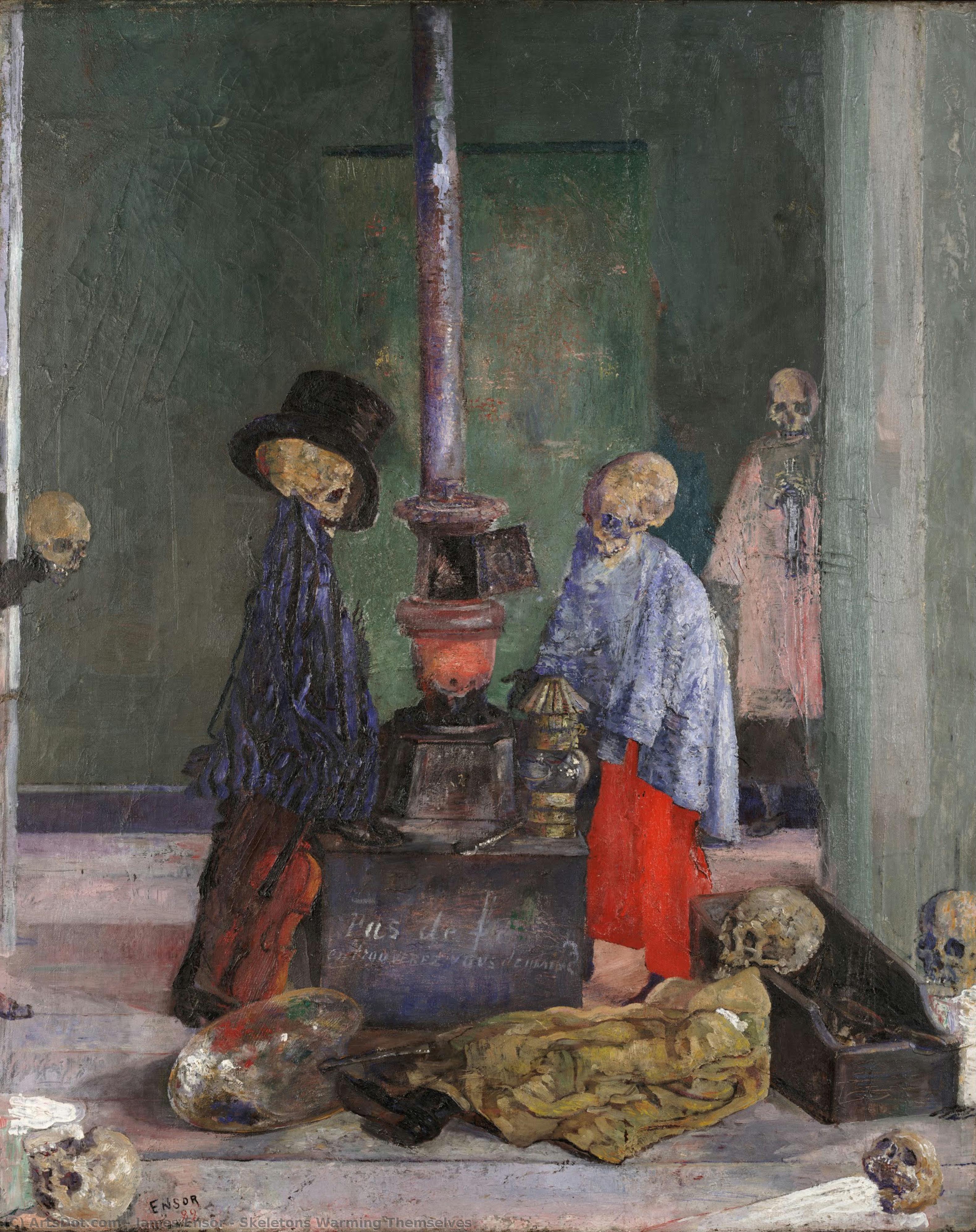
Skeletons Warming Themselves
Velikost reprodukcije
James Ensor's 1889 painting, *Skeletons Warming Themselves*, isn’t merely a depiction of figures around a hearth; it’s a profoundly unsettling meditation on mortality, artistic endeavor, and the lingering echoes of history. Emerging from the artist’s uniquely layered background – his English father and Belgian mother, coupled with a childhood steeped in Ostend's macabre discoveries of skeletal remains – Ensor crafts an image that simultaneously invites contemplation and evokes a chilling unease. The painting possesses a remarkable duality: on one level, it presents a domestic scene, almost banal in its arrangement of skeletons, a palette, brushes, and a violin; yet, beneath this veneer lies a complex web of symbolism and historical reference that demands careful consideration.
Ensor’s masterful manipulation of monochrome creates an atmosphere thick with melancholy. The stark black and white palette emphasizes the skeletal forms, lending them an almost porcelain quality while simultaneously highlighting their vulnerability. Notice how the artist subtly shifts tones – a slight darkening around the edges of the skeletons, suggesting age and decay, contrasts sharply with the brighter areas where they are clustered near the stove. This careful use of value is crucial to the painting’s impact, drawing the viewer's eye across the composition and reinforcing the central theme of transience. The inclusion of the palette and brush isn’t accidental; it directly references Ensor’s own artistic practice, suggesting a cycle of creation and destruction, life and death inextricably linked.
The setting itself is deeply rooted in Ensor's personal history. The stove, inscribed with “Pas de feu” (“No fire”) and followed by “en trouverez vous demain?” (“Will you find any tomorrow?”), immediately evokes a sense of abandonment and uncertainty. This cryptic message resonates with the historical context of Ostend, where human bones were routinely unearthed for centuries – remnants of past conflicts and a constant reminder of mortality. Furthermore, *Skeletons Warming Themselves* aligns itself with the tradition of the “Dance of Death” prints, popular during the medieval and Renaissance periods. These allegorical images frequently depicted skeletons as symbols of universal death, often engaging in satirical commentary on various professions and social classes. Ensor’s work subtly echoes this tradition, transforming the skeletal figures into a group engaged in quiet contemplation – perhaps even a shared ritual of remembrance.
Interestingly, X-radiographs revealed that *Skeletons Warming Themselves* was created over an earlier painting: a bust-length portrait of a young girl. This layering of images speaks volumes about Ensor’s artistic process and his personal circumstances at the time. The decision to rework an existing canvas suggests a period of economic hardship, a common struggle for many artists in late 19th-century Europe. It also hints at a possible desire to move beyond a previous work, perhaps seeking a new direction or grappling with unresolved emotions. The painting becomes not just a visual statement but a window into the artist’s creative journey and his internal landscape.
A hand-painted reproduction of *Skeletons Warming Themselves* offers a unique opportunity to bring this haunting masterpiece into your home. Its evocative imagery, rich symbolism, and historical depth will undoubtedly spark conversation and serve as a poignant reminder of the ephemeral nature of life itself. The meticulous detail captured in the reproduction allows you to appreciate Ensor’s masterful technique and his profound exploration of the human condition – a truly captivating addition to any art collection or interior design scheme.
James Sidney Edouard Ensor (Ostend, 13 April 1860-19 November 1949) was a Belgian painter and printmaker who stands as one of the most influential figures in the development of Expressionism and Surrealism. Born into an English father and Belgian mother—a duality that profoundly shaped his artistic worldview—Ensor defied convention from the outset, rejecting academic formalism and embracing unsettling imagery rooted in psychological exploration.
His formative years were marked by exposure to Ostend’s vibrant seaside atmosphere and his parents’ souvenir shop, which stocked exotic objects and carnival masks – stimuli that ignited his imagination and instilled a lifelong fascination with disguise. Ensor pursued formal artistic training at the Académie Royale des Beaux-Arts in Brussels, where he encountered fellow artists like Fernand Khnopff and Theo Van Rysselberghe—connections that fostered intellectual debate and propelled him beyond traditional boundaries.
Around 1886-1889 Ensor embarked on a transformative stylistic journey, abandoning Impressionistic ideals for Expressionist techniques characterized by bold brushwork and vibrant color palettes. Influenced by Rembrandt’s masterful use of chiaroscuro, Francisco Goya’s unflinching depictions of human suffering, and Japanese woodcuts—a fascination with visual symbolism—Ensor developed a distinctive iconography focused on grotesque figures and unsettling narratives.
His most celebrated works – including *Christ's Entry into Brussels* (1888-1889), *The Scandalized Masks* (1883) and *Skeletons Fighting over a Hanged Man* (1891) – exemplify Ensor’s commitment to confronting uncomfortable truths about human psychology and societal hypocrisy. Recurring themes throughout his oeuvre include death, decay, social critique, religious satire, and the boundless potential of imagination—elements that continue to resonate with audiences today.
James Ensor's uncompromising artistic vision solidified his position as a pivotal innovator in modern art, paving the way for Expressionist artists like Edvard Munch and Surrealists like René Magritte. His rejection of academic conventions and embrace of psychological depth profoundly impacted subsequent generations of painters—establishing him as an enduring symbol of artistic rebellion and intellectual courage.
1860 - 1949 , Belgija
Povejte nam o svojem projektu in naši strokovnjaki za umetnost vam bodo pripravili 3 prilagojene predloge umetniških del.
Naj vam izberemo 3 možnosti – popolnoma brezplačno!