A Fragmented Vision of Humanity
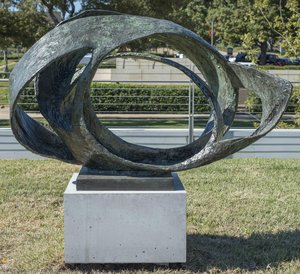
Jacques Lipchitz's "Figure," sculpted in 1930, stands as a profound testament to the transformative power of Cubism and its enduring fascination with exploring the fundamental concepts of form and perception. This bronze masterpiece transcends mere representation; it invites a deep, meditative contemplation on the very essence of human existence through a deliberately abstracted aesthetic. In an era defined by rapid societal shifts, Lipchitz utilized a fragmented language to capture the complexity of the modern soul. The sculpture presents a captivating interplay of geometric precision and organic fluidity, where the human form is not merely depicted but reconstructed through a lens of intellectual rigor and emotional depth.
The composition is a masterclass in the Cubist approach, pioneered by luminaries such as Picasso and Braque. Rather than striving for a realistic or anatomical depiction, Lipchitz dismantles the human figure into interlocking planes, presenting multiple viewpoints simultaneously. The head is rendered with striking simplicity—two oval eyes positioned above a small, triangular nose—which disrupts traditional notions of facial harmony to create a sense of enigmatic presence. Below this stylized visage, undulating vertical forms intersect with curved openings, creating a rhythmic tension between movement and stillness. This structural complexity ensures that the viewer's eye is constantly traveling across the surface, discovering new contours and depths within the bronze.
The Alchemy of Bronze and Form
The materiality of the piece is essential to its enduring impact. The choice of bronze allows for an exquisite level of detail and a rich, tactile quality that stone or wood could not achieve. Through the intricate process of bronze casting, Lipchitz was able to capture subtle variations in surface texture, from the sharp, clean edges of his geometric planes to the softer, more rounded contours of the figure's limbs. The rough, uneven patina resulting from natural oxidation lends the sculpture an ancient, weathered character, suggesting a sense of permanence and historical weight. This textured surface catches the light in a way that emphasizes the sculpture's three-dimensionality, making it a dynamic object that changes appearance depending on the surrounding illumination.
For the discerning collector or interior designer, "Figure" offers an unparalleled opportunity to introduce a piece of art history into a contemporary space. The sculpture’s neutral, earthy tones and sophisticated silhouette allow it to integrate seamlessly into various high-end environments, from minimalist modern galleries to richly textured classical studies. It serves as a powerful focal point, commanding attention through its structural integrity and the quiet strength of its presence. Owning a high-quality reproduction of this work is not merely about acquiring an object; it is about bringing a piece of the avant-garde revolution into one's personal sanctuary, fostering an atmosphere of intellectual curiosity and timeless elegance.
Vprašanja in odgovori
Kje lahko vidim predogled za "Figure"?
Predogled dela "Figure" avtorja Jacques Lipchitz je na strani Predogled za to umetniško delo.
Ali je delo "Figure" avtorja Jacques Lipchitz v javni lastini in zakaj?
Status avtorske pravice za "Figure" - še vedno pod avtorsko pravico - izhaja iz smrti umetnika v letu 1973.
Kdaj je "Figure" pripisano kateremu umetniku?
Delo "Figure" je ustvaril Jacques Lipchitz. Informacije na tej strani opisujejo izvirno delo umetnika Jacques Lipchitz.
Kdaj je bilo ustvarjeno "Figure"?
"Figure" avtorja Jacques Lipchitz je nastalo leta 1930.
Ali je "Figure" avtorja Jacques Lipchitz svetlo ali temno umetniško delo?
Zaznavana svetlina dela "Figure" avtorja Jacques Lipchitz je brilliant. Lahko se prilagodi svetlobi v namenjenem prostoru.
Koliko je bil star/a Jacques Lipchitz, ko je ustvaril/a "Figure"?
Jacques Lipchitz je ustvaril "Figure" v starostih 39 let. Umetnik se je rodil leta 1891, delovni datum pa je 1930.
Kako "Figure" uravновеža svetlo in temno?
Zabeležene vrednosti za "Figure" avtorja Jacques Lipchitz so: svetlina brilliant, luminanca Luminous.



 Preklop na tiskanine
 Pošlji kot čestitko
 Deli
Deli
 Podrobnosti
 Priročnik

 Prenesi
 Podobni artefakti
 Predvajaj diaporama
 Statistika


 Preberi več






































 Možnost stekla je na voljo le za velikosti pod 110 cm