Biografija umetnika
Življenje in zgodnji razvoj Honoréja Daumierja
Honoré-Victorin Daumier se je rodil leta 1808 v Marseillu, njegovo življenje pa je bilo tesno povezano s burnimi dogodki 19. stoletja Francije. Njegova mladost, zaznamovana pesniškimi ambicijami očeta in kasnejšim preselitvijo družine v Pariz leta 1814, ga je potopila v mesto, polno umetniške energije. Čeprav je bil prvotno usmerjen k pravni karieri, se je mladi Daumier nagibal k likovni umetnosti. Učil se je pri Alexandre Lenoirju, vpijal klasične vplive in hkrati cenil dramatično chiaroscuro Rubensa, ter izpopolnjeval svoje spretnosti na Académie Suisse. Ta temeljna usposabljanje bi bilo ključno za oblikovanje njegovega značilnega sloga – močne mešanice realizma in ekspresivne grafike. Vendar Daumierja ni definirala samo umetniška tehnika, temveč predvsem občutljivost do družbene nepravičnosti in politične absurdnosti okoli njega. Preselitev v Pariz je bila prelomnica, saj se je tu začela oblikovati njegova vizija sveta, ki ga bo kasneje tako ostro kritiziral skozi umetnost.
Ostre pero: Karikatura in družbena kritika
Daumierjeva kariera se je resnično razplamtela po Revoluciji leta 1830, dogodku, ki je za vedno spremenil potek francoske zgodovine in hkrati ustvaril plodno podlago za njegov naraščajoči satirični talent. Hitro se je uveljavil kot mojster litografije, sprva anonimno prispeval k različnim publikacijam, preden je pridobil sloves s svojim delom pri *Le Charivari*, neodvisnemu stripovskem časopisu Charlesa Philipona. Tu je Daumierjev genij resnično zacvetel. Njegove karikature niso bile le humorne upodobitve; to so bili ostre obsodbe buržoazije, pravosodnega sistema in politične elite. Brez strahu je posmehoval kralju Ludviku Filipu in si leta 1832 prislužil šestmesečno zaporno kazen za še posebej jedko karikaturo. To izkušnjo ga ni utišalo, temveč okrepilo njegovo odločenost, da bi razkrival hipokrizijo in izzival avtoritete prek umetnosti. Njegove litografije so postale vizualni manifesti, ki so ujeli duh disidentstva in ponujale kritičen komentar na družbene bolezni njegovega časa. Obseg njegove produkcije v tem obdobju je osupljiv – tisoče litografij, ki so služile kot priljubljena zabava in močne politične izjave. Njegova dela so bila pogosto provokativna, a so obenem odražala globoko razumevanje človeške narave in družbenih dinamik.
Onkraj karikature: slikarstvo in vizionarski kip
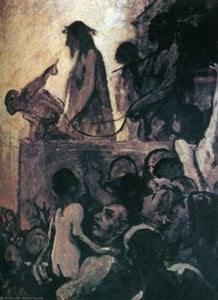
Čeprav je Daumier najbolj znan po litografiji, bi bilo omejevanje njega samo na področje karikature resna krivica. Bil je tudi predan slikar in kipar, čeprav mu je priznavanje za ta dela prišlo kasneje v življenju. Njegova slikanja, ki pogosto prikazujejo prizore vsakdanjega pariškega življenja – tretjerazredni vagon, pralke, odvetnike – so prežeta z globokim občutkom realizma in empatije. To niso idealizirane upodobitve, temveč neomajne predstavitve trdote in boja. Mojstrsko je uporabljal ohlapno črtanje in dramatično osvetlitev za prenašanje čustev in vzdušja, kar je napovedovalo nekatere tehnike, ki so jih kasneje sprejeli impresionisti. Njegovo kiparstvo, večinoma ustvarjeno iz gline (mnoga dela so ostala nezapeljana med njegovim življenjem), razkriva podobno zavezanost ujemanju človeške oblike z iskrenostjo in čustveno globino. Te skulpture, odkrite po njegovi smrti, dokazujejo izjemno nadarjenost za modeliranje in sposobnost prenesti psihološko kompleksnost skozi fizično gesto. Njegova dela so bila pogosto kritizirana zaradi njihovega nekonvencionalnega sloga, vendar je Daumier vztrajal pri svoji viziji in ustvaril edinstven opus, ki odseva njegovo globoko človečnost.
Trajna zapuščina: vpliv in zgodovinski pomen
Vpliv Honoréja Daumierja na umetnostno zgodovino je nesporna dejstvo. Premostil je vrzel med romantizmom in realizmom, utiral pot prihodnjim generacijam umetnikov, ki so si prizadevali prikazati svet tako kot je – z vsemi pomanjkljivostmi. Njegova neomajna družbena kritika je vplivala na umetnike, kot sta Gustave Courbet in Édouard Manet, njegova inovativna uporaba litografije pa je revolucionirala grafiko. Njegovo delo še danes odmeva, opominja nas na moč umetnosti, da izzove avtoritete, razkrije nepravičnost in priča o človeškem stanju. Pomembna zbirka njegovih slik in kipov je v Musée d'Orsay v Parizu, obiskovalcem pa ponuja vpogled v svet, ki ga je tako živo upodobil. Njegove litografije so široko dostopne prek zbirk, kot so tiste na WahooArt, kar zagotavlja, da njegova satirična genialnost še naprej spodbuja razmislek in navdihuje dialog. Daumier ni bil samo umetnik; bil je kronist svojega časa – vizualni pesnik, ki je uporabil svoj talent, da bi dal glas tistim, ki so bili brez glasu, in držal oblast odgovorno. Njegova zapuščina ostaja kot dokaz trajne relevantnosti umetnosti kot sile za družbene spremembe.



 Preverite v realnem okolju
 Naročite ročno slikano reprodukcijo
 Pošlji kot čestitko
 Deli
Deli
 Podrobnosti
 Navodila

 Prenesi
 Podobni artefakti
 Rentgenski posnetek
 Predvajaj diaporama
 Statistika


 Preberi več






































 Možnost stekla je na voljo le za velikosti pod 110 cm