Pridobite datoteko, pripravljeno za tiskanje, ki presega kakovost spletnega predogleda. Vsaka digitalna slika v naši ponudbi izvira iz visoko ločljive izvirne datoteke v naši bazi — običajno široke od 5.000 do 15.000 pikselov — zato lahko z zaupanjem tiskate v večji format, tesno izrezujete ali reproducirate fine podrobnosti.
Nobena datoteka ne zapusti našega studia nedotiknjena. Digitalni strokovnjak preveri barve v primerjavi z izvirno sliko in jih po potrebi popravi, nato pa s profesionalnimi orodji za retuširanje izboljša jasnost in podrobnosti — pri čemer vedno ostaja zvest umetnikovim potezam in slogu. Rezultat je slika, ki izgleda kot samo slikarstvo, ne pa kot le filtriran sken.
Potrditev pred dokončanjem dela: naš strokovnjak vam v roku 72 ur pošlje sliko po e-pošti na pregled. Niste zadovoljni? Zahtevajte izboljšave ali popravke ali prosite za povračilo denarja, če kakovost ni v skladu z pričakovanimi standardi.
To je kakovost, po kateri temeljijo založniki, oblikovalni studii, galerije in tiskarne.
Prenesite datoteko visoke ločljivosti za osebno uporabo, tiskanje in kreativne projekte. ( Preklop na tiskanine Kupite ročno slikano delo)
Z izbiro WahooArt.com ne prejmete le slike – prejmete profesionalno urejeno digitalno umetniško delo, izdelano z največjo natančnostjo in zavestno podprto z garancijo za zadovoljstvo. Tukaj je vse, kar bo z vašim naročilom samodejno priloženo:
Vaša digitalna slika visoke ločljivosti bo na vaš e-naslov poslana v roku 72 ur od zaklopa naročila – pripravljena za takojšnjo uporabo.
Vaše umetniško delo je strokovno optimizirano z uporabo naprednih orodij umetne inteligence in ročne obdelave, kar zagotavlja največjo stopnjo podrobnosti, jasnosti in barvne natančnosti.
Ste datoteko zaradi nespremietne napake izgubili ali izbrisali? Ni težav – vam jo bomo ponovno poslali kadar koli in brezplačno.
Svoje umetniško del uživajte takoj, brez carin, davkov ali stroškov dostave – digitalni prenosi so vedno brezdavčni.
Z uporabo profesionalnih orodij in procesov upravljanja barv zagotavljamo, da vaša digitalna slika čim bolj natančno odraža prvotne barve.
Če niste zadovoljni s svojo digitalno sliko, jo bomo uredili ali vam v 100 dneh povrnili 100% denarja – brez kakršnih koli vprašanj.
Niste zadovoljni? Zagotavljamo vam popoln povračilo sredstev v 100 dneh po prejemu digitalne datoteke – brez dodatnih vprašanj.
Kupite 3 slike, prihranite 10% - Kupite 5 slik, prihranite 15% - Kupite 10+ slik, prihranite 20%. Odlično za kreativne projekte, galerije in agencije.
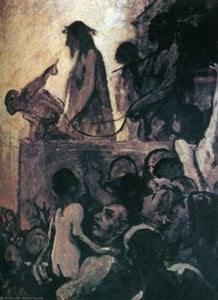
In the mid-19th century, as the world began to shift under the weight of industrialization and political upheaval, Honoré Daumier captured a moment of profound spiritual and social tension. His 1850 masterpiece, Ecce Homo, is far more than a mere biblical illustration; it is a visceral encounter with the essence of human suffering. The painting captures the harrowing instant when Pontius Pilate presents a battered Jesus Christ to a judgmental crowd, uttering the fateful words, "Behold the Man." Through his unflinching lens, Daumier strips away the gilded, idealized layers often found in religious iconography, replacing them with a stark, heavy realism that forces the viewer to confront the uncomfortable truth of injustice and the weight of collective condemnation.
The composition is a masterclass in psychological depth and dramatic tension. Daumier utilizes a technique deeply rooted in the tradition of chiaroscuro, a method he refined by studying the dramatic light and shadow of masters like Rubens. This interplay of light and dark does not merely illuminate the scene; it sculpts the very emotions of the figures. A luminous, almost ethereal glow surrounds the central figure of Christ, yet this light does not offer comfort—instead, it serves to highlight his isolation against a backdrop of grim, shadowed faces. The crowd is not a monolithic entity but a collection of individual gazes: some are filled with mockery, others with a haunting, silent observation, creating a sense that the viewer is standing right there in the dust and heat of the Roman trial.
Technically, Ecce Homo showcases Daumier’s extraordinary command over oil on canvas. His brushwork avoids the superficial prettiness of the era, opting instead for a textured, robust application that mirrors the grit of the subject matter. The palette is dominated by earthy, somber tones—deep browns, muted ochres, and heavy shadows—which ground the divine event in a tangible, earthly reality. This commitment to Realism allows the painting to transcend its historical period; it becomes a universal symbol of compassion amidst cruelty. For the collector or the lover of fine art, this piece offers a profound sense of gravity, making it an anchor for any sophisticated interior.
For those looking to integrate such a powerful work into a curated space, Ecce Homo serves as a magnificent focal point. Its ability to command attention through tonal complexity and emotional weight makes it ideal for galleries or study rooms where art is intended to provoke thought and conversation. A high-quality reproduction of this work preserves the subtle gradations of Daumier’s shadows and the raw, expressive lines of his draftsmanship, allowing the haunting beauty of this 19th-century triumph to breathe within a modern setting. It is an invitation to look closer, to feel the weight of history, and to find beauty in the most honest depictions of the human condition.
Honoré Daumier je za delo "Ecce Homo" uporabil/a tehniko Oil On Canvas. Ta tehnika opredeljuje materialno naravo izvirnega dela.
"Ecce Homo" avtorja Honoré Daumier je po vzduju opisan kot Dramatic. Ta razvrščitev lahko pomaga pri izbiri ustreznega okolja za delo.
"Ecce Homo" avtorja Honoré Daumier združuje tehniko Oil On Canvas s slogom Contemporary Realism. Tehnika in umetnostno smer opredeljata način izdelave ter slog dela.


1808 - 1879 , Francija
 Predogled v realnem okolju
 Pošlji
 Deli
Deli
 Podrobnosti o delu
 Priročnik

 Prenesi sliko
 Podobni izdelki
 Rentgenski posnetek
 Predvajaj diaporama
 Vprašanja in odgovori
 Statistika


 Preberi več