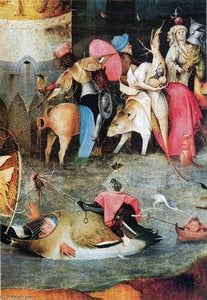
Pridobite datoteko, pripravljeno za tiskanje, ki presega kakovost spletnega predogleda. Vsaka digitalna slika v naši ponudbi izvira iz visoko ločljive izvirne datoteke v naši bazi — običajno široke od 5.000 do 15.000 pikselov — zato lahko z zaupanjem tiskate v večji format, tesno izrezujete ali reproducirate fine podrobnosti.
Nobena datoteka ne zapusti našega studia nedotiknjena. Digitalni strokovnjak preveri barve v primerjavi z izvirno sliko in jih po potrebi popravi, nato pa s profesionalnimi orodji za retuširanje izboljša jasnost in podrobnosti — pri čemer vedno ostaja zvest umetnikovim potezam in slogu. Rezultat je slika, ki izgleda kot samo slikarstvo, ne pa kot le filtriran sken.
Potrditev pred dokončanjem dela: naš strokovnjak vam v roku 72 ur pošlje sliko po e-pošti na pregled. Niste zadovoljni? Zahtevajte izboljšave ali popravke ali prosite za povračilo denarja, če kakovost ni v skladu z pričakovanimi standardi.
To je kakovost, po kateri temeljijo založniki, oblikovalni studii, galerije in tiskarne.
Prenesite datoteko visoke ločljivosti za osebno uporabo, tiskanje in kreativne projekte. ( Preklop na tiskanine Kupite ročno slikano delo)
Z izbiro WahooArt.com ne prejmete le slike – prejmete profesionalno urejeno digitalno umetniško delo, izdelano z največjo natančnostjo in zavestno podprto z garancijo za zadovoljstvo. Tukaj je vse, kar bo z vašim naročilom samodejno priloženo:
Vaša digitalna slika visoke ločljivosti bo na vaš e-naslov poslana v roku 72 ur od zaklopa naročila – pripravljena za takojšnjo uporabo.
Vaše umetniško delo je strokovno optimizirano z uporabo naprednih orodij umetne inteligence in ročne obdelave, kar zagotavlja največjo stopnjo podrobnosti, jasnosti in barvne natančnosti.
Ste datoteko zaradi nespremietne napake izgubili ali izbrisali? Ni težav – vam jo bomo ponovno poslali kadar koli in brezplačno.
Svoje umetniško del uživajte takoj, brez carin, davkov ali stroškov dostave – digitalni prenosi so vedno brezdavčni.
Z uporabo profesionalnih orodij in procesov upravljanja barv zagotavljamo, da vaša digitalna slika čim bolj natančno odraža prvotne barve.
Če niste zadovoljni s svojo digitalno sliko, jo bomo uredili ali vam v 100 dneh povrnili 100% denarja – brez kakršnih koli vprašanj.
Niste zadovoljni? Zagotavljamo vam popoln povračilo sredstev v 100 dneh po prejemu digitalne datoteke – brez dodatnih vprašanj.
Kupite 3 slike, prihranite 10% - Kupite 5 slik, prihranite 15% - Kupite 10+ slik, prihranite 20%. Odlično za kreativne projekte, galerije in agencije.
Hieronymus Bosch’s “A Comical Barber Scene,” a sketch executed in meticulous pen and ink on paper, offers a glimpse into the artist's singular artistic universe—a realm where unsettling realism intertwines with fantastical imagination. Dating back to approximately 1485-1500 during Bosch’s middle period, this artwork transcends mere depiction; it embodies his characteristic blend of moral commentary and psychological exploration.
Beyond its surface humor lies a profound symbolic resonance. The exaggerated expressions and postures of the figures serve as vehicles for Bosch’s critique of societal norms—highlighting vanity, folly, and moral corruption. Consider the woman holding the fan; her upward gesture suggests aspiration yet simultaneously underscores the futility of earthly pursuits. Similarly, the solitary figure embodies contemplation and perhaps despair – mirroring the artist's preoccupation with existential questions.
"A Comical Barber Scene" stands as a cornerstone of Bosch’s oeuvre and exerted considerable influence on subsequent artists—particularly those embracing surrealism. Its unsettling imagery and masterful technique continue to captivate viewers today, prompting contemplation about the complexities of human psychology and the pervasive presence of darkness within our world.
This sketch exemplifies Bosch's unparalleled ability to fuse realism with fantasy—creating a visual experience that is both disturbing and profoundly rewarding. It’s a testament to his enduring artistic genius and a captivating subject for connoisseurs seeking inspiration or considering acquiring a stunning reproduction.
Del v slogu Northern Renaissance, "A comical barber scene", je ustvaril umetnik, rojen v državi Nizozemska.
Stran Podobna dela za delo "A comical barber scene" avtorja Hieronymus Bosch prikazuje sorodna umetniška dela.
Digitalno sliko dela "A comical barber scene" avtorja Hieronymus Bosch lahko prenesete na strani za prenos umetninine Prenos digitalne slike: prenos digitalne slike visoke ločljivosti.

The name Hieronymus Bosch belongs to a man born Jheronimus van Aken. He emerges from the history of the Netherlands around 1450 in the town of 's-Hertogenbosch. This was a period of intense religious fervor and societal unease in the Duchy of Brabant. He was a Dutch painter whose very identity remains a subject of intense scrutiny. Records from the time are fragmented. They offer only glimpses of a man who would become a notable representative of the Early Netherlandish painting school.
His existence was rooted in a lineage of creators. He was born into a family with a long tradition of painting, a background that likely shaped his early understanding of the medium. While his contemporaries often focused on the serene, Bosch turned his gaze toward the grotesque and the symbolic. He navigated a world where the boundaries between the divine and the demonic appeared to dissolve. His work reflects the anxieties of the late medieval era, capturing a sense of human folly through a highly individualistic lens.
The roots of the artist's identity are embedded in the very architecture of 's-Hertogenbosch. He is born in his grandfather's house, a structure tied to a lineage of creators. His grandfather, Jan van Aken, was a painter who died in 1454. This familial connection to the craft is not merely incidental; it is foundational. His father, Anthonius van Aken, continues this tradition, working both as a painter and as an artistic adviser. The workshop environment is the first classroom, a space where the technical conventions of Netherlandish painting are absorbed through daily practice and observation.
Training begins within this family workshop. He learns the discipline of the medium through the hands of his kin, absorbing the methods of his predecessors. The transition from a student in a family studio to a recognized figure in the municipal records occurs in 1474. This is the first time his name appears in the official documents of 's-Hertogenbosch. He moves from the private sphere of the family workshop into the public record of the city, a step that marks his emergence as an individual within the professional landscape of the Duchy of Brabant.
The stability of Bosch's personal life takes shape between 1479 and 1481. He marries Aleyt Goyaerts van den Meervenne, a union that brings more than companionship. Through her family’s holdings, Aleyt provides a layer of financial security, anchoring the artist within the local economy. The couple eventually moves to the nearby town of Oirschot, a shift that marks a departure from the immediate bustle of his birthplace.
Socially, Bosch moves within the influential circles of the Brabant region. In 1486 or 1487, he joins the Illustrious Brotherhood of Our Lady. Membership in this highly respected religious confraternity places him among the influential citizens of 's-Hertogenbosch. This affiliation provides a structured connection to the religious and civic life of the community, cementing his position as a recognized figure in the local social hierarchy.
Bosch works primarily on oak panels, utilizing the masterful oil techniques of the Netherlandish tradition. He does not seek the smooth, invisible surface favored by many of his contemporaries. Instead, his application of paint often leaves a rough surface, a tactile quality that lends weight to his strange subjects. Through the precise use of glazing—layering thin, translucent washes of color—he achieves a sense of luminous depth and intricate texture. This technical control allows for a startling clarity even within his most chaotic compositions.
His visual language relies on a fusion of meticulous detail and wildly imaginative imagery. He populates his landscapes with hybrid beings, grotesque demons, and strange, anatomical distortions that challenge the viewer's perception of reality. These figures are not mere decorations; they function as symbols of vice and spiritual corruption. The tension between his precise, realistic rendering of textures and the surreal nature of his subjects creates a profound sense of unease. He captures the human condition through a lens of intense moral scrutiny, where every creature carries a heavy theological weight.
The gaze shifts to the triptych known as The Garden of Earthly Delights. It remains his most famous work, a complex visual labyrinth. The left panel presents the Garden of Eden, teeming with life. The central panel depicts a world consumed by sensual pleasure and unrestrained desire. On the right, a terrifying vision of hell unfolds. This work functions as a panoramic view of humanity’s fall from grace, moving from paradise to the torments of the afterlife.
In other compositions, Bosch explores the mechanics of sin and the chaos of the human condition. The Seven Deadly Sins, held in the Museo del Prado in Madrid, examines moral failure through a structured lens. Around 1500, he produced The Ship of Fools, a work capturing the folly of mankind. His ability to render the grotesque is further seen in The Temptation of St. Anthony, one of his notable works. The Haywain Triptych also stands as a significant piece in his body of work, presenting a world caught in a cycle of temptation and judgment.
The ripples of Bosch’s vision moved rapidly through the 16th century, shaping the trajectory of Northern art. Pieter Bruegel the Elder emerges as his most significant follower, adopting and expanding upon the complex compositional structures and moralizing themes that Bosch pioneered. This lineage of imagery did not end with the Renaissance. Centuries later, the Surrealists found a precursor in his work. Salvador Dalí and Max Ernst looked toward his canvases to find a visual language for the subconscious, drawing direct inspiration from his ability to render the impossible with startling clarity.
His work remains remarkably modern in its execution. He possessed a unique capacity to weave together the grotesque and the beautiful, creating a tension that feels contemporary even in a digital age. This duality allows his paintings to function as windows into the religious and social climate of the 15th and 16th centuries. Through his brush, the anxieties of a changing world find physical form. He captured a specific era of intense moral scrutiny and societal shifts, turning theological concepts into visceral, visual realities that continue to provoke debate.
The weight of Bosch's legacy is concentrated heavily in Madrid. The Museo del Prado holds 55 of his works, providing the most extensive look at his visual language. Within these halls, one encounters the terrifying details of his hellscapes and the complex moral allegories that defined his career. The collection includes the Triptych of the Adoration of the Magi (c. 1510) and The Seven Deadly Sins (c. 1480).
In Lisbon, the Museu Nacional de Arte Antiga preserves 18 works, including the Temptation of St. Anthony (c. 1506). The presence of his imagery in Portugal highlights the reach of his influence across Europe. Meanwhile, the Museum Boijmans Van Beuningen in the Netherlands maintains 10 works, including The Vagabond (The Prodigal Son) (c. 1516). These pieces offer a direct connection to the Netherlandish tradition from which he emerged.
Other significant collections are scattered across the continent. The Academy of Fine Arts in Vienna holds 8 works, such as Christ Child with a Walking Frame (c. 1480). In Berlin, the Staatliche Museen contains 7 works. To see his output in its entirety, one must move between these specific centers of preservation.

1450 - 1516 , Nizozemska
 Predogled v realnem okolju
 Pošlji
 Deli
Deli
 Podrobnosti o delu
 Priročnik

 Prenesi sliko
 Podobni izdelki
 Rentgenski posnetek
 Predvajaj diaporama
 Vprašanja in odgovori
 Statistika
 Preberi več