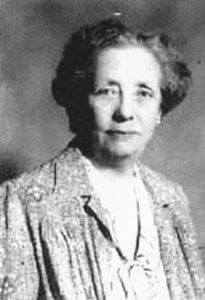
The Sculptor of Grace and Movement
Harriet Whitney Frishmuth stands as a luminous testament to the enduring spirit of American sculpture during the transformative early twentieth century. Born in Philadelphia in 1880, her formative years were shaped by a profound sense of displacement and discovery; following her parents' divorce, she spent eight vital years traversing Europe with her mother and sisters. This period of continental wandering instilled within her a deep appreciation for diverse artistic traditions, eventually leading her to the heart of the sculptural world in Paris. It was there, amidst the shadows of the École des Beaux-Arts, that she sought instruction from the legendary Auguste Rodin. This early exposure to the masters of movement and emotion provided the foundational language for a career that would later define the elegance of the Art Deco era.
Her artistic development was characterized by an almost scientific devotion to the human form. Beyond the studio, Frishmuth pursued a rigorous understanding of anatomy through dissections at the College of Physicians and Surgeons in New York. This rare intersection of medical precision and artistic intuition allowed her to capture not just the surface of the body, but the very tension of muscle and the fluidity of bone beneath. Her training continued under luminaries such as Cuno von Uechtritz-Steinkirch in Berlin, and later at the Art Students League of New York, where she studied under Gutzon Borglum and Hermon Atkins MacNeil. These influences merged to create a style that was simultaneously grounded in classical technique and vibrantly modern in its energy.
A Legacy in Bronze and Motion
Frishmuth’s oeuvre is most celebrated for its ability to freeze a fleeting moment of kinetic beauty in permanent bronze. She possessed a singular talent for depicting the grace of dancers, a motif that allowed her to explore the limits of balance and poise. Her sculptures often feature female figures caught in mid-motion—a limb extended, a torso twisting, or a weight shifting onto the balls of the feet. One can see this mastery in works like The Vine, where the sinuous lines of a figure interact with organic forms to create a sense of rhythmic harmony. Her work does not merely represent a person; it represents the very essence of vitality and the ephemeral nature of movement.
While her large-scale figures commanded attention in galleries, Frishmuth also found immense success in the realm of decorative arts. Her ability to translate sculptural elegance into functional objects made her a sought-after name for high-end commissions. Her contributions to the Art Deco movement included:
- Elegant Decorative Objects: Collaborations with the Gorham Manufacturing Company resulted in exquisite ashtrays and bookends that utilized geometric precision and fluid lines.
- Architectural Bas-reliefs: Early career successes, such as her 1910 commission for the New York County Medical Society, demonstrated her ability to integrate sculpture into architectural contexts.
- Garden Bronzes: Many of her smaller, more intimate bronzes were designed to inhabit lush garden settings or serve as focal points in fountains, bridging the gap between fine art and the natural environment.
Throughout her long and prolific life, which spanned a full century, Frishmuth remained a central figure in the American art scene. Her membership in prestigious organizations like the National Sculpture Society and the National Academy of Design reflected her high standing among her peers. As an artist who bridged the gap between the classical traditions of the nineteenth century and the streamlined modernism of the twentieth, Harriet Whitney Frishmuth left behind a legacy of bronze that continues to captivate viewers with its timeless sense of grace, strength, and eternal motion.



 Preverite v realnem okolju
 Preklop na tiskanine
 Pošlji kot čestitko
 Deli
Deli
 Podrobnosti
 Priročnik

 Prenesi
 Podobni artefakti
 Rentgenski posnetek
 Predvajaj diaporama
 Statistika
 Preberi več






































 Možnost stekla je na voljo le za velikosti pod 110 cm