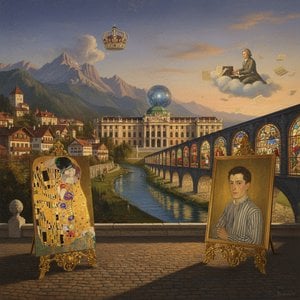
Zgodnje Življenje in Umetniški Začetki
Gustav Klimt, rojen 14. julija 1862 v Baumgartnu blizu Dunaja, je izviral iz družine, ki jo je zaznamovala tako umetniška nagnanost kot finančne težave. Njegov oče, Ernst Klimt, je bil graviralec zlata, poklic, ki je subtilno in globoko vplival na mladega Gustava – privlačnost pozlačenih lističev, natančna podrobnost, čista razkošje. Družinske stiske so pomenile pogoste selitve po Dunaju, kar je morda spodbudilo njegovo osebno opazovanje okolice in občutljivost do človeške izkušnje. Že kot otrok so bile njegove risbe izjemne, negovane s poklicem očeta in prirojeno nadarjenostjo, ki se je hitro razvedla. Leta 1876 je vstopil na Dunajsko šolo za uporabno umetnost (Kunstgewerbeschule), kjer je začel formalno usposabljanje v arhitekturnem slikarstvu pod vodstvom Ferdinanda Laufbergerja. To mu je zagotovilo solidne tehnične osnove, a ga je hkrati izpostavilo prevladujočim akademskim stilom – stilom, ki jih je Klimt kmalu izzval in presegel. Tukaj se je tudi povezal z pomembnim umetniškim partnerstvom s svojim bratom Ernstom in Franzom von Matschom, sodelovanje, ki jim je priskrbelo zgodnje naročila za dekorativne freske in stropove, kar je položilo temelj za njegovo prihodnjo uspešnost.
Vzpon Dunajske Secesije
Že v 1890 letih je bil Klimt vse bolj razočaran s konservativno umetniško ureditvijo na Dunaju. Sanjal je o večji ustvarjalni svobodi, prostoru, kjer bi lahko cvetela inovacija brez omejitev tradicije. Ta želja se je razrešila v oblikovanju Dunajske Secesije leta 1897, prelomnem trenutku v avstrijski umetnostni zgodovini. Klimt je bil izvoljen za prvega predsednika, postal je simbol gibanja, ki je hotel odstopiti od strogih akademskih norm in sprejeti nove umetniške tokove, ki so se razširjali po Evropi – Art Nouveau, Simbolizem in Japonizem. Lastna razstavna zgradba Secesije, zasnovana s strani Josefa Maria Olbricha, je postala simbol tega upora, tempelj, posvečen moderni umetnosti. Klimtovo delo je bilo osrednje za etos Secesije, utelešalo pa je zavrnitev konvencionalne estetike in sprejetje dekorativnih elementov, krepkih barv in simbolistične slike. Njegova dela so začela raziskovati teme ljubezni, smrti in spolnosti z nepredhodno odprtostjo, izzvala pa so družbene norme in sprožila občudovanje in ogorčenje.
Zlata Faza in Umetniška Zrelost
Okoli leta 1900 je Klimt vstopil v obdobje, ki ga danes poznamo kot "zlato fazo", čas, zaznamovan z obilno uporabo pozlačenih lističev, navdihnjenih s bizantinskimi mozaiki in srednjeveškimi iluminiranimi rokopisi. Ta tehnika je njegovo slikanje spremenila v bleščeče, drugotne vizije, prežete s čutom duhovne globine in senzualne privlačnosti. *Poljub* (1907-1908), morda njegovo najbolj ikonično delo, uteleša ta slog – par, zaklenjen v objemu, obdan z zlatim sijajem, njihova telesa okrašena s kompleksnimi vzorci. V tem obdobju je Klimt ustvaril tudi serijo osupljivih portretov, med katerimi je *Portret Adele Bloch-Bauer I* (1907) pokazal njegovo sposobnost zajeti ne le fizično podobo, ampak tudi psihološko kompleksnost svojih subjektov. Vedno bolj je brišel meje med slikanjem in okrasitvijo, integriral dekorativne elemente v svoje kompozicije, da bi ustvaril harmonično združitev oblike in vsebine. Vpliv japonske umetnosti – Japonizma – je bil posebej očitna v njegovi sploščenju perspektive, poudarjanju linij in uporabi dekorativnih vzorcev.
Kontroverze, Vplivi in Trajna Zapuščina
Klimtova kariera ni bila brez kontroverz. Leta 1900 je prejel prestižno naročilo za slikanje muralov na stropu Velike dvorane Univerze v Dunaju, ki so upodabljali Filozofijo, Pravosodje in Teologijo. Vendar pa so bila ta dela – zlasti *Filozofija* – ocenjena kot provokativna celo pornografska s strani konservativnih kritikov, kar je sprožilo javno ogorčenje in končno privedlo do tega, da je Klimt zavrnil nadaljnje javne komišone. Ta incident je predstavljal prelomnico v njegovi karieri, potisnila ga je proti bolj zasebnim pokroviteljem in mu omogočila več umetniško svobodo. V svojem življenju je bil Klimt pod vplivom raznolike palete umetnikov in stilov – od zgodovinskih slik Hansa Makarta do dekorativne umetnosti Bizanca in Japonske. Navdihnila ga je tudi simbolistična gibanja, ki je raziskovala teme mitologije, alegorije in podzavesti. Gustav Klimt je ustvarjal obilno, dokler ni umrl 6. februarja 1918 zaradi kapi med špansko gripo. Njegova kasnejša dela so raziskovala bolj abstraktne oblike in pokrajine, kar kaže na stalno umetniško evolucijo. Zdaj je priznan kot eden najpomembnejših likov avstrijske umetnostne zgodovine, vodilni zagovornik Dunajske Secesije in trajna ikona Art Nouveau elegance.
Njegova dela dosežejo visoke cene na dražbah, njegov vpliv pa še vedno odzvanja v sodobni umetnosti in oblikovanju.
Ključne Značilnosti & Umetniški Stil
- Simbolizem: Klimtovo delo je globoko simbolistično, pogosto raziskuje teme ljubezni, smrti, spolnosti in človeške kondicije.
- Art Nouveau: Bil je vodilna figura v gibanju Art Nouveau, ki se odlikuje po organskih linijah, dekorativnih vzorcih in poudarjanju lepote.
- Zlata Faza: Njegova uporaba pozlačenih lističev je ustvarila bleščeče, razkošne površine, ki so postale njegov podpisni slog.
- Dekorativni Elementi: Klimt je v svoje kompozicije integriral dekorativne elemente in s tem izbrisal meje med slikanjem in okrasitvijo.
- Ženska Forma: Žensko telo je bilo osrednja tema njegovega dela, pogosto upodobljena s senzualnostjo in psihološko globino.



 Predogled
 Preklop na tiskanine
 Pošlji
 Deli
Deli
 Podrobnosti o delu

 Prenesi
 Podobni izdelki
 Rentgenski posnetek
 Predvajaj diaporama
 Statistika

 Razviljaj več






































 Možnost stekla je na voljo le za velikosti pod 110 cm