Umetnik svetlobe in sence: Življenje in delo Gerarda van Honthorsta
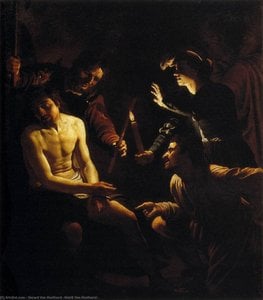
Gerard van Honthorst, rojen leta 1592 v Utrechtu, je bil ključna figura nizozemske zlate dobe. Njegov talent se je razvil pod vodstvom očeta, okrasnega slikarja, a pravo usmeritev je našel pri Abrahamu Bloemaertu, kjer je utrdil osnove risanja in kompozicije. Odločilno potovanje v Rim pa je za vedno spremenilo njegovo umetniško pot. V središču živahne italijanske baročne scene se je srečal z revolucionarnim delom Caravaggia – srečanjem, ki je definiralo njegov prepoznavni slog in mu prineslo vzdevnik “Gherardo delle Notti” (Gerard noči). Dramatična uporaba
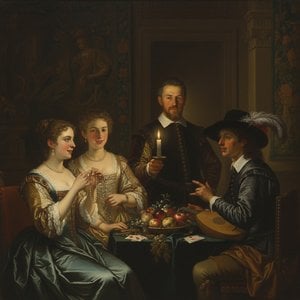
tenebrizma, tehnike, ki izkorišča ostre kontraste med svetlobo in temo, je postala Honthorstov zaščitni znak. Platna so preplavili občutek drame in čustvene intenzivnosti. Vendar ni bil zgolj posnemovalec Caravaggia; prevajal je inovacije italijanskega mojstra v značilno nizozemsko senzibilnost, osredotočal se na intimne prizore, osvetljene z umetnimi viri svetlobe – svečami, lučmi in ognjem – ustvarjal pa je vzdušje, ki je bilo hkrati realistično in globoko gledališko. To obvladovanje svetlobe ni bila le tehnična spretnost; bil je način razkritja karakterjev, vključevanja gledalca v čustveno jedro vsakega prizora.
Od rimske slave do nizozemskega mojstrstva
Honthorstovo obdobje v Rimu je zaznamovalo veliko uspehov in pokroviteljstev. Pridobil naklonitev med mestno elito, vključno z Vincenzom Giustinianijem, za katerega je ustvaril močno “Kristusa pred visokim duhovnikom”, delo, ki ponazarja njegovo mojstrstvo svetlobe in sence. Ta slika, ki jo danes najdemo v londonski National Gallery, prikazuje ne le tehnično spretnost, ampak tudi sposobnost prenesti globoko psihološko globino v svoje figure. Njegov ugled je utrdil z delom za Cosima II. de' Medici, velikega vojvode Toskane, kar dokazuje prilagodljivost in vsestranskost, ki mu bo služila skozi celotno kariero. Ob vrnitvi v Utrecht okoli leta 1620 se je Honthorst hitro uveljavil kot vodilni portretist Nizozemske republike. Njegova sposobnost zajeti ne le fizično podobo, ampak tudi karakter in družbeni status svojih modelov ga je naredila zelo iskanega med bogatimi trgovci, plemiči in celo kraljevo družino. Leta 1623 je postal predsednik ceha sv. Luke v Utrechtu, kar priča o njegovem naraščajočem vplivu znotraj umetniške skupnosti. To obdobje je prineslo razcvet naročil, ki so Honthorstu omogočila izboljšati njegov slog in uveljaviti značilen glas v nizozemskem slikarstvu.
Dvorno ustvarjanje: Naročila in sodelovanja
Honthorstov talent se je razširil tudi onkraj Nizozemske. Njegovo delo je pritegnilo pozornost Sirja Dudleyja Carletona, ki ga je navdušeno priporočil pomembnim angleškim aristokratom, kot sta grof Arundel in lord Dorchester. To je vodilo do naročil od kraljice Elizabete Boemske, sestre Karla I., ki ga je zaposlila tako kot slikarja kot učitelja risanja za svoje otroke. Ti kraljevi stiki so se vrhunili z bistvenimi deli, kot je alegorična upodobitev Karla in Henriette Marie kot Diane in Apolona, zdaj shranjena v palači Hampton Court. Honthorstova pripravljenost sodelovati z drugimi umetniki pa priča o njegovi odprtosti in umetniški velikodušnosti. Slavno je gostil Petra Paula Rubensa med obiskom Utrechta, celo ga upodobil v igrivem prizoru, ki prikazuje Diogena, kako išče poštenega človeka – dokaz vzajemnega spoštovanja med tema baročnima velikanima. Medtem ko so bila nekatera sodelovalna dela, kot je “Jemanje Kristusa”, prvotno pripisana izključno Honthorstu, pa moderna znanost razkriva prispevke drugih umetnikov in poudarja kompleksno dinamiko umetniške produkcije v tem obdobju.
Ta sodelovanja niso bila le o delitvi dela; bili so intelektualne izmenjave, ki so obogatile umetniški kraj.
Zapuščina in Utrecht Caravaggisti
Vpliv Gerarda van Honthorsta je odmeval daleč onkraj njegovega življenja. Bil je ključna figura gibanja *Utrecht Caravaggisti* – skupine nizozemskih slikarjev, ki so sprejele dramatični realizem in
tenebrism Caravaggia. Skupaj z umetniki kot sta Hendrick ter Brugghen in Dirck van Baburen je pomagal uveljaviti značilno nizozemsko interpretacijo italijanskega baročnega sloga. Njegov poudarek na žanrskih prizorih, osvetljenih z umetno svetlobo, njegovi mojstrski portreti in sposobnost prenesti čustveno globino s spretno uporabo chiaroscuro so pustili neizbrisen pečat na razvoju nizozemske zlate dobe. Tudi njegov brat, Willem van Honthorst, je sledil njegovim stopinjah, čeprav so bila njegova dela pogosto napačno pripisana Gerardu zaradi stilističnih podobnosti.
- Honthorstova slikarstva še danes očarajo občinstvo.
- Njegova dramatična lepota in psihološka vpogledljivost so trajne kvalitete.
- Utrdil je svoj položaj kot ključna figura v zgodovini umetnosti.
Honthorstova sposobnost brezhibnega prepletanja italijanskih vplivov z nizozemsko senzibilnostjo je zagotovila njegovo trajno zapuščino, navdihnila pa je generacije umetnikov, ki so sledili za njim. Umrl je v Utrechtu leta 1656 in pustil za seboj delo, ki še naprej osvetljuje umetniški kraj in nas opominja na moč svetlobe in sence pri razkritju človekovega stanja.



 Preverite v realnem okolju
 Preklop na tiskanine
 Pošlji kot čestitko
 Deli
Deli
 Podrobnosti
 Navodila

 Prenesi
 Podobni artefakti
 Rentgenski posnetek
 Predvajaj diaporama
 Statistika


 Preberi več






































 Možnost stekla je na voljo le za velikosti pod 110 cm