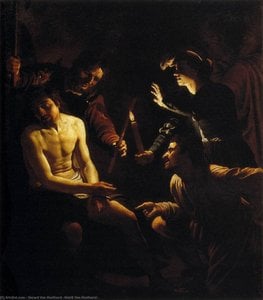
**pionir nizozemske žanrske slikarstva**
Gerard ter Borch, izstopajoča osebnost nizozemskega zlatega obdobja, je s svojimi žanrskimi slikami pustil neizbrisno sled v umetniškem svetu. Rodjen v decembru 1617 in preminil 8. decembra 1681, je Ter Borchev življenjsko pot služila kot dokaz njegove izjemne umetniške spretnosti.
**zgodnje življenje in vplivi**
Čeprav njegovi zgodnji dnevi niso drobno dokumentirani, vemo, da je extensive potoval po Evropi, vključno z Londonom, Nemčijo, Francijo, Španijo in Italijo. Ta izkušnja je razširila njegove umetniške obzorja in močno vplivala na njegov edinstven slog. Tudi njegova sestra,
Gesina ter Borch, je izabrała pot slikarice, kar je še dodatno utrdilo umetniške nagnjenosti njegove družine.
**izstopajoča dela in dosežki**
Med njegovimi vrhunskimi stvaritvami blesti
Črnilo (The Letter), mojstrovina, ki s svojo pokladenostjo prikazuje Ter Borčevo sposobnost zajema tekstur in svetlobe. V delu
Plezan pogovor (The Gallant Conversation), ki ga je graviral Johann Georg Wille, se izvaja umetnikova sposobnost prenosa subtilnih čustev. Njegovo zgodnje delo
Mož na konju (Man on horseback, 1634) razkriva vzrastajoči talent, medtem ko
Prihod Adriana Pauwa v Münster (1646) predstavlja pomembno delo, ki izpostavlja njegovo narrativno moč.
**muzeji in zbirke, ki vključujejo Ter Borčeva dela**
Njegova mednarodna težina je vidna v prestižnih zbirkah po svetu.
Hermitage se ponosno razkaže z šestimi njegovimi deli, kar predstavlja eno največjih zbirk.
Berlin Museum vključuje šest podob, ki dokazujejo njegovo svetovni ugled, medtem ko so tri njegova slik v prestižni zbirki
Getty Center.
**dediščina in vpliv**
Ter Borchev vpliv na nizozemske slikarje, kot so Gabriel Metsu, Gerrit Dou, Eglon van der Neer in Johannes Vermeer, je dobro dokumentiran. Njegov inovativni pristop k žanrskemu slikarstvu ga je postavil v središče umetniške zgodovine.
Gerarda ter Borča trajna dediščina je dokaz njegove inovativne pristopnosti k žanrskemu slikarstvu, ki je vplivala na generacije umetnikov in mu trdno utrdila mesto v letopisu umetnosti.



 Predogled
 Preklop na tiskanine
 Pošlji
 Deli
Deli
 Podrobnosti o delu

 Prenesi
 Podobni izdelki
 Rentgenski posnetek
 Predvajaj diaporama
 Statistika


 Razviljaj več






































 Možnost stekla je na voljo le za velikosti pod 110 cm