PredogledPredogled AR predogledAR predogled Kupi ročno naslikano sliko Kupi ročno naslikano slikoPreklop na digitalno sliko Preklop na digitalno sliko PošljiPošlji
Podrobnosti o deluPodrobnosti o delu Dodaj v priljubljene Dodaj v priljubljene PrenesiPrenesi Podobni izdelkiPodobni izdelki Rentgenski posnetekRentgenski posnetek Predvajaj diaporamaPredvajaj diaporama StatistikaStatistika

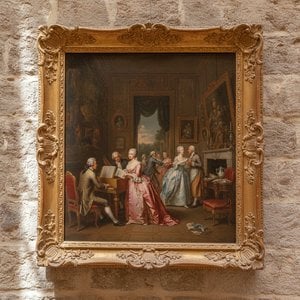
Gallant Conversation, known as

Spoznajte življenje in umetnost Gerarda ter Borcha (1617–1681), mojstra nederškega zlate dobe, znanega po intimnih žanrskih slikah, ki s čudovitim realizmom prikazujejo vsakdan. Odkrijte »Pismo« in še več!

Giclée tisk / Umetniški tisk

Giclée ali platnati odtis muzejske kakovosti z hitro proizvodnjo in prilagodljivimi možnostmi končne obdelave. (Kupi ročno naslikano sliko Kupi ročno naslikano slikoPreklop na digitalno sliko Preklop na digitalno sliko)

P118B $10
P118H $10
P118W $10
P438Z $10
P508JH $12
P508YH $12
P805H $10
P805Z $10
P919BZ $10
P919G $10
P919XJ $10
P959ZH $10
P968JZ $12
W106C $8
W218G $10
W218JH $8
W218Y $10
W307PJ $10
W316G $10
W316PJ $8
W316Y $10
W398PJ $8
W4111J $10
W500HY $15
W500JH $15
W692G $12
W849H $8
W940BG $15
W953PJ $8

Standardna velikost
prilagojeno
CM
INCH

Izberite eno od naših vnaprej določenih velikosti, ki ustrezajo prvotnim proporcijam umetničkega dela.

širina
višina

Svoje dimenzije lahko vnesete sami, da bodo ustrezne za določen okvir ali prostor. Če izbrana velikost ne bo skladna z razmerji izvirne slike, bomo umetniško delo orezali ali podaljšali s pomočjo ogledalnega odraza ali barvno polnega roba. Pred začetkom proizvodnje vam bomo poslali digitalni predogled za potrditev.
Upoštevajte, da predogled na zaslonu ne prikazuje dejanskega orezovanja ali podaljševanja. Le digitalni predogled bo natančno prikazal končno kompozicijo.
Čeprav so na voljo prilagojene velikosti, priporočamo izbiro dimenzije s predhodno določenega seznama, da ohranite prvotna razmerja.

Globalna dostava () v 2 tednih namesto standardnih 4/5 tednov. (9 september)

why_choose_icon
Brezplačna ekspresna dostava po vsem svetu
why_choose_icon
Visokokakovostno laneno platno
why_choose_icon
Popolno zavarovanje pošiljke
why_choose_icon
Garancija povračila carine in uvoznih davkov
why_choose_icon
Garancija popolnega ujemanja barv
why_choose_icon
Politika vračilo v 100 dneh (le v primeru okvar)
why_choose_icon
Garancija 100% povračila denarja
why_choose_icon
Popust pri večjem naročilu

Skupna cena

$ 68

reproduction

Gallant Conversation, known as

Giclée tisk / Umetniški tisk

Velikost reprodukcije

-

Skupna končna cena

$ 68

Ključni podatki

  • Artistic style: Genre painting, realism
  • Influences: European travel
  • Notable elements: Subtle scene, brothel
  • Medium: Oil on panel
  • Dimensions: 73 x 71 cm
  • Artist: Gerard ter Borch
  • Location: Private Collection

Umetniški kviz

Pri vsakem vprašanju je na voljo le eden pravilen odgovor.

Vprašanje 1:
What is the most significant and initially misleading aspect of Gerard ter Borch’s ‘Gallant Conversation’?
Vprašanje 2:
Based on the image description, what specific elements within the room strongly suggest the illicit setting?
Vprašanje 3:
Gerard ter Borch is best known for his work in which genre of painting?
Vprašanje 4:
What historical period does Gerard ter Borch primarily represent in his art?
Vprašanje 5:
Which of the following best describes a key characteristic of Gerard ter Borch’s artistic style?

A Shadowed Intimacy: Unraveling Gerard ter Borch’s *Gallant Conversation*

Gerard ter Borch's *Gallant Conversation*, painted in 1655, is not merely a portrait; it’s an exquisitely rendered tableau of veiled secrets and subtle anxieties. Initially known as “The paternal admonition,” the painting quickly revealed a far more complex narrative – one that challenged viewers at the time and continues to intrigue today. It's a masterful example of Dutch Golden Age genre painting, showcasing ter Borch’s unparalleled ability to capture not just appearances but the very essence of human interaction, particularly within the confines of a private, almost clandestine setting.

The scene unfolds within a modestly furnished room, bathed in a muted red light that casts long shadows and adds an air of mystery. A young soldier, strikingly handsome yet undeniably youthful, occupies a central position, engaged in conversation with a woman of considerable elegance – likely a courtesan or prostitute. A third figure, a woman holding a glass, observes the interaction from a distance, her expression hinting at both amusement and perhaps a degree of control. The inclusion of a dog, casually observing the scene, further contributes to the feeling that this is a carefully constructed tableau, a staged moment rather than an impromptu gathering. The deliberate ambiguity surrounding the relationships – who is admonishing whom? – is precisely what makes this painting so compelling.

The Delicate Dance of Light and Shadow: Ter Borch’s Technique

Ter Borch's genius lies in his painstaking attention to detail and his revolutionary approach to light. Unlike many of his contemporaries, he eschewed the dramatic chiaroscuro favored by Rembrandt, opting instead for a subtle, almost photographic realism. He meticulously built up layers of translucent glazes, creating an astonishingly delicate surface texture that captures the sheen of silk, the gleam of metal, and the softness of skin with remarkable precision. Notice how the light catches the folds of the woman’s dress, revealing the intricate weave, or how it subtly illuminates the soldier's face, highlighting his youthful features and a hint of vulnerability. This technique wasn’t simply about realism; it was about capturing the *atmosphere* of the scene – a sense of quiet contemplation punctuated by unspoken tensions.

  • Glazing Technique: Ter Borch employed countless thin layers of translucent paint, building up color and depth gradually.
  • Subtle Modeling: He masterfully used light and shadow to sculpt the figures, creating a sense of volume and form without resorting to harsh contrasts.
  • Attention to Texture: The meticulous rendering of fabrics, metal, and skin demonstrates his dedication to capturing the tactile qualities of the scene.

A Brothel in Disguise: Historical Context and Symbolism

The painting’s true subject matter – a clandestine meeting within a brothel – was initially met with considerable debate. The original title, “The paternal admonition,” suggested a familial setting, leading to confusion about the nature of the scene. However, clues abound that point towards a more illicit reality: the bed in the background, the table with a mirror (a common feature in such establishments), and the overall atmosphere of intimacy and veiled intent. This ambiguity reflects the social realities of 17th-century Amsterdam – a city rife with wealth, commerce, and a thriving underworld. Ter Borch’s willingness to depict this darker side of society was remarkably bold for his time.

The soldier's youth is particularly significant. He isn’t a father dispensing wisdom; he’s a young man indulging in the pleasures of the flesh, suggesting themes of youthful folly and the corrupting influence of wealth. The woman observing from afar embodies a certain power – perhaps ownership or control – while the courtesan herself represents allure and danger.

Capturing Emotion: A Portrait of Quiet Tension

*Gallant Conversation* is not a painting that shouts; it whispers. It’s a study in restraint, conveying a complex web of emotions through subtle gestures and averted glances. The figures are caught in a moment of quiet contemplation, their faces betraying a mixture of curiosity, amusement, and perhaps even apprehension. The overall effect is profoundly unsettling – a reminder that appearances can be deceiving and that beneath the surface of polite conversation often lie hidden desires and unspoken truths. This painting’s enduring power lies in its ability to evoke a sense of unease and intrigue, prompting viewers to question what they are seeing and, more importantly, what they *aren't* being told.


Biografija umetnika

**pionir nizozemske žanrske slikarstva**

Gerard ter Borch, izstopajoča osebnost nizozemskega zlatega obdobja, je s svojimi žanrskimi slikami pustil neizbrisno sled v umetniškem svetu. Rodjen v decembru 1617 in preminil 8. decembra 1681, je Ter Borchev življenjsko pot služila kot dokaz njegove izjemne umetniške spretnosti.

**zgodnje življenje in vplivi**

Čeprav njegovi zgodnji dnevi niso drobno dokumentirani, vemo, da je extensive potoval po Evropi, vključno z Londonom, Nemčijo, Francijo, Španijo in Italijo. Ta izkušnja je razširila njegove umetniške obzorja in močno vplivala na njegov edinstven slog. Tudi njegova sestra, Gesina ter Borch, je izabrała pot slikarice, kar je še dodatno utrdilo umetniške nagnjenosti njegove družine.

**izstopajoča dela in dosežki**

Med njegovimi vrhunskimi stvaritvami blesti Črnilo (The Letter), mojstrovina, ki s svojo pokladenostjo prikazuje Ter Borčevo sposobnost zajema tekstur in svetlobe. V delu Plezan pogovor (The Gallant Conversation), ki ga je graviral Johann Georg Wille, se izvaja umetnikova sposobnost prenosa subtilnih čustev. Njegovo zgodnje delo Mož na konju (Man on horseback, 1634) razkriva vzrastajoči talent, medtem ko Prihod Adriana Pauwa v Münster (1646) predstavlja pomembno delo, ki izpostavlja njegovo narrativno moč.

**muzeji in zbirke, ki vključujejo Ter Borčeva dela**

Njegova mednarodna težina je vidna v prestižnih zbirkah po svetu. Hermitage se ponosno razkaže z šestimi njegovimi deli, kar predstavlja eno največjih zbirk. Berlin Museum vključuje šest podob, ki dokazujejo njegovo svetovni ugled, medtem ko so tri njegova slik v prestižni zbirki Getty Center.

**dediščina in vpliv**

Ter Borchev vpliv na nizozemske slikarje, kot so Gabriel Metsu, Gerrit Dou, Eglon van der Neer in Johannes Vermeer, je dobro dokumentiran. Njegov inovativni pristop k žanrskemu slikarstvu ga je postavil v središče umetniške zgodovine. Gerarda ter Borča trajna dediščina je dokaz njegove inovativne pristopnosti k žanrskemu slikarstvu, ki je vplivala na generacije umetnikov in mu trdno utrdila mesto v letopisu umetnosti.
Gerard Ter Borch

Gerard Ter Borch

1617 - 1681 , Nederlandija

Hitri podatki

  • Artistic Movement Or Style: Žanrska slikarstvo
  • Artists Or Movements Influenced By This Artist: ['Diego Velázquez']
  • Artists Who Influenced This Artist:
    • Gabriel Metsu
    • Gerrit Dou
    • Eglon van der Neer
    • Johannes Vermeer
  • Date Of Birth: December 1617
  • Date Of Death: 8 December 1681
  • Full Name: Gerard ter Borch
  • Nationality: Nizozemski
  • Notable Artworks:
    • Črnilo (The Letter)
    • Dvorovni pogovor (The Gallant Conversation)
    • Moški na konjah (Man on horseback)
    • Prihod Adriana Pauwja v Münster (Adrian Pauw's arrival in Münster)
  • Place Of Birth: Zwolle, Nizozemska
Raziščite umetniška dela, razvrščena po temah, slogih in značilnostih.