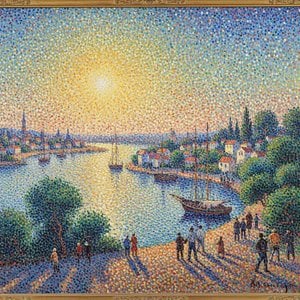
Biografija umetnika
Življenje in umetnost: Georges Seurat, pionir svetlobe in barve
Georges Pierre Seurat, rojen leta 1859 v Parizu, je bil slikar in risar, katerega kratko, a izjemno intenzivno ustvarjanje je za vedno spremenilo potek umetnosti. Njegova zapuščina se nadaljuje skozi generacije, saj njegovo delo še danes navdušuje občinstvo po vsem svetu. Seurat ni bil le slikar; bil je znanstvenik barve, matematični mislec in vizionarski umetnik, ki je s svojo edinstveno tehniko Pointillizma ustvaril svet, kjer se barva premika, diha in živi. Njegova zgodnja leta so bila zaznamovana z akademsko izobrazbo – študiral je na École Municipale de Sculpture et Dessin ter kasneje na prestižni École des Beaux-Arts, kjer je osvojil tehnične veščine, ki so bile ključne za njegovo poznejše inovacije. Vendar pa ga ni zadovoljila le reprodukcija tradicionalnih tem; želel je raziskati naravo svetlobe in barve na način, ki bi presegel meje impresionizma.
Od akademskih korenin do chromoluminarizma
Seuratovo umetniško potovanje ni bilo nagel prelom, ampak postopna evolucija, podpirana z intelektualno radovednostjo in natančnim eksperimentiranjem. Čeprav so se njegove zgodnje slike odlikovale s tradicionalnimi akademskimi pristopi, je kmalu začel dvomiti o teh konvencijah in iskal bolj znanstveni pristop k slikanju. Potapljal se je v raziskave teorije barve, proučeval dela znanstvenikov, kot sta Michel Eugène Chevreul in Ogden Rood, ki so raziskovali optične učinke združenih barv. Ta raziskava je postala temelj njegove revolucionarne tehnike – chromoluminarizma, znanosti o barvi, in njene praktične uporabe, Pointillizma. Osrednja ideja je bila preprosta: nanašati majhne, ločljive pike čiste barve na platno, pri čemer se zanaša na oko gledalca, da jih optično združi in ustvari živahni učinek. To ni bilo le o doseganju svetlejših barv; šlo je za razumevanje tega, kako človeški vidni sistem zaznava svetlobo in barvo ter izkoriščanje tega znanja za ustvarjanje bolj dinamičnega in privlačnega slikarskega doživetja. Njegova dela so bila temeljito pripravljena s Conté kredo na grobem papirju, kjer je skrbno načrtoval postavitev vsake pike, kar kaže na skoraj matematično natančnost v njegovem umetniškem procesu.
Pomembna dela in umetniška vizija
Kronanje Seuratovih raziskav in eksperimentiranja je morda najboljši primer A Sunday Afternoon on the Island of La Grande Jatte (1884-1886), monumentalno delo, ki je zaznamovalo začetek Neo-Impresionizma. Ta ikonična slika, ki prikazuje parižane, ki uživajo v sproščenem popoldnevu ob Seni, razstavlja njegovo pointilistično tehniko v polni meri. Figure, upodobljene kot skrbno postavljene pike barve, se zdijo sijajne in vibrirajoče s svetlobo, kar ustvarja vzdušje mirne tišine. Alfalfa, Saint-Denis (1886-1887) prikazuje uporabo teorije barve v podeželski pokrajini, medtem ko zgodnja dela, kot je Landscape at Saint-Ouen (1882-1883), razkrivajo njegovo razvijajočo se tehniko in naraščajoče zanimanje za zajem učinkov svetlobe in atmosfere. Celotna upodabljanje sodobnega pariškega življenja, kot je The Eiffel Tower (1889), je bila spremenjena s pomočjo njegove edinstvene tehnike, kar kaže na harmonično združevanje industrijske moderne in umetniške inovacije. Bathers at Asnières (1884), še eno pomembno delo, je raziskovalo teme prostega časa in sodobnega življenja s svojim značilnim stilom, napovedujoč bolj izpopolnjeno tehniko, ki jo vidimo v *La Grande Jatte*. Ta dela niso bila le upodobitve prizorov; bili so skrbno konstruirani vizualni poskusi, namenjeni raziskovanju možnosti barve in percepcije.
Trajna zapuščina: Vpliv in zgodovinski pomen
Kljub kratkemu življenju – Seurat je umrl leta 1891 pri le 31 letih – je njegov vpliv na svet umetnosti bil globok in daleč segajoč. Njegovo delo je izzvalo tradicionalne umetniške konvencije, odprlo pot številnim kasnejšim gibanjem. Poudarek na subjektivnem izrazu in raziskovanju novih tehnik je resoniral z umetniki, ki so si želeli prestopiti akademske omejitve. Seuratov vpliv je mogoče opaziti pri delih Fauvistov, ki so sprejeli krepko barvo in izrazito črtanje; Kubistov, ki so razgradili oblike na geometrijske elemente; ter Abstract Expressionistov, ki so dali prednost čustveni intenzivnosti in spontanemu gestu. Njegov znanstveni pristop k slikanju, čeprav sprva kontroverzen, je sčasoma razširil definicijo umetniške možnosti. Dokazal je, da lahko umetnost združuje intelektualno rigorost in čustveno izraznost – sintezo, ki še danes navdihuje umetnike. Seuratova zapuščina sega onkraj njegovih tehničnih inovacij; pustil je za sabo korpus del, ki ujame bistvo sodobnega življenja z neprimerljivo natančnostjo in lepoto, s čimer je utrdil svoj položaj pravega pionirja moderne umetnosti. Njegova dela ostajajo priče moči opazovanja, eksperimentiranja in trajne človeške želje, da razume svet okoli sebe skozi lečo umetniškega izražanja.



 Predogled
 Kupi ročno naslikano sliko
 Pošlji
 Deli
Deli
 Podrobnosti o delu

 Prenesi
 Podobni izdelki
 Rentgenski posnetek
 Predvajaj diaporama
 Statistika

 Razviljaj več






































 Možnost stekla je na voljo le za velikosti pod 110 cm