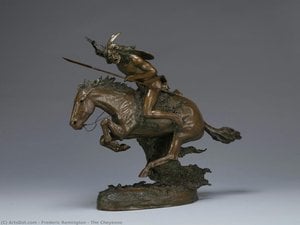
Kronist Izginjajočega Zahoda: Življenje in Umetnost Frederica Remingtona
Frederic Sackrider Remington, rojen v Cantonu, New Yorku, 4. oktobra 1861, ni bil produkt Divjega Zahoda, ki ga je tako živo upodobil; temveč vzhodnik, ki je svojo umetniško identiteto oblikoval s fascinacijo in predanim študijem. Njegovo poreklo je namigovalo na življenje daleč od prašnih poti in kavalerijskih napadov – francosko baskovsko dediščina se je prepletala z močno republikanskim New Englandom, očetom, ki je bil polkovnik državljanske vojne in urednik časopisa, ter povezavami s slavno dinastijo Remington Arms prek oddaljenih sorodnikov. A zgodnje izpostavljenost vojaškim motivom, skupaj z nemirnim duhom in ostrim očesom za pripovedovanje zgodb, ga je usmerila na pot k temu, da postane morda najbolj prepoznaven umetnik Ameriške zahodne scene. Njegovo otroštvo se je preselilo v Bloomington, Illinois, nato nazaj v Canton in končno Ogdensburg, New York, a njegova domišljija je ostala očarana s pripovedmi o življenju na mejah. Čeprav ga je sprva usmeril vojaško izobrazba na Vermont Episcopal Institute, Remingtonov pravi poklic ni bil slediti ukazom, temveč opazovati in interpretirati svet okoli sebe prek umetnosti. Kratek čas na univerzi Yale je to potrdil; nogomet in skiciranje sta bila veliko bolj privlačna od formalnih študijev.
Od Ilustratorja do Slikarja: Oblikovanje Umetniške Vizije
Remingtonovo umetniško potovanje se ni začelo z velikimi platni, temveč s črnilom in papirjem. Njegovo prvo objavljeno delo, strip za *Yale Courant*, je nakazovalo na zgodnjo sposobnost ujemanja akcije in pripovedi. Odločilno potovanje v Montano leta 1881 je sprožilo njegovo celoživotno obsesijo z Zahodom. To ni bil le pogled turista; Remington se je želel potopiti v kulturo, opazovati kavboje, domorodce in samo pokrajino. Sprva je poskusil s kmetovanjem in rudarjenjem, a to se ni izšlo, kar mu je omogočilo, da se v celoti posveti umetnosti. Ob vrnitvi na vzhod se je hitro uveljavil kot ilustrator za revije *Harper's Weekly* in *Collier’s*, njegove dinamične upodobitve zahodne scene pa so očarale nacionalno publiko, ki je bila lačna zgodb o mejah. Te ilustracije niso bile zgolj poročilo; bili so prežeti s dramatičnostjo, energijo in romantično vizijo Zahoda, ki je globoko odmevala v javni domišljiji. S tem delom je Remington izpilil svoje spretnosti v kompoziciji, ujemanju gibanja in sporočanju čustev – lastnosti, ki bodo kasneje definirale njegove slike. Minimalno formalno usposabljanje je prejel le nekaj tečajev risanja na Yaleu in kratkega obdobja na Art Students League, namesto tega pa je razvil značilen slog, za katerega so bili značilni energična črtna dela, drzne barve in osredotočenost na realizem, pomešan z dramatičnim sijajem.
Ujeti Izginjajoči Svet: Teme in Stil
Remingtonova umetnost je neločljivo povezana s specifičnim trenutkom v ameriški zgodovini – mrakom Starega Zahoda. Njegova platna naseljujejo ikonične figure: robustni kavboji, ki gnajo govedo, stoični domorodci, soočeni z izseljevanjem, in vojaki ZDA, udeleženi v herojskih bitkah in tragičnih konfliktih. Ni se izogibal prikazovanju težkih resnic življenja na mejah, a njegovo delo pogosto nagiba k romantični upodobitvi, poudarja pogum, avanturo in trk kultur.
Njegove slike niso zgolj zgodovinski dokumenti; so sugestivne pripovedi, ki raziskujejo teme heroizma, izgube in neizogibnega napredka. Remingtonov slog se je sčasoma spreminjal, od tesnejših, bolj akademskih upodobitev do ohlapnejših, ekspresivnejših črtnih del. Bil je mojster ujemanja gibanja – konji galopirajo po ravnicah, kavboji se borijo z govedo, vojaki napadajo v bitki.
Pogosto je uporabljal hitre skice in fotografije kot referenčni material, a njegova umetnost je vedno presegla zgolj posnemanje, prežeta z lastno edinstveno vizijo in čustveno intenzivnostjo. Pomembna dela, kot so *My Ranch*, *Waiting in the Moonlight*, *Ridden Down* (1905) in *The Long-Horn Cattle Sign* (1908), ponazarjajo njegovo sposobnost ujemanja veličine in ranljivosti Ameriške zahodne scene.
Zapuščina in Trajni Vpliv
Frederic Remington je nepričakovano umrl leta 1909 v starosti 48 let, za seboj pa je pustil obsežno delo, ki še danes očara občinstvo. Njegov vpliv na zahodno umetnost je nesporna; ni samo upodobil Zahoda, temveč ga je pomagal *opredeliti* za generacije Američanov. Vzpostavil je vizualni jezik mej – ikonografijo kavbojev, Indijancev in konjenice, ki se je globoko ugnezdila v popularni kulturi.
- Njegovo delo je navdihnilo številne druge umetnike, vključno z N.C. Wyethom in Zanom Greyem.
- Muzej umetnosti Frederica Remingtona v Ogdensburgu, New York, stoji kot pričevanje o njegovi trajni zapuščini, saj hrani obsežno zbirko njegovih slik, skulptur in arhivskega gradiva.
- Njegova umetnost je še vedno razstavljena v večjih muzejih po državi, vključno z Metropolitanskim muzejem umetnosti in Amon Carter Museum of American Art.
Remingtonove upodobitve, čeprav so jih včasih kritizirali zaradi njihove romantične predstave Zahoda, ponujajo dragocen vpogled v ključno obdobje v ameriški zgodovini. Ujel ni samo to, *kaj je bilo*, temveč tudi to, *v kaj so ljudje verjeli* o Zahodu – njegove mite, legende in trajni čar. Ostaja močan simbol ameriškega duha—kronist izginjajočega sveta, ki ga je spremenil v trajno umetniško zapuščino.



 Preklop na tiskanine
 Pošlji
 Deli
Deli
 Podrobnosti o delu

 Prenesi
 Podobni izdelki
 Predvajaj diaporama
 Statistika


 Razviljaj več