Preverite v realnem okolju Predogled v AR Preklop na tiskanine Preklop na digitalno sliko Pošlji kot čestitko
Podrobnosti Priročnik Dodaj v priljubljene Prenesi Podobni artefakti Rentgenski posnetek Predvajaj diaporama Statistika

The Bather

Admire François Lemoyne's 'The Bather,' a captivating Rococo masterpiece showcasing classical beauty and serene landscapes. Explore the artistry & details of this iconic Hermitage Museum painting.

François Lemoyne (1688-1737): Pariški rokokov avtor, ki je oživljal grandiozne alegorije pod vplivom Rubensa. Raziskujte njegovo dediščino elegance in baroknega sjaja!

Ročno izdelana oljna reprodukcija

Ročno slikano olje na platnu v vaši izbiri velikosti in okvirja, izdelano po naročilu naših umetnikov. ( Preklop na tiskanine Preklop na digitalno sliko)

Corner sample of the P118B picture frame: izoblit polistiren, 5 cm wide and 3 cm thick
P118B €10
Corner sample of the P118H picture frame: izoblit polistiren, 5 cm wide and 3 cm thick
P118H €10
Corner sample of the P118W picture frame: izoblit polistiren, 5 cm wide and 3 cm thick
P118W €10
Corner sample of the P438Z picture frame: izoblit polistiren, 5.5 cm wide and 3.5 cm thick
P438Z €10
Corner sample of the P508JH picture frame: izoblit polistiren, 7 cm wide and 3.5 cm thick
P508JH €12
Corner sample of the P508YH picture frame: izoblit polistiren, 7 cm wide and 3.5 cm thick
P508YH €12
Corner sample of the P805H picture frame: izoblit polistiren, 5 cm wide and 3.5 cm thick
P805H €10
Corner sample of the P805Z picture frame: izoblit polistiren, 5 cm wide and 3.5 cm thick
P805Z €10
Corner sample of the P919BZ picture frame: izoblit polistiren, 7 cm wide and 3.5 cm thick
P919BZ €10
Corner sample of the P919G picture frame: izoblit polistiren, 7 cm wide and 3.5 cm thick
P919G €10
Corner sample of the P919XJ picture frame: izoblit polistiren, 7 cm wide and 3.5 cm thick
P919XJ €10
Corner sample of the P959ZH picture frame: izoblit polistiren, 5 cm wide and 3 cm thick
P959ZH €10
Corner sample of the P968JZ picture frame: izoblit polistiren, 6 cm wide and 4 cm thick
P968JZ €12
Corner sample of the W106C picture frame: masivno drevo, 5 cm wide and 3 cm thick
W106C €8
Corner sample of the W218G picture frame: masivno drevo, 5 cm wide and 3 cm thick
W218G €10
Corner sample of the W218JH picture frame: masivno drevo, 5 cm wide and 3 cm thick
W218JH €8
Corner sample of the W218Y picture frame: masivno drevo, 5 cm wide and 3 cm thick
W218Y €10
Corner sample of the W307PJ picture frame: masivno drevo, 6 cm wide and 3 cm thick
W307PJ €10
Corner sample of the W316G picture frame: masivno drevo, 6 cm wide and 3 cm thick
W316G €10
Corner sample of the W316PJ picture frame: masivno drevo, 6 cm wide and 3 cm thick
W316PJ €8
Corner sample of the W316Y picture frame: masivno drevo, 6 cm wide and 3 cm thick
W316Y €10
Corner sample of the W398PJ picture frame: masivno drevo, 5 cm wide and 3 cm thick
W398PJ €8
Corner sample of the W4111J picture frame: masivno drevo, 6.5 cm wide and 3.5 cm thick
W4111J €10
Corner sample of the W500HY picture frame: masivno drevo, 7 cm wide and 5 cm thick
W500HY €15
Corner sample of the W500JH picture frame: masivno drevo, 7 cm wide and 5 cm thick
W500JH €15
Corner sample of the W692G picture frame: masivno drevo, 8 cm wide and 4 cm thick
W692G €12
Corner sample of the W849H picture frame: masivno drevo, 5 cm wide and 3 cm thick
W849H €8
Corner sample of the W940BG picture frame: masivno drevo, 7.5 cm wide and 4.5 cm thick
W940BG €15
Corner sample of the W953PJ picture frame: masivno drevo, 6 cm wide and 3.5 cm thick
W953PJ €8

Standardna velikost
po meri
CM
INCH

Izberite eno od naših vnaprej določenih velikosti, ki ustrezajo prvotnim proporcijam umetničkega dela.

širina
višina

Vnesite širino in višino, ki jih potrebujete, da se slika prilega vašemu okviru ali steni. Ker je delo ročno slikano, lahko umetnik pri različnih oblikih slik pri robovih doda malo več barve ali pa jih malo odreže — izberite sami. Pred začetkom slikanja vam pošljemo digitalni predogled za potrditev. Slika, prikazana na tej strani, ni končni rezultat — le predogled prikazuje dejansko podobo.

Primeri možnih sprememb: Zamenjava obraza s fotografijo stranke; Dodajanje hišnega ljubljenčka (npr. zamenjava mačke s psom); Vključitev skritega sporočila v ozadje; Sprememba pokrajine ali elementov v ozadju.
Po oddaji naročila bo ekipa WahooArt.com stranki po e-pošti poslala navodila in predogled digitalnega predogleda.

Mednarodna dostava () v 3/4 tednih namesto običajnih 5 tednov. (23 oktober). Brez kompromisov pri kakovosti.

Brezplačna ekspresna dostava po vsem svetu
Visokokakovostno laneno platno
Popolno zavarovanje pošiljke
Garancija povračila carine in uvoznih davkov
Garancija popolnega barvnega ujemanja
Politika vračila v 100 dneh (le v primeru okvar)
Garancija 100% povračila denarja
Popust pri večjem naročilu

Skupna cena

€ 239

The Bather

Tehnika reprodukcije

Velikost reprodukcije

-

Skupna cena

€ 239

Hitri podatki

  • Subject or theme: Nude bathing scene
  • Artist: François Lemoyne
  • Movement: Rococo
  • Medium: Oil on canvas
  • Dimensions: 137 x 105 cm

Kviz o umetnosti

Pri vsakem vprašanju je na voljo le eden pravilen odgovor.

Vprašanje 1:
What artistic movement is most closely associated with François Lemoyne’s ‘The Bather’?
Vprašanje 2:
In the painting 'The Bather', what is depicted in the background landscape?
Vprašanje 3:
According to the description, what is a key characteristic of Lemoyne’s style as demonstrated in ‘The Bather’?
Vprašanje 4:
What year was François Lemoyne born?
Vprašanje 5:
The painting ‘The Bather’ is housed in which museum?

François Lemoyne’s “The Bather”: A Baroque Embrace of Form and Nature

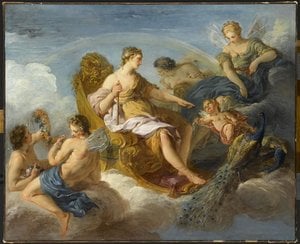
François Lemoyne's "The Bather," housed within the venerable halls of the Hermitage Museum in St. Petersburg, is more than a simple depiction of two women enjoying a tranquil moment; it’s a masterful distillation of 18th-century Rococo aesthetics, imbued with the grandeur and intellectual depth sought by its creator. Painted around the mid-1720s, this oil on canvas work offers a glimpse into a world where classical ideals intertwined with the burgeoning sensuality of the era, showcasing Lemoyne’s skill in capturing both human form and the harmonious relationship between figure and landscape.

Lemoyne, born in Paris in 1688, was a dedicated revivalist. He sought to resurrect the monumental allegorical paintings that had fallen out of favor since the time of Charles Le Brun, viewing himself as a worthy successor to this illustrious tradition. Unlike mere decorative works, Lemoyne aimed for pieces possessing significant intellectual weight and emotional resonance – a reflection of the complex spirit of the Rococo period while simultaneously drawing upon the stability and balance of classical art. The painting’s composition immediately establishes this duality; the figures are presented within a carefully constructed natural setting, yet their poses and gazes convey a subtle interplay of observation and intimacy.

A Study in Drapery and Light

The immediate impact of “The Bather” lies in its exquisite rendering of form and texture. Lemoyne’s mastery of drapery is particularly noteworthy. The flowing garments enveloping the figures are not merely decorative; they actively contribute to the sense of movement and life within the scene. Each fold, pleat, and drape appears sculpted with meticulous detail, suggesting a tactile quality that invites the viewer to almost reach out and feel the fabric’s weight and texture. This is further enhanced by Lemoyne's skillful use of light and shadow – a hallmark of Baroque technique—which models the curves of the bodies and creates a sense of depth within the landscape.

The background, depicting a serene woodland scene with trees and foliage rendered in soft blues and greens, provides a tranquil counterpoint to the figures. The sky, dotted with clouds, reinforces this atmosphere of peaceful contemplation. Notice how Lemoyne subtly integrates the natural elements into the composition; the branches of the trees frame the women, creating a sense of enclosure and intimacy while simultaneously emphasizing their connection to the surrounding environment. Research reveals that Lemoyne’s time in Venice and Rome profoundly influenced his approach, evident in the vibrant local colors used to depict the foliage – a departure from the more muted palettes often favored in Parisian art at the time.

Symbolism and the Rococo Ideal

While seemingly simple in its subject matter, “The Bather” is rich in symbolic potential. The act of bathing itself held multiple meanings during the 18th century – representing purification, renewal, and a connection to nature. The two women, positioned in close proximity yet engaged in distinct activities, invite speculation about their relationship. One appears to be lost in thought, while the other observes her companion with a gentle curiosity. This subtle dynamic speaks to the complexities of human interaction and the enduring fascination with the mysteries of the female psyche – themes frequently explored within the Rococo style.

The painting’s overall mood is one of understated elegance and quiet beauty. It's a testament to Lemoyne’s ability to capture not just the physical likeness of his subjects, but also their inner lives—a skill that cemented his place as a significant figure in the transition from Baroque formality to the more playful sensibilities of the Rococo era. WahooArt offers meticulously crafted hand-painted reproductions that faithfully recreate this exquisite work, allowing you to experience its timeless beauty and intellectual depth firsthand.

Bringing “The Bather” Home

Reproductions of "The Bather" by WahooArt are available in a range of sizes, ensuring that you can find the perfect piece to complement your interior design. Whether adorning a formal salon or adding a touch of classical grace to a more casual space, this painting’s serene beauty and masterful technique will undoubtedly captivate viewers for years to come. Explore our collection today and bring a touch of 18th-century French artistry into your home.

Vprašanja in odgovori

Katera barva najbolj izstopa v delu "The Bather"?

Prevladujoča barva dela "The Bather" avtorja François Lemoyne je Espresso (#5a4933).

Kakšno paleto barv in kakšen občutek združuje "The Bather"?

Paleta Earthy dela "The Bather" avtorja François Lemoyne se dopolnjuje z njegovim Tranquil čustvenim tonom. Barva je eden od načinov, s katerimi delovaje izražajo čustva.

Ali se izvence "The Bather" nahaja v državi svojega ustvarjalca?

Ne – umetniško delo se nahaja v tujini. Rodna država umetnika François Lemoyne je Francija, original dela "The Bather" pa se nahaja v muzeju v državi Rusija.


Biografija umetnika

Parizško dediščino v rokokoskem sijaju

François Lemoyne, ime, ki morda ni tako takoj적으로 prepoznano kot imena njegovih sodobnikov Boucher ali Watteau, vendar vseeno zavzema pomembno mesto v tapiseriji francijske umetnosti 18. stoletja. Lemoyne, rojen v Parizu leta 1688, je svoje življenje posvetil oživljanju veličastnosti velikoredimskih alegoričnih slik—tradicije, ki je nekoliko zamlodela od dobe Charlesa Le Bruna, kiga je Lemoyne globoko občudoval in se trudil zanj imitirati. Njegova ambicija ni bila le v dekoraciji, temveč v ustvarjanju del, prežetih z intelektualno težo in čustvenim odmevom, ki odražajo kompleksnega duha obdobja rokokov in hkrati posegajo nazaj k bolj klasičnemu idealu. Od zgodnjega usposabljanja pod očami očeta, Roberta le Vrac, in kasneje v strogem okolju Académie Royale de peinture et de sculpture, je Lemoyne pokazal predanost mojstra tehničnim veščinam in umetniški izraznosti. Njegova formalna izobrazba pri Louisu Gallocheju in Pierre-Jacquesu Cazeju je bila ključnega pomena, še posebej pri razvijanju njegove subtilne razumevanja barv—karakteristike, ki je postajala vse bolj izrazita skozi njegovo karierno pot. Preželjen Prix de Rome leta 1711 je predstavljal ključni trenutek, čeprav so finančne omejitve sprva zamdelovale njegovo pot v Italijo; potovanje, ki ga je končno opravil leta 1723 v spremljanju Françoisa Bergerja.

Italski odmevi in rokokovski okrasji

Italsko bivanje se je za Lemoyneja izkazalo kot preobrazilno. S potopljanjem v dela renesančnih mojstrov, kot so Raphael, Correggio in Titian, je vpojil njihove tehnike in estetična načela, s čimer je obogatil svoj umetniški jezik. Vendar je bila prav dinamična energija Petra Paula Rubensa tista, ki je pustila neizbrisen след na njegov slog—kar je vidno v njegovi živahni barvni paleti in dramatičnih kompozicijah. Stik z venecijansko slikarstvom v znameniti zbirki Pierreja Crozata je še dodatno izpilil njegove občutljivosti in spodbudil ljubezen do bogatih tekstur ter atmosferičnih učinkov. Ti vplivi so se združili v značilno rokokovsko estetiko, ki jo odlikuje eleganca, ornamentika in osredotočenost na dekorativno lepoto. Kljub temu Lemoyne nikoli popolnoma ni opustil ambicije velike pripovestnosti, ki je definiral zgodnje francusko akademsko slikarstvo; iskal je sintezo teh na videz različnih elementov—lahkost in gracio rokokov ter intelektualno rigoroznost klasične tradicijo. Ta edinstvena zlitva je tisto, kar njegovo del loči od drugih in prispeva k njegovi trajni privlačnosti.

Versailles in kraljevsko priznanje

Lemoynejeva umetniška dovršenost se je najsplošneje izrazila v njegovih monumentalnih stropnih freskah, predvsem v delu L'Apothéose d'Hercule (Apotheosis Hercula) v Salon d’Hercule v palači Versailles. To vrhunsko delo—očarajoč prikaz iluzionistične tehnike in dinamične kompozicije—je takoj doseglo široko priznanje. Sodobniki, kot sta Voltaire in kardinal Fleury, so pohvalili njegovo briljantnost in v njem prepoznali mojstra svoje umetnosti. Pozas Versailles je izvajal tudi pomembne religiozne naročila, kot je Preobraženje v prezreku cerkve Jacobin (zdaj župnijska cerkev sv. Toma d’Aquin) v Parizu, s čimer je dokazal svojo vsestranost in sposobnost prilagajanja sloga različnim temam. Leta 1736 je Lemoyne dosegel vrhunec svoje kariere z任命om za Premier peintre du roi (prvega kraljevega slikarja) pod Louisom XV—kar je bilo spet priznanje njegovim umetnijskim dosežkom in položaju na francuskem dvoru.

Tragičen konec in trajni vpliv

Kljub temu, da je dosegal takšne visine, se je Lemoynejevo življenje tragično končalo z samomorji leta 1737. Njegova prezgodnja smrt ni pomenila le osebnega izguba, temveč je signalizirala tudi premik v umetniških okusih; zazadila je upad popularity velikoredimskih alegoričnih stropnih slik, ki jih je tako strastno zastopal. Kljub temu je njegovo dediščino ohranilo njegovo šolstvo, vključno z izjemnimi umetniki, kot sta Charles-Joseph Natoire in François Boucher, ki sem mu prenesli svoje znanje in veščine. Čeprav morda danes ni tako univerzalno slavljen kot nekateri njegovi sodobniki, se Lemoynejev prispevek k francosko rokokovski umetnosti vse bolj cenimo zaradi njegove tehnične mojstre, umetniške ambicije in edinstvene sinteze klasičnih idealov z prevailingo estetiko njegove dobe. Njegova dela ostajajo spomenik predanemu umetniku, ki je želel slikarstvo dvigniti na njegovo najvišjo obliko—dediščino, ki še stoletja pozneje navdihuje in očarava gledalce. Ključna dela in umetniški prispevek
  • Stropne freske: Lemoynejevi najslavnejši dosežki, ki jih ponazarja L'Apothéose d'Hercule, prikazujejo njegovo mojstvo iluzionističnih tehnik in dinamične kompozicije.
  • Mitološke scene: Dela, kot je Hercules and Omphale, dokazująjo njegovo sposobnost prikazovanja klasičnih pripovestij z dramatično intenzivnostjo in čutno gracio.
  • Religijska slika: Preobraženje je primer njegove veščine pri prikazovanju religioznih motivov z čustveno globino in tehnično natančnostjo.
  • Portretiranje: Njegov portret pod naslovom Glava kralja Ludvika XV. razkriva subtilno razumevanje lika ter mojstvo v tehniki oglja in pastelja.

François Lemoyne

François Lemoyne

1688 - 1737 , Francija

Ključne informacije

  • Artistic Movement Or Style: Rococo
  • Artists Or Movements Influenced By This Artist:
    • Natoire
    • Boucher
  • Artists Who Influenced This Artist:
    • Rubens
    • Raphael
    • Correggio
    • Titian
    • Cazes
  • Date Of Birth: 1688
  • Date Of Death: 1737
  • Full Name: François Lemoyne
  • Nationality: Francoz
  • Notable Artworks:
    • Apotheoza Herkulesa
    • Herkul in Omfala
    • Persej in Andromeda
    • Glava kralja Ludvika XV.
    • Preobraženje
  • Other Names: François Le Moine
  • Place Of Birth: Pariz, Francija