


Giclée ali platnati odtis muzejske kakovosti z hitro proizvodnjo in prilagodljivimi možnostmi končne obdelave. ( Kupite ročno slikano delo Preklop na digitalno sliko)





























Izberite eno od naših vnaprej določenih velikosti, ki ustrezajo prvotnim proporcijam umetničkega dela.

Vnesite širino in višino, ki jih potrebujete za svoj okvir ali steno. Tiskanje se lahko le odreže, vendar ga ni mogoče narediti večjega od slike, zato format z drugačno obliko pomeni izgubo dela slike. Pred tiskanjem vam pošljemo digitalni predogled za potrditev. Slika, prikazana na tej strani, ne prikazuje dejanskega izrezka — le predogled to omogoča.
Globalna dostava () v 2 tednih namesto standardnih 4/5 tednov. (15 november)
Mesto
Velikost reprodukcije
The air vibrates with a rhythmic, metallic hum as the eye moves across the canvas. There is no single point to rest upon; instead, the gaze wanders through a labyrinth of interlocking cylinders, sharp rectangles, and bold geometric planes that seem to pulse with the energy of a machine in motion. Stenciled letters appear like fragments of advertising billboards, while a balcony railing cuts through the space to signify a building facade. Bits of metal girder emerge from the composition, suggesting construction machinery, scaffolding, or perhaps electrical pylons. The colors strike with a sudden intensity—primary reds and blues clash against deep blacks and stark whites, creating a visual tension that mirrors the frantic pace of an urban environment. Everything feels caught in a state of becoming, as if the very structures are assembling themselves before our eyes.
This 1919 work captures the essence of a world transformed by industrial progress. The composition possesses a mural-like quality, with a sweep and scale that envelops the viewer like a theater backdrop or a movie screen. Through the use of Tubism, the artist employs cylindrical forms and flattened planes to celebrate the mechanical spirit of the age. There is a profound sense of structural harmony found within these clashing shapes. The painting deconstructs the streetscape into fundamental units, using heavy outlines to define each segment of the urban landscape. Two sooty pedestrians appear at the bottom center, small and grounded amidst the overwhelming scale of the architecture. Their presence provides a human anchor to the mechanical ballet unfolding above them. This arrangement reflects a period when the boundaries between humanity and industry began to blur, finding beauty in the functional shapes and the relentless momentum of the modern metropolis.
V okviru gibanja Kubizem ima delo "Mesto" Ikonična stopnjo priljubljenosti.
"Mesto" je ustvaril Fernand Léger leta 1919.
Svetlo-temni kontrast dela "Mesto" je zabeležen kot Izjava. Kontrast opisuje stopnjo razlike med svetlim in temnimi conami.


1881 - 1955 , Francija

Explore the profound evolution of Cubist still life, from Cézanne's structural foundations to the fragmented brilliance of Braque and Léger. Discover how geometric abstraction redefined reality through a sophisticated lens of form, color, and modern artistic mastery.

Journey through the bold shapes and vibrant colors of geometric abstraction. Explore the stories behind 10 iconic masterpieces that redefined modern art. Find museum-quality reproductions and decor inspiration for your space. Discover all masterpieces on WahooArt.com.

Explore 10 iconic artworks that define the industrial aesthetic. From gritty urban landscapes to metallic textures, discover the stories behind these timeless masterpieces. Find museum-quality art reproductions and curated decor inspiration. Explore the full collection on WahooArt.com.

Master the complexities of Cubist composition with our expert guide. Explore analytical techniques, geometric deconstruction, and the art of simultaneous perspective to deepen your appreciation for this avant-garde movement.
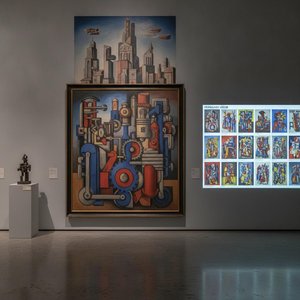
Immerse yourself in the vibrant world of Fernand Léger. Explore 25 iconic masterpieces of Cubism and Tubism, from bold geometric forms to machine-age energy. Find inspiration for your decor with museum-quality reproductions. Discover all masterpieces on WahooArt.com.
 Predogled v realnem okolju
 Pošlji
 Deli
Deli
 Podrobnosti o delu
 Priročnik

 Prenesi sliko
 Podobni izdelki
 Rentgenski posnetek
 Predvajaj diaporama
 Vprašanja in odgovori
 Statistika


 Preberi več









 Možnost stekla je na voljo le za velikosti pod 110 cm


