Fernand Léger in "The Mechanic": A Celebration of Modernity
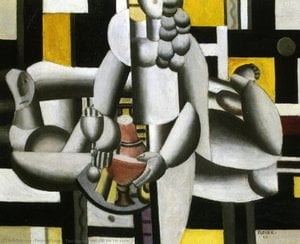
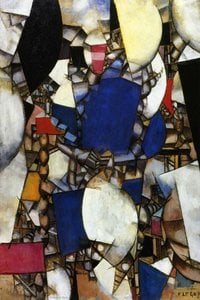
Fernand Léger’s “The Mechanic,” painted in 1920, isn't merely a portrait; it's a vibrant manifesto celebrating the burgeoning industrial age and its impact on human form. This striking work, now available as a meticulously hand-painted reproduction, encapsulates Léger’s unique artistic vision – often dubbed "Tubism" – where cylindrical shapes and bold primary colors dominate, creating a dynamic interplay between humanity and machinery. The painting immediately draws you in with its energetic composition, a testament to the artist's fascination with the mechanical aesthetics that were rapidly reshaping the world around him. It is more than just an image; it’s a window into a pivotal moment in history, when traditional artistic conventions were being challenged by the relentless march of progress.
A Cubist Symphony of Form and Color
Léger's approach diverges from the more fragmented aesthetic often associated with Cubism. While he certainly employs the flattening of perspective – presenting multiple viewpoints simultaneously on a single plane – his work retains a surprising clarity and accessibility. The figure, an artist or intellectual deeply engrossed in thought, is not broken down into unrecognizable shards but rather reassembled using simplified geometric forms, primarily cylinders and spheres. This technique creates depth through overlapping shapes and intersecting lines, eschewing traditional linear perspective for a more dynamic visual experience. The color palette explodes with life: vibrant yellows, reds, and blues are juxtaposed against stark blacks and whites, creating a visually arresting contrast that amplifies the painting’s energy. Thick, bold outlines define both the figure and the surrounding geometric shapes, while finer lines add texture and detail, further enriching the composition. It's as if Léger is not just depicting a scene but constructing it, brick by mechanical brick.
Symbolism: The Artist, the Machine, and the Modern Soul
Beyond its aesthetic appeal, "The Mechanic" resonates with profound symbolism. The central figure, seemingly lost in contemplation or creation, represents the creative spirit – an artist, perhaps, or a thinker grappling with the complexities of modernity. He is not merely a worker; he embodies the potential for innovation and intellectual pursuit within this new industrial landscape. The geometric forms that surround him are open to interpretation: they could represent elements of his environment, abstract concepts swirling through his mind, or even symbolic representations of the machinery that defines his world. The prominent anchor symbol on his forearm adds another layer of meaning, perhaps alluding to stability and grounding amidst a rapidly changing era. The overall effect is one of introspection and creativity, inviting viewers to reflect upon the relationship between humanity and technology, and the enduring power of the human spirit in an age of machines.
A Legacy Forged in Form: Léger’s Place in Art History
Created during a period of intense artistic experimentation, "The Mechanic" exemplifies Léger's evolving style and his commitment to capturing the essence of modernity. Influenced by Cubism but forging his own distinct path, Léger sought to integrate industrial aesthetics into his art, creating a visual language that was both abstract and deeply rooted in the observable world. His work foreshadowed Pop Art decades before its emergence, demonstrating an early appreciation for the power of popular culture and mass media. Fernand Léger’s legacy continues to inspire artists and designers today, and "The Mechanic," with its bold colors, dynamic composition, and profound symbolism, remains a powerful testament to his enduring vision – a celebration of the machine age and the human spirit that drives it. Owning a hand-painted reproduction allows you to bring this iconic piece into your home, experiencing Léger’s vibrant world firsthand.
Vprašanja in odgovori
Koliko je bil Fernand Léger star ob ustvarjanju dela "Mehanik" leta 1920?
Fernand Léger je ustvaril "Mehanik" v starostih 39 let. Umetnik se je rodil leta 1881, delovni datum pa je 1920.
Kakšno svetlobno stanje ima "Mehanik" avtorja Fernand Léger?
Barve dela "Mehanik" izkazujejo Zmerna luminanca luminanco.
Kateri umetniški slog zastopa "Mehanik" avtorja Fernand Léger?
Umetnostni smer, povezana z delom "Mehanik" avtorja Fernand Léger, je Cubism. Ta klasifikacija delo uvršča med sorodne umetnike in umetniška dela.
Kakšna velikost in orientacija sta priporočeni za tiskanje dela "Mehanik" avtorja Fernand Léger?
Za tiskanje dela "Mehanik" avtorja Fernand Léger priporočamo velikost Velika dimenzija v Vertikalno orientaciji.
Ali je "Mehanik" avtorja Fernand Léger svetlo ali temno umetniško delo?
Zaznavana svetlina dela "Mehanik" avtorja Fernand Léger je svetlo. Lahko se prilagodi svetlobi v namenjenem prostoru.
Kdaj je "Mehanik" pripisano kateremu umetniku?
Avtor dela "Mehanik" je Fernand Léger. Del je katalogiran pod imenom Fernand Léger.
V letu katerega je bilo ustvarjeno delo "Mehanik" avtorja Fernand Léger?
"Mehanik" avtorja Fernand Léger je nastalo leta 1920.



 Preverite v realnem okolju
 Naročite ročno slikano reprodukcijo
 Pošlji kot čestitko
 Deli
Deli
 Podrobnosti
 Priročnik

 Prenesi
 Podobni artefakti
 Rentgenski posnetek
 Predvajaj diaporama
 Statistika

 Preberi več






































 Možnost stekla je na voljo le za velikosti pod 110 cm