PredogledPredogled AR predogledAR predogled Preklop na tiskanine Preklop na tiskanineKupi ročno naslikano sliko Kupi ročno naslikano sliko PošljiPošlji
Podrobnosti o deluPodrobnosti o delu Dodaj v priljubljene Dodaj v priljubljene PrenesiPrenesi Podobni izdelkiPodobni izdelki Rentgenski posnetekRentgenski posnetek Predvajaj diaporamaPredvajaj diaporama StatistikaStatistika

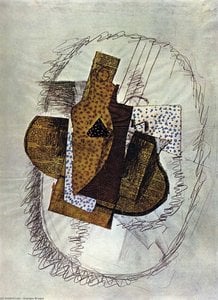
Proun 99

Explore Proun 99 by El Lissitzky, a striking geometric abstraction from 1924 embodying the Bauhaus aesthetic and Russian Constructivism. This mesmerizing canvas showcases layered triangles and circles—a testament to Lissitzky’s revolutionary vision; discover its beauty.

El Lissitzky (1890-1941): Ruski umetnik avangarde znan za Suprematizem, Konstruktivizem in Proun. Raziskujte njegovo Bauhaus vlogo, tipografijo, fotomonografijo ter pomembne dizajnske ideje.

Kupite digitalno sliko visoke ločljivosti z izboljšano kakovostjo, ki je precej boljša od spletnega predogleda.

Vsaka datoteka je pod natančnim nadzorom naših strokovnjakov, ki uporabljajo napredna orodja in strokovno ročno obdelavo. Zagotovimo, da ima vsaka slika izjemno jasnost, natančnost barv in fine podrobnosti.

Končna datoteka je po e-pošti dostavljena v 72 urah, optimizirana za takojšnjo uporabo v profesionalnem, uredniškem in tiskarskem okolju. To je kakovost, ki ji zaupajo vrhunska oblikovalna studia, založniki in galerije.

Digitalna slika

Prenesite datoteko visoke ločljivosti za osebno uporabo, tiskanje in kreativne projekte. (Preklop na tiskanine Preklop na tiskanineKupi ročno naslikano sliko Kupi ročno naslikano sliko)

Skupna cena

$ 24,90

Vključeno v vsako naročilo digitalne slike

Zagotovljena strokovna digitalna dostava

Ko izberete WahooArt.com, ne prejmete le slike – prejmete digitalno umetniško delo, ki je profesionalno urejeno, izdelano z natančnostostjo in zavestno zagotovljeno z garancijo za zadovoljstvo. Tukaj je vse, kar samodejno prejmete z vašim naročilom:

shipping_icon
Hitra dostava prek e-pošte

Vaša digitalna slika visoke ločljivosti bo na vaš e-naslov poslana v roku 72 ur od zaklopa naročila – pripravljena za takojšnjo uporabo.

canvas_icon
Digitalna datoteka z umetno inteligenco

Vaše umetniško delo je strokovno optimizirano z uporabo naprednih orodij umetne inteligence in ročne obdelave, kar zagotavlja največjo stopnjo podrobnosti, jasnosti in barvne natančnosti.

insurance_icon
Brezplačna ponovna dostava za vse življenje

Ste zaradi nespremietne napake izgubili ali izbrisali svojo datoteko? Ni težav – vam jo bomo ponovno poslali kadar koli in brezplačno.

tax_icon
Brez uvoznih pristojbin – vedno

Uživajte v svojem umetniškem delu takoj, brez carin, davkov ali stroškov dostave – digitalni prenosi so vedno brezdavčni.

color_icon
Zagotovilo natančnosti barv

Z uporabo profesionalnih orodij in upravljanja barv zagotavljamo, da vaša digitalna slika čim bolj natančno odraža prvotne barve.

return_icon
100-dnevna garancija zadovoljstva

Če niste zadovoljni s svojo digitalno sliko, jo bomo uredili ali povrnili 100% zate v 100 dneh – brez kakršnih koli vprašanj.

guarantee_icon
100% Garancija povračila denarja

Niste zadovoljni? Zagotavljamo vam popoln povračilo sredstev v 100 dneh po prejemu digitalne datoteke – brez dodatnih vprašanj.

discount_icon
Popusti pri večjem številu naročil

Kupite 3 slike, prihranite 10% - Kupite 5 slik, prihranite 15% - Kupite 10+ slik, prihranite 20%. Odlično za kreativne projekte, galerije in agencije.

Ključni podatki

  • Subject or theme: Abstract design
  • Year: 1924
  • Location: Private Collection
  • Dimensions: 129 x 99 cm
  • Medium: Painting
  • Notable elements or techniques: Geometric abstraction
  • Title: Proun 99

A Geometric Symphony: Exploring Proun 99 by El Lissitzky

El Lissitzky’s Proun 99 stands as a testament to the revolutionary spirit of the Bauhaus era and a cornerstone of Constructivism, offering more than just visual beauty; it embodies an ambitious conceptual framework aimed at reshaping perception itself. Painted in 1924, this artwork isn't merely a depiction of shapes—it’s an assertion of geometric principles as instruments for constructing reality. Lissitzky, deeply influenced by Piet Mondrian and Kubist explorations, sought to transcend representational art, believing that pure abstraction could unlock deeper truths about the universe and humanity’s place within it.
  • Subject Matter: The composition centers around a dominant triangle, flanked by two smaller triangles positioned strategically at the upper left corner. Complementing this geometric core are three circles meticulously placed throughout the canvas—one anchoring the lower right quadrant, another subtly above and to the left of the central triangle, and finally occupying the uppermost portion of the left side.
  • Style & Technique: Lissitzky’s approach aligns perfectly with Constructivism's ethos – a movement dedicated to utilizing industrial materials and geometric forms to express social ideals. The painting employs a bold palette—primarily shades of gray—creating an austere yet impactful visual experience. Lissitzky achieved this effect through meticulous layering of paint, resulting in a textured surface that enhances the solidity and permanence of the shapes depicted.

Historical Context: Bauhaus and Beyond

Proun 99 emerged during a period of profound artistic and intellectual upheaval. The Bauhaus school in Weimar championed experimentation with new materials and techniques, rejecting traditional academic conventions in favor of functional design and universal aesthetic principles. Lissitzky’s work directly responded to this zeitgeist, reflecting the broader desire for artists to engage actively in shaping society—a conviction rooted in his involvement with Marxist ideology. He envisioned Proun as a tool for visualizing “Space-Time,” arguing that geometric abstraction could liberate viewers from illusionistic representations and foster a more rational understanding of existence.

Symbolism & Conceptual Depth

Beyond its formal qualities, Proun 99 carries significant symbolic weight. The triangle represents stability and unity—a foundational element in Lissitzky’s cosmological vision. It symbolizes the cosmos itself, mirroring the tetrahedron – a geometric shape considered sacred by ancient civilizations – representing the building blocks of reality. The circles contribute to this overarching symbolism, symbolizing movement and dynamism, countering the rigidity implied by the triangles. Lissitzky deliberately avoided explicit narrative content, prioritizing instead the viewer’s engagement with the artwork's underlying conceptual framework.

Emotional Impact & Artistic Legacy

Despite its apparent simplicity, Proun 99 possesses a remarkable emotional resonance. The restrained palette and precise execution convey a sense of calm contemplation—inviting viewers to consider the fundamental structures governing our perception. Lissitzky’s pioneering work continues to inspire artists and designers today, demonstrating the enduring power of abstraction to communicate complex ideas and evoke profound feelings. Reproductions of Proun 99 offer an opportunity to experience this seminal artwork's intellectual rigor and aesthetic elegance within a contemporary setting.

Biografija umetnika

A Revolutionary Vision: The Life and Art of El Lissitzky

El Lissitzky, born Lazar Markovich Lissitzky in 1890 in the small Russian town of Pochinok, emerged as a pivotal figure in the tumultuous landscape of early 20th-century art. His journey was one of constant reinvention, driven by a fervent belief in the power of art to shape society and reflect the dynamism of the modern world. From his initial training as an architect and engineer – pursuits hampered by restrictions placed upon Jewish students – Lissitzky’s path diverged towards artistic expression, initially through illustrations steeped in Jewish folklore. These early works, like his cover for ‘Chad Gadya’, reveal a nascent talent already grappling with narrative and visual storytelling, hinting at the profound cultural roots that would continue to inform his aesthetic. A move to Berlin and Darmstadt broadened his horizons, but it was upon returning to Russia that Lissitzky truly found his artistic voice, becoming inextricably linked with the revolutionary fervor sweeping through the nation.

The Embrace of Abstraction: Suprematism and Proun

A defining moment arrived with his encounter with Kazimir Malevich and the embrace of Suprematism. This radical movement, dedicated to pure geometric abstraction, resonated deeply with Lissitzky’s desire to transcend representational art and tap into a universal visual language. He became a key member of UNovis, the Suprematist group established in Vitebsk, actively disseminating its principles through teaching and artistic production. However, Lissitzky didn't simply replicate Malevich’s style; he forged his own distinct path with the development of *Proun*. This unique series, born from a fusion of Suprematism and Constructivism, explored spatial relationships and geometric forms in dynamic compositions that often resembled architectural blueprints or exploded diagrams. Proun wasn’t merely painting; it was an investigation into the very structure of space itself, a premonition of future architectural possibilities. These works, with their floating planes and intersecting lines, embodied Lissitzky’s belief in art as a force capable of constructing new realities. The influence of his engineering background is palpable here, lending a structural logic to the abstract forms. He sought to liberate visual language from traditional conventions, prioritizing clarity and geometric precision—a quest that would propel him toward groundbreaking innovations.

Artistic Influences and Bauhaus Connection

Lissitzky’s artistic sensibilities were profoundly shaped by several key influences. Kazimir Malevich's Suprematism served as a catalyst for his radical departure from figurative representation, prompting him to embrace the austere beauty of pure geometric abstraction. Simultaneously, Constructivism—particularly the ideas championed by Vladimir Tatlin—provided him with a conceptual framework for exploring the relationship between art and technology. Lissitzky’s engagement with Bauhaus, Germany's influential design school, further solidified his commitment to functionalism and aesthetic innovation. He collaborated closely with Josef Albers and László Moholy-Nagy, absorbing their experimental techniques and sharing his vision of how art could contribute to social progress. These collaborations underscored the importance of interdisciplinary dialogue—a characteristic that would permeate his entire artistic practice.

Typography and Photomontage: Mastering Visual Communication

Lissitzky possessed an exceptional understanding of visual communication, mastering both typography and photomontage with unparalleled skill. He revolutionized typographic design by experimenting with bold fonts, asymmetrical layouts, and innovative spacing techniques—challenging established conventions and elevating the expressive potential of text. His photomontages—such as ‘The Constructor’ (1924)—were particularly striking—self-portraits that blended photography with geometric abstraction, offering a complex commentary on identity and the role of the artist in society. Lissitzky skillfully juxtaposed disparate images to create visually arresting compositions that conveyed powerful messages about political ideology and social transformation. He recognized that visual language could transcend verbal articulation, communicating ideas and emotions directly—a conviction that underpinned his entire artistic endeavor.

Legacy and Enduring Significance

El Lissitzky’s contribution to the history of art is undeniable. He stands as a towering figure in the vanguard of Russian avant-garde movement, embodying the spirit of experimentation, innovation, and social engagement. His pioneering explorations into abstraction, typography, and photomontage continue to inspire contemporary artists and designers—demonstrating the enduring relevance of his artistic vision. Lissitzky’s legacy extends beyond the realm of aesthetics; he championed the transformative power of art as a tool for shaping culture and advancing human understanding. He remains an exemplar of intellectual courage—a testament to the conviction that art can serve as a catalyst for social change—and his work continues to provoke reflection and inspire creativity across generations. His influence is visible in numerous international collections, and museums featuring his masterpieces include the Taganrog Art Museum and Novokuznetsk Art Museum.
El Lissitzky

El Lissitzky

1890 - 1941 , Rusija

Ključne informacije

  • Artistic Movement Or Style:
    • Suprematism
    • Constructivism
  • Artists Or Movements Influenced By This Artist: ['Bauhaus']
  • Artists Who Influenced This Artist: ['Kazimir Malevich']
  • Date Of Birth: Nov 23, 1890
  • Date Of Death: Dec 30, 1941
  • Full Name: El Lissitzky
  • Nationality: Ruski
  • Notable Artworks:
    • The Constructor
    • Chad Gadya cover
    • Proun series
  • Place Of Birth: Pochinki, Russia