Preverite v realnem okolju Predogled v AR Preklop na tiskanine Preklop na digitalno sliko Pošlji kot čestitko
Podrobnosti Priročnik Dodaj v priljubljene Prenesi Podobni artefakti Rentgenski posnetek Predvajaj diaporama Statistika

untitled (2996)

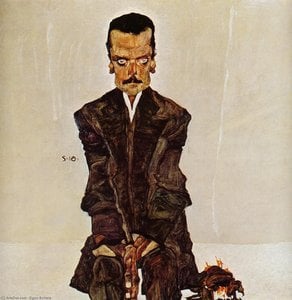
Delve into Egon Schiele's haunting 'untitled (2996)'. This evocative portrait captures vulnerability and unease, reflecting the artist’s exploration of mortality & the human condition. Explore a masterpiece of Expressionism.

Raziskujte intenzivne ekspresionistične umetnosti Egon Schieleja (1890-1918): izrazite portrete, psihološke teme in edinstvene črte. Odkrijte reprodukcije že danes!

Ročno izdelana oljna reprodukcija

Ročno slikano olje na platnu v vaši izbiri velikosti in okvirja, izdelano po naročilu naših umetnikov. ( Preklop na tiskanine Preklop na digitalno sliko)

Corner sample of the P118B picture frame: izoblit polistiren, 5 cm wide and 3 cm thick
P118B €10
Corner sample of the P118H picture frame: izoblit polistiren, 5 cm wide and 3 cm thick
P118H €10
Corner sample of the P118W picture frame: izoblit polistiren, 5 cm wide and 3 cm thick
P118W €10
Corner sample of the P438Z picture frame: izoblit polistiren, 5.5 cm wide and 3.5 cm thick
P438Z €10
Corner sample of the P508JH picture frame: izoblit polistiren, 7 cm wide and 3.5 cm thick
P508JH €12
Corner sample of the P508YH picture frame: izoblit polistiren, 7 cm wide and 3.5 cm thick
P508YH €12
Corner sample of the P805H picture frame: izoblit polistiren, 5 cm wide and 3.5 cm thick
P805H €10
Corner sample of the P805Z picture frame: izoblit polistiren, 5 cm wide and 3.5 cm thick
P805Z €10
Corner sample of the P919BZ picture frame: izoblit polistiren, 7 cm wide and 3.5 cm thick
P919BZ €10
Corner sample of the P919G picture frame: izoblit polistiren, 7 cm wide and 3.5 cm thick
P919G €10
Corner sample of the P919XJ picture frame: izoblit polistiren, 7 cm wide and 3.5 cm thick
P919XJ €10
Corner sample of the P959ZH picture frame: izoblit polistiren, 5 cm wide and 3 cm thick
P959ZH €10
Corner sample of the P968JZ picture frame: izoblit polistiren, 6 cm wide and 4 cm thick
P968JZ €12
Corner sample of the W106C picture frame: masivno drevo, 5 cm wide and 3 cm thick
W106C €8
Corner sample of the W218G picture frame: masivno drevo, 5 cm wide and 3 cm thick
W218G €10
Corner sample of the W218JH picture frame: masivno drevo, 5 cm wide and 3 cm thick
W218JH €8
Corner sample of the W218Y picture frame: masivno drevo, 5 cm wide and 3 cm thick
W218Y €10
Corner sample of the W307PJ picture frame: masivno drevo, 6 cm wide and 3 cm thick
W307PJ €10
Corner sample of the W316G picture frame: masivno drevo, 6 cm wide and 3 cm thick
W316G €10
Corner sample of the W316PJ picture frame: masivno drevo, 6 cm wide and 3 cm thick
W316PJ €8
Corner sample of the W316Y picture frame: masivno drevo, 6 cm wide and 3 cm thick
W316Y €10
Corner sample of the W398PJ picture frame: masivno drevo, 5 cm wide and 3 cm thick
W398PJ €8
Corner sample of the W4111J picture frame: masivno drevo, 6.5 cm wide and 3.5 cm thick
W4111J €10
Corner sample of the W500HY picture frame: masivno drevo, 7 cm wide and 5 cm thick
W500HY €15
Corner sample of the W500JH picture frame: masivno drevo, 7 cm wide and 5 cm thick
W500JH €15
Corner sample of the W692G picture frame: masivno drevo, 8 cm wide and 4 cm thick
W692G €12
Corner sample of the W849H picture frame: masivno drevo, 5 cm wide and 3 cm thick
W849H €8
Corner sample of the W940BG picture frame: masivno drevo, 7.5 cm wide and 4.5 cm thick
W940BG €15
Corner sample of the W953PJ picture frame: masivno drevo, 6 cm wide and 3.5 cm thick
W953PJ €8

Standardna velikost
po meri
CM
INCH

Izberite eno od naših vnaprej določenih velikosti, ki ustrezajo prvotnim proporcijam umetničkega dela.

širina
višina

Vnesite širino in višino, ki jih potrebujete, da se slika prilega vašemu okviru ali steni. Ker je delo ročno slikano, lahko umetnik pri različnih oblikih slik pri robovih doda malo več barve ali pa jih malo odreže — izberite sami. Pred začetkom slikanja vam pošljemo digitalni predogled za potrditev. Slika, prikazana na tej strani, ni končni rezultat — le predogled prikazuje dejansko podobo.

Primeri možnih sprememb: Zamenjava obraza s fotografijo stranke; Dodajanje hišnega ljubljenčka (npr. zamenjava mačke s psom); Vključitev skritega sporočila v ozadje; Sprememba pokrajine ali elementov v ozadju.
Po oddaji naročila bo ekipa WahooArt.com stranki po e-pošti poslala navodila in predogled digitalnega predogleda.

Mednarodna dostava () v 3/4 tednih namesto običajnih 5 tednov. (25 oktober). Brez kompromisov pri kakovosti.

Brezplačna ekspresna dostava po vsem svetu
Visokokakovostno laneno platno
Popolno zavarovanje pošiljke
Garancija povračila carine in uvoznih davkov
Garancija popolnega barvnega ujemanja
Politika vračila v 100 dneh (le v primeru okvar)
Garancija 100% povračila denarja
Popust pri večjem naročilu

Skupna cena

€ 239

untitled (2996)

Tehnika reprodukcije

Velikost reprodukcije

-

Skupna cena

€ 239

Hitri podatki

  • Subject or theme: Vulnerability
  • Movement: Expressionism
  • Influences: Klimt
  • Artist: Egon Schiele

Kviz o umetnosti

Pri vsakem vprašanju je na voljo le eden pravilen odgovor.

Vprašanje 1:
Based on the image description, what is the primary emotional tone conveyed by Egon Schiele’s painting?
Vprašanje 2:
Egon Schiele was a prominent figure in which artistic movement?
Vprašanje 3:
The image depicts a woman wearing black clothing. What does this likely symbolize, considering Schiele’s artistic themes?
Vprašanje 4:
Egon Schiele's life was significantly shaped by the early death of his father. How did this event influence his artistic style?
Vprašanje 5:
Considering Schiele's biography, which of the following best describes his early artistic training?

A Tempestuous Soul Captured: The Enigmatic “Untitled (2996)” by Egon Schiele

Egon Schiele's "Untitled (2996)," a haunting depiction of a woman seated on the ground, is more than just a portrait; it’s a raw and intensely personal exploration of vulnerability, anxiety, and the precariousness of existence. Painted in 1918, tragically near the end of his life, this work embodies the core tenets of Schiele's Expressionist style – a deliberate distortion of form, an emphasis on emotional intensity, and a willingness to confront uncomfortable truths about the human condition. The painting’s power lies not in its precise representation but in its evocative atmosphere, a palpable sense of unease that draws the viewer into the woman’s internal world.

Untitled (2996) by Egon Schiele

The subject, shrouded in a dark, enveloping garment, occupies the lower half of the canvas. Her posture – slumped and seemingly defeated – immediately conveys distress. Her face, though partially obscured, holds an expression of profound sorrow or perhaps even resignation. The background is deliberately blurred, populated by indistinct figures that serve to isolate the central figure and amplify her solitude. Schiele’s signature technique—bold, gestural lines—dominates the composition. He employs a thick impasto application of paint, creating a textured surface that adds to the painting's visceral impact. The lines themselves are not merely descriptive; they actively communicate emotion, conveying the woman’s inner turmoil with an almost violent energy.

Echoes of Trauma and Mortality

To understand “Untitled (2996),” it’s crucial to consider Schiele's deeply troubled life. Born in 1890 into a family marked by illness and loss, he experienced the early deaths of his father (from syphilis) and sister, events that profoundly shaped his artistic vision. His father’s descent into madness and subsequent death cast a long shadow over Schiele’s psyche, fueling an obsession with mortality and the fragility of human existence – themes repeatedly explored in his work. The painting can be interpreted as a direct reflection of this personal trauma, a visual manifestation of grief, isolation, and the struggle to find meaning in the face of overwhelming loss.

Furthermore, Schiele’s artistic development was heavily influenced by Gustav Klimt, a prominent figure in the Viennese Secession movement. However, while Klimt often depicted idealized beauty, Schiele relentlessly pursued an unflinching portrayal of human vulnerability and psychological distress. His work stands as a stark contrast to Klimt's polished surfaces, prioritizing emotional honesty over aesthetic perfection.

Symbolism and the Language of Line

The woman’s dark clothing can be seen as symbolic of concealment, perhaps representing a hidden pain or a desire for anonymity. The ground she sits upon—a simple, unadorned surface—suggests a lack of support or stability. However, it's the expressive lines that truly carry the weight of meaning in this painting. Schiele’s use of jagged, broken lines creates a sense of unease and instability, mirroring the woman’s emotional state. The lines aren’t simply outlining forms; they are actively shaping the viewer’s perception, drawing attention to the subject's vulnerability and projecting her inner turmoil outward.

A Window into an Artist’s Soul

"Untitled (2996)" is a profoundly moving work that offers a rare glimpse into the tormented soul of Egon Schiele. It’s a testament to his courage in confronting difficult emotions and his willingness to expose the darker aspects of human experience. Reproductions of this painting, available through WahooArt.com, allow viewers to connect with this powerful artwork on a deeper level, appreciating its raw emotional intensity and enduring relevance. Consider commissioning a hand-painted reproduction to bring this evocative image into your home or office – a tangible reminder of the complexities of human emotion and the beauty found within vulnerability.

Vprašanja in odgovori

Ali je "untitled (2996)" v celotnosti bolj svetel ali bolj temen?

Zabeležene vrednosti za "untitled (2996)" avtorja Egon Ščile so: svetlina balanced, luminanca Gentle Luminance.

Kje lahko kupim tiskanino dela "untitled (2996)" avtorja Egon Ščile?

Če želite naročiti tiskanino dela "untitled (2996)" avtorja Egon Ščile, jo preprosto naročite na njegovi strani Kakovostna tiskanina: umjetnička grafika na bombažnem platnu ali arhivskem papirju za platno.

Kakšen občutek si povezujete z delom "untitled (2996)"?

"untitled (2996)" je povezano z Melancholic občutkom. Čustveni ton opisuje vtis, ki ga delo pusti.


Biografija umetnika

Egon Schiele: Austrian Expressionist Painter

Austrian art has since acquired legendary status in interdisciplinary cultural studies. Histories of modern Austrian art generally begin with the architectural boom that swept Vienna in the second half of the nineteenth century. During this period of strong economic growth, the Emperor Franz Josef constructed a necklace of public edifices along the broad Ringstrasse that encircles Vienna’s inner city, prompting artists to flock to the capital from all over to compete for decorative mural commissions. The most renowned painter of the era was Hans Makart, but the young Gustav Klimt also earned his reputation executing commissions on the interior walls of structures such as theaters and museums. The favored style combined a sort of blowsy eroticism with a firm grip on classical and historical allegory. Starting from his masterpiece *The Kiss*, Klimt gradually moved away from the accepted formula, however, evolving a personal symbolism that was less conventionally readable as well as more overtly sexual. This combination proved devastating so far as the tasted of staid Vienna were concerned: Klimt was banished from the ranks of public muralists, and henceforth had to seek support solely from well-heeled private patrons.

Early Life & Influences

Egon Schiele was born in Tulln an der Donau – a picturesque region with vineyards, onion-domed towers and Baroque monasteries. Yet this idyllic setting is hardly reflected in his work.
Instead, many of his landscapes appear melancholic, sometimes sombre. Perhaps he was processing the early death of his father from syphilis and the subsequent loss of his sister Elvira.
Raised initially by his mother and then under the somewhat controlling guardianship of his uncle Leopold Czihaczek, Schiele’s childhood lacked conventional stability but fostered a fiercely independent spirit. Even as a boy, he displayed an intense fascination with trains—a motif that subtly reappeared in later paintings—and a burgeoning talent for drawing, though this was initially met with disapproval from his father who saw it as a distraction from more practical pursuits. The early death of his sister Elvira also cast a long shadow over the young artist’s psyche. These formative experiences instilled within him a sensitivity and an emotional rawness that would become hallmarks of his artistic expression, a constant grappling with themes of life, death, and the human condition.

Vienna Secession & Artistic Breakthrough

Schiele's formal artistic training began at the Kunstgewerbeschule (School of Arts and Crafts) in Vienna, but he quickly found itself stifled by its conservative approach. He transferred to the Akademie der bildenden Künste (Academy of Fine Arts), only to become further disillusioned with its rigid academic traditions. This dissatisfaction led him to abandon formal training altogether, choosing instead to forge his own path, a testament to his unwavering artistic conviction.
The influence of Gustav Klimt was pivotal during these early years; Schiele admired Klimt’s decorative style and exploration of symbolism, even receiving mentorship from the established artist.
He co-founded the Neues Wiener Kunstgruppe (New Viennese Art Group) in 1909, aligning himself with other progressive artists who challenged the prevailing artistic norms. His distinctive style features elongated figures, contorted poses, and expressive lines that convey a sense of unease and emotional intensity.

Style Characteristics & Recurring Themes

Schiele’s art is immediately recognizable for its raw honesty and psychological depth.
He fearlessly confronted themes often considered taboo – sexuality, death, anxiety, isolation – with an unflinching gaze.
His distinctive style features elongated figures, contorted poses, and expressive lines that convey a sense of unease and emotional intensity. The human form, particularly the nude, became his primary subject, not as an object of idealized beauty but as a vessel for exploring the complexities of human experience.
Schiele didn’t shy away from depicting himself in unflattering or vulnerable poses, revealing a profound level of self-awareness and introspection.

Legacy & Recognition

Despite facing censorship and legal challenges – including a brief imprisonment for allegedly corrupting minors with his art – Schiele gained recognition within Vienna’s avant-garde circles.
His work challenged the conventions of the time, provoking both admiration and outrage.
By the time of his untimely death during the Spanish flu pandemic in 1918 at the age of twenty-eight, he had established himself as a leading figure in Austrian Expressionism. Significant works such as *Self-Portrait with Physalis*, *Couple Embracing*, and *Field Landscape (Kreuzberg near Krumau)* stand as testaments to his artistic genius.
His influence on subsequent generations of artists is undeniable, particularly those interested in exploring psychological themes and challenging conventional artistic norms.

Egon Ščile

Egon Ščile

1890 - 1918 , Avstrija

Ključne informacije

  • Artistic Movement Or Style: Expresionismo
  • Artists Who Influenced This Artist: ['Gustav Klimt']
  • Date Of Birth: 12 giugno 1890
  • Date Of Death: 31 octubre 1918
  • Full Name: Egon Schiele
  • Nationality: Austriaco
  • Notable Artworks:
    • Autoritratto con Physalis
    • Giovane coppia
    • Paesaggio campo (Kreuzberg)
  • Place Of Birth: Tulln an der Donau, Austria
Raziščite umetniška dela, razvrščena po temah, slogih in značilnostih.