Predogled v realnem okolju Predogled v AR Preklop na tiskanine Kupite ročno slikano delo Pošlji
Podrobnosti o delu Priročnik Dodaj v priljubljene Prenesi sliko Podobni izdelki Rentgenski posnetek Predvajaj diaporama Q&A Statistika

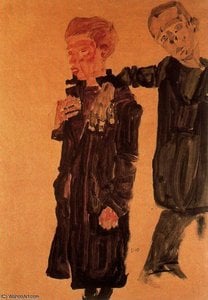
Two Guttersnipes

Explore 'Two Guttersnipes' by Egon Schiele – a haunting Expressionist masterpiece featuring distorted figures & vibrant colors. Discover this pivotal 20th-century artwork.

Raziskujte intenzivne ekspresionistične umetnosti Egon Schieleja (1890-1918): izrazite portrete, psihološke teme in edinstvene črte. Odkrijte reprodukcije že danes!

Pridobite datoteko, pripravljeno za tiskanje, ki presega kakovost spletnega predogleda. Vsaka digitalna slika v naši ponudbi izvira iz visoko ločljive izvirne datoteke v naši bazi — običajno široke od 5.000 do 15.000 pikselov — zato lahko z zaupanjem tiskate v večji format, tesno izrezujete ali reproducirate fine podrobnosti.

Nobena datoteka ne zapusti našega studia nedotiknjena. Digitalni strokovnjak preveri barve v primerjavi z izvirno sliko in jih po potrebi popravi, nato pa s profesionalnimi orodji za retuširanje izboljša jasnost in podrobnosti — pri čemer vedno ostaja zvest umetnikovim potezam in slogu. Rezultat je slika, ki izgleda kot samo slikarstvo, ne pa kot le filtriran sken.

Potrditev pred dokončanjem dela: naš strokovnjak vam v roku 72 ur pošlje sliko po e-pošti na pregled. Niste zadovoljni? Zahtevajte izboljšave ali popravke ali prosite za povračilo denarja, če kakovost ni v skladu z pričakovanimi standardi.

To je kakovost, po kateri temeljijo založniki, oblikovalni studii, galerije in tiskarne.

Digitalna slika

Prenesite datoteko visoke ločljivosti za osebno uporabo, tiskanje in kreativne projekte. ( Preklop na tiskanine Kupite ročno slikano delo)

Skupna cena

€ 21,95

Vključeno v vsako naročilo digitalne slike

Zagotovljena strokovna digitalna dostava

Z izbiro WahooArt.com ne prejmete le slike – prejmete profesionalno urejeno digitalno umetniško delo, izdelano z največjo natančnostjo in zavestno podprto z garancijo za zadovoljstvo. Tukaj je vse, kar bo z vašim naročilom samodejno priloženo:

Hitra dostava prek e-pošte

Vaša digitalna slika visoke ločljivosti bo na vaš e-naslov poslana v roku 72 ur od zaklopa naročila – pripravljena za takojšnjo uporabo.

Digitalna datoteka z uporabo AI

Vaše umetniško delo je strokovno optimizirano z uporabo naprednih orodij umetne inteligence in ročne obdelave, kar zagotavlja največjo stopnjo podrobnosti, jasnosti in barvne natančnosti.

Brezplačna doletna ponovna dostava

Ste datoteko zaradi nespremietne napake izgubili ali izbrisali? Ni težav – vam jo bomo ponovno poslali kadar koli in brezplačno.

Brez uvoznih pristojbin – vedno

Svoje umetniško del uživajte takoj, brez carin, davkov ali stroškov dostave – digitalni prenosi so vedno brezdavčni.

Zagotovilo natančnosti barv

Z uporabo profesionalnih orodij in procesov upravljanja barv zagotavljamo, da vaša digitalna slika čim bolj natančno odraža prvotne barve.

100-dnevna garancija zadovoljstva

Če niste zadovoljni s svojo digitalno sliko, jo bomo uredili ali vam v 100 dneh povrnili 100% denarja – brez kakršnih koli vprašanj.

100% Garancija povračila denarja

Niste zadovoljni? Zagotavljamo vam popoln povračilo sredstev v 100 dneh po prejemu digitalne datoteke – brez dodatnih vprašanj.

Popusti pri večjih naročilih

Kupite 3 slike, prihranite 10% - Kupite 5 slik, prihranite 15% - Kupite 10+ slik, prihranite 20%. Odlično za kreativne projekte, galerije in agencije.

Ključni podatki

  • subject: Two figures, social commentary, psychological tension
  • year: 1910
  • artist: Egon Schiele
  • medium: Oil on paper/board (presumed)

Umetniški kviz

Pri vsakem vprašanju je na voljo le eden pravilen odgovor.

Vprašanje 1:
To which artistic movement does 'Two Guttersnipes' by Egon Schiele most closely belong?
Vprašanje 2:
What is a prominent characteristic of Schiele’s technique evident in 'Two Guttersnipes'?
Vprašanje 3:
What year was ‘Two Guttersnipes’ created?
Vprašanje 4:
The figures in 'Two Guttersnipes' are characterized by…

A Glimpse into Vienna’s Underbelly: Decoding Egon Schiele's “Two Guttersnipes”

This arresting work by Egon Schiele, painted in 1910, offers a raw and unflinching portrayal of societal marginalization. *“Two Guttersnipes"* isn’t merely a depiction of two figures; it is a visceral exploration of poverty, alienation, and the psychological weight carried by those existing on the fringes of Viennese society during a period of rapid social change.

Stylistic Innovation & Expressionist Roots

Schiele was a pivotal figure in early 20th-century art, and this painting exemplifies his distinctive style – a potent blend of Symbolism and Expressionism. The work abandons traditional academic realism in favor of distorted forms, exaggerated proportions, and intensely saturated colors. Notice how the figures are not rendered with anatomical precision but rather as emotionally charged vessels. The loose, gestural brushstrokes contribute to a sense of unease and immediacy, while the flattened perspective denies any illusionistic depth, forcing the viewer into direct confrontation with the subjects. This deliberate stylistic choice underscores Schiele’s focus on conveying inner psychological states over objective representation.

Technique & Materiality

Schiele's masterful use of oil paint – likely combined with other mediums to achieve textural effects – is central to the painting’s impact. The impasto technique, where paint is applied thickly, creates a tangible surface that invites tactile engagement (even through reproduction). This textured quality amplifies the emotional intensity and adds a layer of physicality to the figures' vulnerability. The warm, muted brown background serves as a grounding element, allowing the vibrant colors of the figures to leap forward, further emphasizing their isolation.

Subject Matter & Social Commentary

The title itself – “Guttersnipes” – is deliberately provocative, referencing children or young people who scavenge in the streets. The subjects’ gaunt features and downcast gazes suggest hardship and desperation. Their interaction, though ambiguous, hints at a shared experience of suffering. Schiele wasn't simply documenting poverty; he was probing the psychological consequences of social inequality and challenging conventional notions of beauty and dignity. The painting can be interpreted as a critique of societal indifference towards the marginalized.

Historical Context: Vienna 1910

Vienna at the turn of the century was a city grappling with profound transformations – industrialization, urbanization, and shifting social hierarchies. This period also witnessed a flourishing of artistic innovation, including the Secession movement (of which Schiele was initially associated). Schiele’s work emerged as a counterpoint to the more decorative aspects of the Secession, embracing a rawer, more confrontational aesthetic that reflected the anxieties and contradictions of modern life. He challenged the established norms and explored taboo subjects with unflinching honesty.

Emotional Resonance & Lasting Impact

“Two Guttersnipes” is not an easy painting to look at. It evokes feelings of discomfort, empathy, and perhaps even a sense of moral responsibility. Schiele’s ability to capture the raw emotional core of his subjects continues to resonate with viewers today. The work serves as a powerful reminder of the enduring human cost of social injustice and the importance of confronting uncomfortable truths. For collectors and interior designers, this piece – or a high-quality reproduction – offers a compelling statement, adding depth, complexity, and intellectual weight to any space.

Further Exploration

  • Consider exploring works by Schiele’s contemporaries like Heinrich Böhler and Broncia Koller-Pinell for further insight into the Viennese Expressionist movement.
  • Visit the Egon Schiele Art Centrum in Český Krumlov, Czech Republic to immerse yourself in his world.
  • Explore collections at institutions such as The J. Paul Getty Museum and Serpentine Galleries which often feature works from this era.

Vprašanja in odgovori

Ali je "Two Guttersnipes" znano umetniško delo v slogu Expressionism?

"Two Guttersnipes" avtorja Egon Ščile je razvrščeno kot Recognized in pripada gibanju Expressionism.

Katere velikosti bi moral "Two Guttersnipes" natisniti za mojo sobo?

Za Living Room priporočamo tisk dela "Two Guttersnipes" v velikosti Medium.

Kako nasičena je barvna paleta dela "Two Guttersnipes"?

"Two Guttersnipes" avtorja Egon Ščile ima Clear Color Presence saturacijo.


Biografija umetnika

Egon Schiele: Austrian Expressionist Painter

Austrian art has since acquired legendary status in interdisciplinary cultural studies. Histories of modern Austrian art generally begin with the architectural boom that swept Vienna in the second half of the nineteenth century. During this period of strong economic growth, the Emperor Franz Josef constructed a necklace of public edifices along the broad Ringstrasse that encircles Vienna’s inner city, prompting artists to flock to the capital from all over to compete for decorative mural commissions. The most renowned painter of the era was Hans Makart, but the young Gustav Klimt also earned his reputation executing commissions on the interior walls of structures such as theaters and museums. The favored style combined a sort of blowsy eroticism with a firm grip on classical and historical allegory. Starting from his masterpiece *The Kiss*, Klimt gradually moved away from the accepted formula, however, evolving a personal symbolism that was less conventionally readable as well as more overtly sexual. This combination proved devastating so far as the tasted of staid Vienna were concerned: Klimt was banished from the ranks of public muralists, and henceforth had to seek support solely from well-heeled private patrons.

Early Life & Influences

Egon Schiele was born in Tulln an der Donau – a picturesque region with vineyards, onion-domed towers and Baroque monasteries. Yet this idyllic setting is hardly reflected in his work.
Instead, many of his landscapes appear melancholic, sometimes sombre. Perhaps he was processing the early death of his father from syphilis and the subsequent loss of his sister Elvira.
Raised initially by his mother and then under the somewhat controlling guardianship of his uncle Leopold Czihaczek, Schiele’s childhood lacked conventional stability but fostered a fiercely independent spirit. Even as a boy, he displayed an intense fascination with trains—a motif that subtly reappeared in later paintings—and a burgeoning talent for drawing, though this was initially met with disapproval from his father who saw it as a distraction from more practical pursuits. The early death of his sister Elvira also cast a long shadow over the young artist’s psyche. These formative experiences instilled within him a sensitivity and an emotional rawness that would become hallmarks of his artistic expression, a constant grappling with themes of life, death, and the human condition.

Vienna Secession & Artistic Breakthrough

Schiele's formal artistic training began at the Kunstgewerbeschule (School of Arts and Crafts) in Vienna, but he quickly found itself stifled by its conservative approach. He transferred to the Akademie der bildenden Künste (Academy of Fine Arts), only to become further disillusioned with its rigid academic traditions. This dissatisfaction led him to abandon formal training altogether, choosing instead to forge his own path, a testament to his unwavering artistic conviction.
The influence of Gustav Klimt was pivotal during these early years; Schiele admired Klimt’s decorative style and exploration of symbolism, even receiving mentorship from the established artist.
He co-founded the Neues Wiener Kunstgruppe (New Viennese Art Group) in 1909, aligning himself with other progressive artists who challenged the prevailing artistic norms. His distinctive style features elongated figures, contorted poses, and expressive lines that convey a sense of unease and emotional intensity.

Style Characteristics & Recurring Themes

Schiele’s art is immediately recognizable for its raw honesty and psychological depth.
He fearlessly confronted themes often considered taboo – sexuality, death, anxiety, isolation – with an unflinching gaze.
His distinctive style features elongated figures, contorted poses, and expressive lines that convey a sense of unease and emotional intensity. The human form, particularly the nude, became his primary subject, not as an object of idealized beauty but as a vessel for exploring the complexities of human experience.
Schiele didn’t shy away from depicting himself in unflattering or vulnerable poses, revealing a profound level of self-awareness and introspection.

Legacy & Recognition

Despite facing censorship and legal challenges – including a brief imprisonment for allegedly corrupting minors with his art – Schiele gained recognition within Vienna’s avant-garde circles.
His work challenged the conventions of the time, provoking both admiration and outrage.
By the time of his untimely death during the Spanish flu pandemic in 1918 at the age of twenty-eight, he had established himself as a leading figure in Austrian Expressionism. Significant works such as *Self-Portrait with Physalis*, *Couple Embracing*, and *Field Landscape (Kreuzberg near Krumau)* stand as testaments to his artistic genius.
His influence on subsequent generations of artists is undeniable, particularly those interested in exploring psychological themes and challenging conventional artistic norms.

Egon Ščile

Egon Ščile

1890 - 1918 , Avstrija

Ključne informacije

  • Artistic Movement Or Style: Expresionismo
  • Artists Who Influenced This Artist: ['Gustav Klimt']
  • Date Of Birth: 12 giugno 1890
  • Date Of Death: 31 octubre 1918
  • Full Name: Egon Schiele
  • Nationality: Austriaco
  • Notable Artworks:
    • Autoritratto con Physalis
    • Giovane coppia
    • Paesaggio campo (Kreuzberg)
  • Place Of Birth: Tulln an der Donau, Austria