PredogledPredogled AR predogledAR predogled Switch to Print Switch to PrintKupi ročno naslikano sliko Kupi ročno naslikano sliko PošljiPošlji
Podrobnosti o deluPodrobnosti o delu Dodaj v priljubljene Dodaj v priljubljene PrenesiPrenesi Podobni izdelkiPodobni izdelki Rentgenski posnetekRentgenski posnetek Predvajaj diaporamaPredvajaj diaporama StatsStats

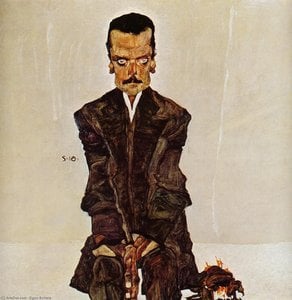
Arthur Roessler

Explore Egon Schiele's intense 1910 Expressionist portrait of Arthur Roessler, capturing psychological depth and bold style. A masterpiece of emotion.

Raziskujte intenzivne ekspresionistične umetnosti Egon Schieleja (1890-1918): izrazite portrete, psihološke teme in edinstvene črte. Odkrijte reprodukcije že danes!

Kupite digitalno sliko visoke ločljivosti z izboljšano kakovostjo, ki je precej boljša od spletnega predogleda.

Vsaka datoteka je pod natančnim nadzorom naših strokovnjakov, ki uporabljajo napredna orodja in strokovno ročno obdelavo. Zagotovimo, da ima vsaka slika izjemno jasnost, natančnost barv in fine podrobnosti.

Končna datoteka je po e-pošti dostavljena v 72 urah, optimizirana za takojšnjo uporabo v profesionalnem, uredniškem in tiskarskem okolju. To je kakovost, ki ji zaupajo vrhunska oblikovalna studia, založniki in galerije.

Digitalna slika

Prenesite datoteko visoke ločljivosti za osebno uporabo, tiskanje in kreativne projekte. (Switch to Print Switch to PrintKupi ročno naslikano sliko Kupi ročno naslikano sliko)

Skupna cena

$ 24,90

Vključeno v vsako naročilo digitalne slike

Zagotovljena strokovna digitalna dostava

Ko izberete WahooArt.com, ne prejmete le slike – prejmete digitalno umetniško delo, ki je profesionalno urejeno, izdelano z natančnostostjo in zavestno zagotovljeno z garancijo za zadovoljstvo. Tukaj je vse, kar samodejno prejmete z vašim naročilom:

shipping_icon
Hitra dostava prek e-pošte

Vaša digitalna slika visoke ločljivosti bo na vaš e-naslov poslana v roku 72 ur od zaklopa naročila – pripravljena za takojšnjo uporabo.

canvas_icon
Digitalna datoteka z umetno inteligenco

Vaše umetniško delo je strokovno optimizirano z uporabo naprednih orodij umetne inteligence in ročne obdelave, kar zagotavlja največjo stopnjo podrobnosti, jasnosti in barvne natančnosti.

insurance_icon
Brezplačna ponovna dostava za vse življenje

Ste zaradi nespremietne napake izgubili ali izbrisali svojo datoteko? Ni težav – vam jo bomo ponovno poslali kadar koli in brezplačno.

tax_icon
Brez uvoznih pristojbin – vedno

Uživajte v svojem umetniškem delu takoj, brez carin, davkov ali stroškov dostave – digitalni prenosi so vedno brezdavčni.

color_icon
Zagotovilo natančnosti barv

Z uporabo profesionalnih orodij in upravljanja barv zagotavljamo, da vaša digitalna slika čim bolj natančno odraža prvotne barve.

return_icon
100-dnevna garancija zadovoljstva

Če niste zadovoljni s svojo digitalno sliko, jo bomo uredili ali povrnili 100% zate v 100 dneh – brez kakršnih koli vprašanj.

guarantee_icon
100% Garancija povračila denarja

Niste zadovoljni? Zagotavljamo vam popoln povračilo sredstev v 100 dneh po prejemu digitalne datoteke – brez dodatnih vprašanj.

discount_icon
Popusti pri večjem številu naročil

Kupite 3 slike, prihranite 10% - Kupite 5 slik, prihranite 15% - Kupite 10+ slik, prihranite 20%. Odlično za kreativne projekte, galerije in agencije.

Ključni podatki

  • Artist: Egon Schiele
  • Year: 1910
  • Notable elements or techniques: Intense gaze, bold lines
  • Artistic style: Expressionist
  • Movement: Expressionism
  • Dimensions: 99 x 99 cm
  • Title: Arthur Roessler

Umetniški kviz

Pri vsakem vprašanju je na voljo le eden pravilen odgovor.

Vprašanje 1:
Who is the subject of Egon Schiele’s painting, ‘Arthur Roessler’?
Vprašanje 2:
In what year was Egon Schiele’s ‘Arthur Roessler’ painted?
Vprašanje 3:
What artistic movement is Egon Schiele most closely associated with?
Vprašanje 4:
Based on the image description, what is suggested about Arthur Roessler’s emotional state in the painting?
Vprašanje 5:
What is the approximate size of ‘Arthur Roessler’?

A Portrait of Disquiet: Egon Schiele’s ‘Arthur Roessler’

Egon Schiele's 1910 portrait of Arthur Roessler is not merely a depiction of a man; it is a visceral exploration of psychological tension, rendered with the raw intensity that defines the Expressionist movement. The painting captures Roessler, an Austrian art critic and early champion of Schiele’s work, in a state of palpable unease. He leans against a wall, his body angled away from the viewer, creating a sense of withdrawal and guardedness. The suit and tie suggest societal expectation, perhaps even formality, yet they are utterly at odds with the internal turmoil radiating from Roessler's face and posture. Schiele doesn’t present us with a celebratory portrait of a patron; instead, he offers an unflinching glimpse into a private moment of vulnerability, a man seemingly burdened by unseen anxieties.

The Brushstroke of Emotion: Technique and Style

Schiele’s technique in ‘Arthur Roessler’ is central to its emotional power. He eschews the smooth, idealized surfaces favored by earlier portraitists, opting instead for visible brushstrokes that seem to claw at the canvas. The color palette is dominated by muted browns and ochres, creating a somber atmosphere that amplifies the sitter's melancholy. This deliberate restriction of color isn’t accidental; it serves to focus attention on Roessler’s face – specifically his eyes and mustache – which become anchors for the viewer’s gaze. The angularity of the figure, particularly in the hands and limbs, is characteristic of Schiele’s style, a departure from traditional anatomical representation that prioritizes emotional expression over realistic form. The large scale of the painting—99 x 99 cm—further intensifies this effect, enveloping the viewer in Roessler's disquiet.

A Patron and a Friend: Historical Context

The creation of ‘Arthur Roessler’ occurred at a pivotal moment in Schiele’s career. Having recently broken away from the more conservative teachings of the Academy of Fine Arts Vienna, he was forging his own path, one that embraced subjectivity and psychological depth. Arthur Roessler played a crucial role in this development. He recognized Schiele's talent early on, providing not only financial support but also intellectual encouragement. Roessler’s belief in Schiele allowed him to exhibit his work and gain recognition within the Viennese art scene. However, it is important to note that Schiele wasn’t simply creating a thank-you portrait; he was engaging with Roessler as a complex individual, exploring the hidden layers beneath the surface of social decorum. The painting reflects a period where Schiele was experimenting with portraiture, seeking to capture not just likeness but also the inner life of his subjects.

Symbolism and Interpretation

While seemingly straightforward in its depiction, ‘Arthur Roessler’ is rich in symbolic potential. The very act of portraying a man in such a vulnerable state challenges conventional notions of portraiture, which traditionally aimed to project power and status. The hands, prominently displayed, are often interpreted as representing the creative force or intellectual labor – yet here they appear tense and constricted, suggesting a sense of frustration or limitation. Roessler’s gaze, averted from the viewer, hints at an internal struggle, a reluctance to fully reveal himself. Schiele's work frequently grapples with themes of mortality, sexuality, and alienation; while not explicitly present in this portrait, these undercurrents contribute to its overall sense of unease. The painting invites us to contemplate the complexities of human emotion and the masks we wear to navigate social interactions.

Ultimately, ‘Arthur Roessler’ is a testament to Schiele's ability to transform a simple portrait into a profound psychological study. It remains a compelling work for its honesty, its technical brilliance, and its enduring relevance in an age still grappling with questions of identity and emotional authenticity.


Biografija umetnika

Egon Schiele: Austrian Expressionist Painter

Austrian art has since acquired legendary status in interdisciplinary cultural studies. Histories of modern Austrian art generally begin with the architectural boom that swept Vienna in the second half of the nineteenth century. During this period of strong economic growth, the Emperor Franz Josef constructed a necklace of public edifices along the broad Ringstrasse that encircles Vienna’s inner city, prompting artists to flock to the capital from all over to compete for decorative mural commissions. The most renowned painter of the era was Hans Makart, but the young Gustav Klimt also earned his reputation executing commissions on the interior walls of structures such as theaters and museums. The favored style combined a sort of blowsy eroticism with a firm grip on classical and historical allegory. Starting from his masterpiece *The Kiss*, Klimt gradually moved away from the accepted formula, however, evolving a personal symbolism that was less conventionally readable as well as more overtly sexual. This combination proved devastating so far as the tasted of staid Vienna were concerned: Klimt was banished from the ranks of public muralists, and henceforth had to seek support solely from well-heeled private patrons.

Early Life & Influences

Egon Schiele was born in Tulln an der Donau – a picturesque region with vineyards, onion-domed towers and Baroque monasteries. Yet this idyllic setting is hardly reflected in his work.
Instead, many of his landscapes appear melancholic, sometimes sombre. Perhaps he was processing the early death of his father from syphilis and the subsequent loss of his sister Elvira.
Raised initially by his mother and then under the somewhat controlling guardianship of his uncle Leopold Czihaczek, Schiele’s childhood lacked conventional stability but fostered a fiercely independent spirit. Even as a boy, he displayed an intense fascination with trains—a motif that subtly reappeared in later paintings—and a burgeoning talent for drawing, though this was initially met with disapproval from his father who saw it as a distraction from more practical pursuits. The early death of his sister Elvira also cast a long shadow over the young artist’s psyche. These formative experiences instilled within him a sensitivity and an emotional rawness that would become hallmarks of his artistic expression, a constant grappling with themes of life, death, and the human condition.

Vienna Secession & Artistic Breakthrough

Schiele's formal artistic training began at the Kunstgewerbeschule (School of Arts and Crafts) in Vienna, but he quickly found itself stifled by its conservative approach. He transferred to the Akademie der bildenden Künste (Academy of Fine Arts), only to become further disillusioned with its rigid academic traditions. This dissatisfaction led him to abandon formal training altogether, choosing instead to forge his own path, a testament to his unwavering artistic conviction.
The influence of Gustav Klimt was pivotal during these early years; Schiele admired Klimt’s decorative style and exploration of symbolism, even receiving mentorship from the established artist.
He co-founded the Neues Wiener Kunstgruppe (New Viennese Art Group) in 1909, aligning himself with other progressive artists who challenged the prevailing artistic norms. His distinctive style features elongated figures, contorted poses, and expressive lines that convey a sense of unease and emotional intensity.

Style Characteristics & Recurring Themes

Schiele’s art is immediately recognizable for its raw honesty and psychological depth.
He fearlessly confronted themes often considered taboo – sexuality, death, anxiety, isolation – with an unflinching gaze.
His distinctive style features elongated figures, contorted poses, and expressive lines that convey a sense of unease and emotional intensity. The human form, particularly the nude, became his primary subject, not as an object of idealized beauty but as a vessel for exploring the complexities of human experience.
Schiele didn’t shy away from depicting himself in unflattering or vulnerable poses, revealing a profound level of self-awareness and introspection.

Legacy & Recognition

Despite facing censorship and legal challenges – including a brief imprisonment for allegedly corrupting minors with his art – Schiele gained recognition within Vienna’s avant-garde circles.
His work challenged the conventions of the time, provoking both admiration and outrage.
By the time of his untimely death during the Spanish flu pandemic in 1918 at the age of twenty-eight, he had established himself as a leading figure in Austrian Expressionism. Significant works such as *Self-Portrait with Physalis*, *Couple Embracing*, and *Field Landscape (Kreuzberg near Krumau)* stand as testaments to his artistic genius.
His influence on subsequent generations of artists is undeniable, particularly those interested in exploring psychological themes and challenging conventional artistic norms.

Egon Ščile

Egon Ščile

1890 - 1918 , Avstrija

Ključne informacije

  • Artistic Movement Or Style: Expresionismo
  • Artists Who Influenced This Artist: ['Gustav Klimt']
  • Date Of Birth: 12 giugno 1890
  • Date Of Death: 31 octubre 1918
  • Full Name: Egon Schiele
  • Nationality: Austriaco
  • Notable Artworks:
    • Autoritratto con Physalis
    • Giovane coppia
    • Paesaggio campo (Kreuzberg)
  • Place Of Birth: Tulln an der Donau, Austria