

Umetniška dela, prikazana na tej strani, so zaščitena z avtorskimi pravicami, kar pomeni, da po zakonu ne moremo ustvarjati ali prodajati identičnih reprodukcij. Ta zaščita se izvaja v skladu z mednarodnimi sporazumi, kot so Bernska konvencija in po nacionalnih zakonih, vključno s tistimi, ki jih določa Zakon o avtorskih pravicah ZDA – naslov 17.
Ta način v celoti upošteva zakonodajo o avtorskih pravicah, saj ne vključuje kopiranja ali podvajanja zaščitenga umetniškega dela. Namesto tega gre za kreativno preinterpretacijo – novo sliko, ki je navdihnjen rezultat originala, vendar ni z njim identična.
Giclée ali platnati odtis muzejske kakovosti z hitro proizvodnjo in prilagodljivimi možnostmi končne obdelave. ( Kupite ročno slikano delo Preklop na digitalno sliko)





























Izberite eno od naših vnaprej določenih velikosti, ki ustrezajo prvotnim proporcijam umetničkega dela.

Vnesite širino in višino, ki jih potrebujete za svoj okvir ali steno. Tiskanje se lahko le odreže, vendar ga ni mogoče narediti večjega od slike, zato format z drugačno obliko pomeni izgubo dela slike. Pred tiskanjem vam pošljemo digitalni predogled za potrditev. Slika, prikazana na tej strani, ne prikazuje dejanskega izrezka — le predogled to omogoča.
Globalna dostava () v 2 tednih namesto standardnih 4/5 tednov. (2 november)
Tiha razgovorna
Velikost reprodukcije
Prevladujoča barva dela "Tiha razgovorna" avtorja Dattatray Gundo Kulkarni je Obrežna lesa (#a4816a).
Delo "Tiha razgovorna" je ustvaril Dattatray Gundo Kulkarni. Informacije na tej strani opisujejo izvirno delo umetnika Dattatray Gundo Kulkarni.
Digitalno sliko dela "Tiha razgovorna" avtorja Dattatray Gundo Kulkarni lahko prenesete na strani za prenos umetninine Prenos digitalne slike: prenos digitalne slike visoke ločljivosti.

Dattatray Gundo Kulkarni, known to the art world by the evocative moniker Dizi, remains one of the most compelling and singular voices in twentieth-century Indian modernism. Born on December 28, 1921, in the village of Shedbal, Karnataka, his life was a profound testament to the pursuit of artistic truth over external acclaim. While many of his contemporaries sought refuge in established movements, Dizi maintained a fiercely independent path, characterized by an unwavering commitment to his own creative vision. His journey was not merely one of aesthetic evolution but also one of personal resilience; during the Quit India movement of 1942, his patriotic fervor led to imprisonment, an experience that left him with a lifelong limp but perhaps deepened the raw intensity found within his work.
His formal artistic foundation was laid at the prestigious Sir Jamsetjee Jeejebhoy School of Art in Mumbai. It was during these formative years that he balanced the practical necessity of working as an illustrator and cartoonist with his burgeoning passion for fine art. This dual existence allowed him to master the precision of line and the wit of caricature, skills that would later inform the structural integrity of his paintings and sculptures. The name Dizi emerged from this period, becoming a symbol of an artist whose personality and style were inextricably linked. Though he held brief affiliations with the Progressive Artists’ Group and the Bombay Group, he never allowed himself to be subsumed by any single school, preferring instead to exist in the vibrant, often turbulent, center of India's modernizing art scene.
The evolution of Dizi’s technique is a fascinating study in artistic maturation. In his early career, his palette was characterized by a certain brightness—vibrant, gay, and light colors that captured the energy of a young artist exploring the possibilities of medium. However, as he matured, his work underwent a profound transformation. He began to eschew superficial ornamentation and flamboyant color in favor of a more sombre and meditative representation. This shift toward deeper tones, mass, and volume allowed him to explore the very essence of form, creating works that felt grounded and monumental even in their most minimalist expressions.
His versatility was truly remarkable, spanning three distinct media: drawing, painting, and sculpture. Whether he was capturing nuanced details in an intricate drawing, exploring abstract depths in a painting, or manipulating physical space through sculpture, his core philosophy remained constant. He sought to convey an honest representation of inner truth, a goal shared by his close friends and contemporaries, V. S. Gaitonde and S. B. Palsikar. His work often reflected a minimalist approach, reminiscent of the post-war European movements, where simplicity was used as a tool to probe the complexities of human psychology and existence. In his art, one finds a deliberate rejection of the decorative, replaced by a search for a core essence that resonates far beyond the canvas.
Dizi’s contribution to Indian art is marked by both his technical mastery and his philosophical depth. He was an artist who believed in surrendering to the center of life without losing one's individual identity, a sentiment that permeates his entire oeuvre. His ability to mirror his own personality through his artistic style made him a unique figure—a rebel with a refined sensibility. This dedication to integrity did not go unnoticed by the institutional art community, which recognized his profound impact on the landscape of Indian modernism.
Throughout his career, he received several prestigious accolades that honored his lifelong commitment to excellence:
Today, the legacy of Dattatray Gundo Kulkarni lives on through works that continue to challenge and inspire. His ability to blend traditional Indian aesthetics with modernist experimentation ensures his place in the canon of great modernists. He remains a symbol of the artist as an independent thinker—one who navigates the complexities of history, politics, and personal struggle to emerge with a voice that is unmistakably, and eternally, his own.

1921 - 1992 , India

Explore 25 iconic Kandinsky masterpieces and the birth of abstraction. Discover the full collection online at WahooArt.com.

Odkrijte 25 mojstrovin Marka Rothka – ikonične slike ekspresionizma, polne barv in emocij. Preberite zgodbe za vsako umetnino in obogatite svoj dom z reprodukcijami vrhunske kakovosti na WahooArt.com.

Explore 10 iconic paintings dominated by black tones, from Rembrandt’s chiaroscuro to Goya's dark expressions. Discover the stories behind these masterpieces & find museum-quality art reproductions for your home at .
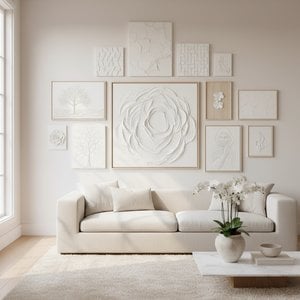
Explore 10 iconic white paintings by Monet, Whistler & Rothko! Discover the stories behind these serene masterpieces and their impact on art history. Find museum-quality reproductions for your home decor at .

Odkrijte 25 mojstrovin Kazimirja Maleviča, pionirja suprematizma! Raziskajte zgodbe za črnim kvadratom in belo na belem. Umetniške reprodukcije vrhunske kakovosti za vaš dom – WahooArt.
 Predogled v realnem okolju
 Pošlji
 Deli
Deli
 Podrobnosti o delu
 Priročnik

 Prenesi sliko
 Podobni izdelki
 Rentgenski posnetek
 Predvajaj diaporama
 Q&A
Q&A Statistika


 Preberi več









 Možnost stekla je na voljo le za velikosti pod 110 cm


