Predogled AR predogled Kupi ročno naslikano sliko Preklop na digitalno sliko Pošlji
Podrobnosti o delu Dodaj v priljubljene Prenesi Podobni izdelki Rentgenski posnetek Predvajaj diaporama Statistika

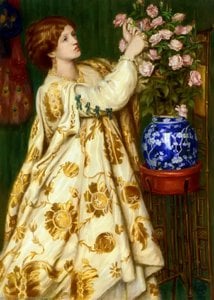
Lucrezia Borgia

Dante Gabriel Rossetti's haunting portrait of Lucrezia Borgia captures the enigmatic beauty and controversial legacy of the Renaissance’s infamous figure. Explore its symbolism & artistic details.

Meta Description: Dante Gabriel Rossetti je ključna figura estetizma in simbolizma znan zaradi svojih čutnih slik, simbolične poezije ter srednjeveških tem – umetnik, ki je spremenil umetnost svojega časa z revolucionarno dušo.

Giclée tisk / Umetniški tisk

Giclée ali platnati odtis muzejske kakovosti z hitro proizvodnjo in prilagodljivimi možnostmi končne obdelave. ( Kupi ročno naslikano sliko Preklop na digitalno sliko)

P118B $10
P118H $10
P118W $10
P438Z $10
P508JH $12
P508YH $12
P805H $10
P805Z $10
P919BZ $10
P919G $10
P919XJ $10
P959ZH $10
P968JZ $12
W106C $8
W218G $10
W218JH $8
W218Y $10
W307PJ $10
W316G $10
W316PJ $8
W316Y $10
W398PJ $8
W4111J $10
W500HY $15
W500JH $15
W692G $12
W849H $8
W940BG $15
W953PJ $8

Standardna velikost
prilagojeno
CM
INCH

Izberite eno od naših vnaprej določenih velikosti, ki ustrezajo prvotnim proporcijam umetničkega dela.

širina
višina

Svoje dimenzije lahko vnesete sami, da bodo ustrezne za določen okvir ali prostor. Če izbrana velikost ne bo skladna z razmerji izvirne slike, bomo umetniško delo orezali ali podaljšali s pomočjo ogledalnega odraza ali barvno polnega roba. Pred začetkom proizvodnje vam bomo poslali digitalni predogled za potrditev.
Upoštevajte, da predogled na zaslonu ne prikazuje dejanskega orezovanja ali podaljševanja. Le digitalni predogled bo natančno prikazal končno kompozicijo.
Čeprav so na voljo prilagojene velikosti, priporočamo izbiro dimenzije s predhodno določenega seznama, da ohranite prvotna razmerja.

Globalna dostava () v 2 tednih namesto standardnih 4/5 tednov. (16 september)

why_choose_icon
Brezplačna ekspresna dostava po vsem svetu
why_choose_icon
Visokokakovostno laneno platno
why_choose_icon
Popolno zavarovanje pošiljke
why_choose_icon
Garancija povračila carine in uvoznih davkov
why_choose_icon
Garancija popolnega ujemanja barv
why_choose_icon
Politika vračilo v 100 dneh (le v primeru okvar)
why_choose_icon
Garancija 100% povračila denarja
why_choose_icon
Popust pri večjem naročilu

Skupna cena

$ 68

reproduction

Lucrezia Borgia

Giclée tisk / Umetniški tisk

Velikost reprodukcije

-

Skupna končna cena

$ 68

Ključni podatki

  • Movement: Pre-Raphaelite
  • Title: Lucrezia Borgia
  • Influences:
    • Rossetti
    • Borgia
  • Medium: Painting
  • Subject or theme: Portraiture, Renaissance
  • Notable elements: Fruit, figures

Umetniški kviz

Pri vsakem vprašanju je na voljo le eden pravilen odgovor.

Vprašanje 1:
The painting ‘Lucrezia Borgia’ by Dante Gabriel Rossetti primarily depicts which subject?
Vprašanje 2:
Rossetti’s style in ‘Lucrezia Borgia’ is most closely associated with which artistic movement?
Vprašanje 3:
Based on the image description, what is prominently featured in the background of the painting?
Vprašanje 4:
Lucrezia Borgia’s life was often portrayed with controversy. What historical element contributed to this perception?
Vprašanje 5:
Dante Gabriel Rossetti frequently incorporated elements of which literary tradition into his artwork?

The Enigmatic Beauty of Lucrezia Borgia – A Rossetti Interpretation

Dante Gabriel Rossetti’s “Lucrezia Borgia” isn't merely a portrait; it’s an immersion into the shadowed glamour and calculated power of one of history’s most captivating figures. Painted circa 1870, this work transcends simple representation, becoming a potent exploration of beauty, intrigue, and the inherent ambiguity of female agency within the turbulent world of Renaissance Italy. Rossetti, deeply influenced by Pre-Raphaelite ideals – a movement he himself spearheaded – masterfully employs rich color palettes, meticulous detail, and symbolic elements to construct an image that simultaneously celebrates and subtly critiques Lucrezia’s complex legacy.

The subject herself is presented with a deliberate sensuality. Lucrezia, rendered in a palette of deep reds, purples, and golds, embodies the opulent excesses associated with her family – the Borgias. Her long, flowing hair, cascading over her shoulders, hints at both vulnerability and regal bearing. The delicate rendering of her hands, holding what appear to be apples or perhaps oranges (the fruit’s precise identification remains debated), adds a layer of quiet contemplation to the scene. Rossetti's signature brushwork is evident in the luminous quality of the fabrics and the subtle modeling of the face – a technique designed to capture not just appearance but also an underlying emotional state.

Pre-Raphaelite Symbolism and Narrative Depth

As a key figure within the Pre-Raphaelite Brotherhood, Rossetti infused his work with layers of symbolic meaning. The choice of fruit is particularly significant. Apples, frequently associated with temptation and knowledge (as in the story of Adam and Eve), could represent Lucrezia’s own perceived role as a catalyst for political maneuvering and familial discord. The background, though somewhat indistinct, suggests a richly furnished interior – a space of power and privilege, yet also hinting at confinement and perhaps even melancholy. The inclusion of figures in the distance, partially obscured, reinforces this sense of hidden narratives and unspoken secrets.

Rossetti’s artistic choices align perfectly with the Pre-Raphaelite emphasis on detailed observation and moral allegory. He wasn't simply painting a likeness; he was attempting to capture an essence, a psychological truth beneath the surface. The lighting, diffused and atmospheric, contributes to this effect, creating a sense of mystery and inviting the viewer to contemplate Lucrezia’s inner world.

The Borgia Legacy: Intrigue and Artistic Representation

Lucrezia Borgia's life was one of dramatic political maneuvering, scandalous rumors, and ultimately, tragic circumstances. Born into a family renowned for its ruthlessness and ambition, she navigated the treacherous currents of Renaissance Italy as a pawn in her father’s power games – a strategy that involved strategic marriages designed to consolidate his influence. The opera “Lucrezia Borgia,” composed by Donizetti, further cemented her image as a femme fatale, a woman whose beauty masked a dangerous and manipulative nature.

Rossetti's painting doesn’t shy away from this complex narrative. It acknowledges the inherent drama of Lucrezia’s life while simultaneously presenting her with an undeniable allure. The artist skillfully avoids simplistic judgment, instead offering a nuanced portrait that invites viewers to grapple with the ambiguities of her character and the historical context in which she lived. It's a testament to Rossetti’s ability to transform a notorious historical figure into a compelling work of art – one that continues to fascinate and provoke discussion today.

A Reproduction for Collectors: Bringing Rossetti’s Vision to Life

WahooArt is proud to offer meticulously hand-painted reproductions of Dante Gabriel Rossetti's “Lucrezia Borgia.” Our artists, trained in the finest techniques of traditional painting, recreate the artwork's rich textures, luminous colors, and intricate details with unparalleled accuracy. Each reproduction is created on archival-quality canvas using pigments that will endure for generations, ensuring that this iconic image remains vibrant and captivating for years to come.

Whether you’re a seasoned art collector, an interior designer seeking a statement piece, or simply an admirer of Pre-Raphaelite beauty, our “Lucrezia Borgia” reproduction offers a stunning opportunity to own a tangible connection to one of the Victorian era's most celebrated artists. Explore the available sizes and framing options on our website to discover the perfect way to bring this enigmatic portrait into your home or office.


Biografija umetnika

A Life Immersed in Beauty: The World of Dante Gabriel Rossetti

Dante Gabriel Rossetti, born Gabriel Charles Dante Rossetti in 1828 London, was a figure profoundly shaped by the currents of his time—a Romantic spirit blossoming into the Victorian era. His lineage itself hinted at the artistic destiny that awaited him; his father, an Italian political refugee and scholar of Dante Alighieri, instilled within young Gabriel a deep reverence for literature and the arts. This early exposure, coupled with a mother who nurtured his intellectual curiosity, laid the foundation for a life dedicated to creative expression. Though initially considering a clerical career, Rossetti’s true calling lay in the realm of aesthetics—a path he would forge as a poet, illustrator, and, most notably, a painter whose works continue to captivate audiences today. His formative years were steeped in the literary giants of his age – Shakespeare, Dickens, Scott, Byron – all contributing to a rich imaginative landscape that would later define his artistic vision.

The Pre-Raphaelite Rebellion and Artistic Awakening

Rossetti’s name is inextricably linked with the Pre-Raphaelite Brotherhood, a revolutionary movement he co-founded in 1848 alongside William Holman Hunt and John Everett Millais. This wasn't merely an artistic shift; it was a rebellion against the perceived artificiality of academic painting prevalent at the time. The Brotherhood sought to return to the detailed realism, vibrant colors, and spiritual intensity found in Italian and Flemish art *before* the High Renaissance – hence “Pre-Raphaelite.” This meant rejecting the idealized forms and conventional compositions favored by the Royal Academy, instead embracing a meticulous observation of nature and a commitment to truthful representation. Rossetti’s early works, such as *The Girlhood of Mary Virgin*, exemplify this dedication, showcasing an almost photographic level of detail alongside symbolic imagery drawn from religious texts. The Brotherhood’s manifesto wasn’t just about *how* to paint, but *what* to paint – focusing on themes of morality, spirituality, and beauty with an intensity that challenged Victorian sensibilities. He championed the Pre-Raphaelite ideal—a rejection of academic conventions in favor of a return to artistic inspiration from earlier masters—and his unwavering commitment to this vision solidified his place as one of the most influential figures in British art history. Rossetti’s meticulous attention to detail, combined with his profound understanding of symbolism and mythology, distinguished him from his contemporaries and established him as a pioneer of Aestheticism.

Evolving Styles: Symbolism, Sensuality, and the Female Muse

As Rossetti's career progressed, his artistic style underwent a fascinating evolution. While initially adhering to the strict tenets of Pre-Raphaelite realism, he gradually moved towards more symbolic and dreamlike imagery. His paintings became increasingly infused with sensuality, exploring themes of love, loss, and spiritual longing with an emotional depth that resonated deeply with audiences. This shift was partly influenced by his personal life, particularly his complex relationships with the women who served as his models and muses – Elizabeth Siddal, Fanny Cornforth, and Jane Morris. These women weren’t merely passive subjects; they embodied a particular aesthetic ideal for Rossetti—often depicted with flowing red hair, melancholic expressions, and an air of enigmatic beauty. Paintings like *Proserpine* are prime examples of this later style, showcasing his mastery of symbolism and his ability to evoke a sense of otherworldly allure. The rich colors, dramatic lighting, and evocative poses all contribute to the painting’s haunting atmosphere. He also began to seamlessly blend poetry and visual art, often writing sonnets to accompany his paintings, creating a unified artistic experience that engaged both the eye and the mind. *Behold the handmaid of the Lord! (The Annunciation)* is a testament to this integrated approach. Rossetti's exploration of psychological depth—a characteristic that distinguishes him from many of his peers—reflected the broader intellectual currents of Victorian England, where thinkers wrestled with questions of morality, spirituality, and the role of art in shaping human consciousness.

Major Achievements and Legacy

Rossetti achieved considerable acclaim during his lifetime as a poet and painter, establishing himself as one of the foremost artists of his era. His poems—particularly *The House of Life*, which delves into themes of mortality, memory, and artistic creation—are considered masterpieces of Victorian lyricism. He captivated audiences with his evocative imagery and profound emotional resonance, cementing his reputation as a visionary artist who challenged conventional norms. Beyond his literary accomplishments, Rossetti’s paintings—including *Ophelia*, *Ecstasy*, and *Sleeping Beauty*—remain iconic representations of Pre-Raphaelite art and continue to inspire artists today. His meticulous technique—characterized by painstaking detail and vibrant color palettes—demonstrates a mastery of artistic craft that transcends time. Furthermore, Rossetti profoundly influenced subsequent generations of artists and writers, shaping the aesthetic sensibilities of movements such as Aestheticism and Symbolism. He championed beauty in all its forms—from the sublime grandeur of nature to the delicate intricacies of human emotion—leaving behind a legacy that celebrates creativity and spiritual contemplation. Dante Gabriel Rossetti’s enduring influence testifies to his ability to capture the essence of the Victorian spirit—a spirit marked by both intellectual curiosity and artistic fervor.

Historical Significance: A Catalyst for Artistic Change

Rossetti's contribution to British art history extends beyond mere stylistic innovation; he served as a catalyst for transformative change within the artistic landscape of his time. His defiance of academic conventions—his insistence on prioritizing emotional expression over formal imitation—challenged the prevailing aesthetic standards and paved the way for new artistic explorations. He helped usher in an era of Symbolist art, where artists sought to convey complex psychological states through evocative imagery and poetic language. Rossetti’s unwavering commitment to his artistic vision—a vision rooted in Pre-Raphaelite ideals—established him as a pivotal figure in shaping British culture and intellectual life. His legacy continues to inspire artists and scholars alike, reminding us of the importance of questioning assumptions and embracing creativity as a means of confronting existential questions. Dante Gabriel Rossetti remains an unforgettable artist whose work embodies the spirit of Romanticism and heralds the dawn of Symbolism—a testament to his enduring influence on the course of art history.
Dante Gabriele Rossetti

Dante Gabriele Rossetti

1828 - 1882 , Združeno kraljestvo

Hitri podatki

  • Artistic Movement Or Style: Pre-rafaelitska umetnost
  • Artists Who Influenced This Artist:
    • John Keats
    • William Blake
  • Date Of Birth: 12. maj 1828
  • Date Of Death: 9. april 1882
  • Full Name: Dante Gabriel Rossetti
  • Nationality: Britanski
  • Notable Artworks:
    • Proserpine
    • Joan of Arc
    • King Rene's Honeymoon
  • Place Of Birth: London, UK
Raziščite umetniška dela, razvrščena po temah, slogih in značilnostih.