PredogledPredogled AR predogledAR predogled Preklop na tiskanine Preklop na tiskanineKupi ročno naslikano sliko Kupi ročno naslikano sliko PošljiPošlji
Podrobnosti o deluPodrobnosti o delu Dodaj v priljubljene Dodaj v priljubljene PrenesiPrenesi Podobni izdelkiPodobni izdelki Rentgenski posnetekRentgenski posnetek Predvajaj diaporamaPredvajaj diaporama StatistikaStatistika

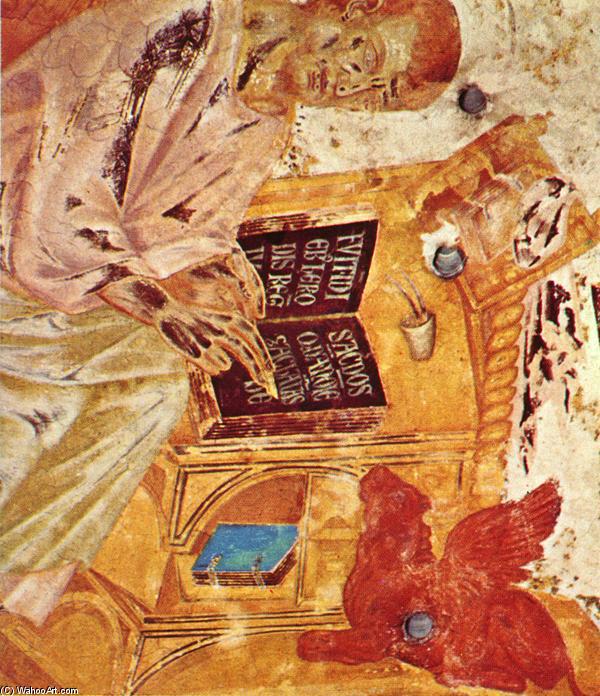
St Luke (detail)

Explore Cimabue’s ‘St Luke (detail)’ – a pivotal Early Renaissance fresco showcasing Byzantine influence & linear realism. Discover 13th-century Italian art at its finest!

Cimabue je italijanski mojster iz obdobja bizantinske umetnosti, ki je postavil temelje za renesanso z realističnimi figurami in inovativnim pristopom k prostoru ter svetlosti. Odkrijte njegove veličastne freske!

Kupite digitalno sliko visoke ločljivosti z izboljšano kakovostjo, ki je precej boljša od spletnega predogleda.

Vsaka datoteka je pod natančnim nadzorom naših strokovnjakov, ki uporabljajo napredna orodja in strokovno ročno obdelavo. Zagotovimo, da ima vsaka slika izjemno jasnost, natančnost barv in fine podrobnosti.

Končna datoteka je po e-pošti dostavljena v 72 urah, optimizirana za takojšnjo uporabo v profesionalnem, uredniškem in tiskarskem okolju. To je kakovost, ki ji zaupajo vrhunska oblikovalna studia, založniki in galerije.

Digitalna slika

Prenesite datoteko visoke ločljivosti za osebno uporabo, tiskanje in kreativne projekte. (Preklop na tiskanine Preklop na tiskanineKupi ročno naslikano sliko Kupi ročno naslikano sliko)

Skupna cena

$ 24,90

Vključeno v vsako naročilo digitalne slike

Zagotovljena strokovna digitalna dostava

Ko izberete WahooArt.com, ne prejmete le slike – prejmete digitalno umetniško delo, ki je profesionalno urejeno, izdelano z natančnostostjo in zavestno zagotovljeno z garancijo za zadovoljstvo. Tukaj je vse, kar samodejno prejmete z vašim naročilom:

shipping_icon
Hitra dostava prek e-pošte

Vaša digitalna slika visoke ločljivosti bo na vaš e-naslov poslana v roku 72 ur od zaklopa naročila – pripravljena za takojšnjo uporabo.

canvas_icon
Digitalna datoteka z umetno inteligenco

Vaše umetniško delo je strokovno optimizirano z uporabo naprednih orodij umetne inteligence in ročne obdelave, kar zagotavlja največjo stopnjo podrobnosti, jasnosti in barvne natančnosti.

insurance_icon
Brezplačna ponovna dostava za vse življenje

Ste zaradi nespremietne napake izgubili ali izbrisali svojo datoteko? Ni težav – vam jo bomo ponovno poslali kadar koli in brezplačno.

tax_icon
Brez uvoznih pristojbin – vedno

Uživajte v svojem umetniškem delu takoj, brez carin, davkov ali stroškov dostave – digitalni prenosi so vedno brezdavčni.

color_icon
Zagotovilo natančnosti barv

Z uporabo profesionalnih orodij in upravljanja barv zagotavljamo, da vaša digitalna slika čim bolj natančno odraža prvotne barve.

return_icon
100-dnevna garancija zadovoljstva

Če niste zadovoljni s svojo digitalno sliko, jo bomo uredili ali povrnili 100% zate v 100 dneh – brez kakršnih koli vprašanj.

guarantee_icon
100% Garancija povračila denarja

Niste zadovoljni? Zagotavljamo vam popoln povračilo sredstev v 100 dneh po prejemu digitalne datoteke – brez dodatnih vprašanj.

discount_icon
Popusti pri večjem številu naročil

Kupite 3 slike, prihranite 10% - Kupite 5 slik, prihranite 15% - Kupite 10+ slik, prihranite 20%. Odlično za kreativne projekte, galerije in agencije.

Ključni podatki

  • medium: Fresco
  • subject: St. Luke the Evangelist
  • influences: Byzantine art
  • dimensions: 450 x 900 cm
  • movement: Early Renaissance
  • artist: Cimabue

Umetniški kviz

Pri vsakem vprašanju je na voljo le eden pravilen odgovor.

Vprašanje 1:
To what artistic period does Cimabue's 'St Luke (detail)' primarily belong?
Vprašanje 2:
Cimabue is recognized for moving *away* from which dominant artistic style of his time?
Vprašanje 3:
What painting technique was used to create 'St Luke (detail)'?
Vprašanje 4:
The open books held by St. Luke symbolically represent what?
Vprašanje 5:
What is a defining characteristic of Cimabue's style as he moved towards greater realism?

A Glimpse into a Changing World: Cimabue’s *St Luke (detail)*

This captivating detail from Cimabue's fresco of St. Luke offers a profound window into the pivotal moment when Italian art began to break free from the rigid conventions of the Byzantine tradition. Painted around 1280, this section – measuring an impressive 450 x 900 cm in its entirety – isn’t merely a religious depiction; it's a testament to artistic innovation and the dawn of a new era in painting.

Subject & Narrative

The fragment focuses on St. Luke, traditionally considered the author of the Gospel of Luke and the Acts of the Apostles, and patron saint of artists. He is depicted as a scholar or cleric, deeply engrossed in his work. He holds open several books, likely representing the scriptures he penned, and extends a hand in what appears to be a gesture of teaching or revelation. The surrounding architectural elements suggest an interior setting – perhaps a study or scriptorium – conducive to learning and contemplation. While part of a larger narrative scene, this detail powerfully conveys Luke’s intellectual pursuit and devotion.

Style & Technique: Bridging Byzantium and the Renaissance

Cimabue (born Cenni di Pepo), active in Florence and Pisa, was instrumental in transitioning from the Italo-Byzantine style to a more naturalistic approach. While still exhibiting hallmarks of Byzantine art – such as the use of gold leaf (not visible in this detail but present in the full fresco), flattened perspective, and hierarchical scale – this work demonstrates Cimabue’s burgeoning interest in realism. Notice the attempts at modeling forms through subtle shading, a departure from the flat, iconic representations prevalent in earlier Byzantine works. The technique employed is *fresco*, where pigments are applied to wet plaster, creating a durable and vibrant surface. This explains the textured appearance with visible brushstrokes and variations in paint application.

Color & Composition

The color palette is dominated by warm earth tones – ochres, yellows, and reds – lending the scene an air of antiquity and solemnity. The composition is dense and layered, characteristic of fresco work, with figures overlapping and receding into a shallow depth of field. Linearity is key; defined lines structure the figures and architectural elements, contributing to the overall sense of order. Geometric shapes – rectangular books, arched doorways, rounded drapery – further reinforce this structured aesthetic.

Symbolism & Historical Context

The open books are potent symbols of knowledge, scripture, and divine inspiration. St. Luke’s gesture signifies instruction or the transmission of sacred truth. Created during a period of significant social and religious change in Italy, Cimabue's work reflects a growing humanistic interest alongside continued devotion to Christian themes. He was a contemporary of Giotto, often considered his student, and both artists played crucial roles in laying the foundations for the Renaissance. Vasari’s “Lives of the Most Excellent Painters, Sculptors, and Architects” provides valuable (though sometimes debated) insights into Cimabue's life and career.

Emotional Impact & Aesthetic Appeal

Despite its age, this detail from *St Luke* evokes a sense of quiet contemplation and reverence. The artist’s skillful use of line, color, and composition draws the viewer into the scene, inviting reflection on themes of faith, knowledge, and artistic creation. For collectors and interior designers, a high-quality reproduction of this work offers a timeless piece that blends historical significance with aesthetic beauty – a subtle yet powerful statement for any space. It’s a reminder of art's capacity to both reflect and shape our understanding of the world.

Biografija umetnika

Giovanni Cimabue: Pioneer of Italian Painting

Giovanni Cimabue, born Cenni di Pepo around 1240 in Florence, stands as a monumental figure—a bridge between the established artistic traditions of the Byzantine world and the burgeoning innovations that would define the Italian Renaissance. His life, though partially obscured by time and romanticized accounts – most notably those penned by Giorgio Vasari centuries later – marks an undeniable turning point in Western art history. Cimabue wasn’t simply a painter; he was a courageous innovator who dared to subtly challenge artistic conventions, laying the groundwork for the revolutionary changes that would soon sweep across Italy. Even his nickname, believed to mean “bull-headed,” hints at a strong will and perhaps a rebellious spirit—qualities demonstrably present in his willingness to experiment with form and expression. He represents a crucial moment where art began to shift from being solely devotional imagery towards something more humanistic and emotionally resonant.

Early Influences and Artistic Development

Initially immersed in the Italo-Byzantine style prevalent throughout Florence, Cimabue’s early work adhered closely to established aesthetic principles: flattened figures adorned with shimmering gold leaf, symbolic rather than realistic depictions of space, and a profound focus on religious iconography. However, even within these constraints, a nascent desire for naturalism began to emerge. He wasn't content merely replicating existing forms; he sought to imbue his paintings with a greater sense of life and emotional depth. While the precise nature of his early training remains debated, it’s likely he honed his skills within Florentine workshops, absorbing the techniques and influences of the time while simultaneously developing his own unique artistic voice. The Byzantine style, characterized by its formality and spiritual focus, provided him with a solid foundation, but Cimabue began to subtly introduce elements that would foreshadow the coming Renaissance—a greater attention to volume, more expressive facial features, and a nascent understanding of spatial relationships. This wasn’t a sudden break from tradition, but rather a gradual evolution, a delicate balancing act between honoring the past and embracing new possibilities.

Masterpieces and Artistic Innovations

Cimabue's legacy is cemented through a series of breathtaking works that showcase his evolving style. The Maestà (Louvre), originally created for the Church of San Francesco in Pisa, stands as one of his most celebrated masterpieces. This monumental altarpiece exemplifies his mastery of composition and use of color, while simultaneously hinting at the shift away from rigid Byzantine conventions. The figures, though still possessing a degree of formality, exhibit a newfound sense of volume and presence. The Crucifixion (San Domenico, Arezzo), dating around 1270, is particularly significant as an early demonstration of his departure from strict Byzantine norms. Here, the proportions are more realistic, and the emotional weight of the scene is palpable—a stark contrast to the often-distant depictions found in earlier religious art. Further evidence of Cimabue’s innovative spirit can be seen in works like the Flagellation of Christ (Frick Collection), generally attributed to his workshop. This complex composition reveals an evolving understanding of perspective and spatial relationships, showcasing a growing interest in creating more immersive and believable scenes. His contributions weren't limited to panel paintings; Cimabue also excelled as a mosaicist, contributing significantly to the decoration of the Baptistery of Florence—though these mosaics have unfortunately suffered from deterioration over time.

A Pivotal Teacher: Giotto and Beyond

Perhaps Cimabue’s most enduring legacy lies in his role as the teacher of Giotto di Bondone. While historical accounts vary regarding the exact nature of their relationship, it is widely accepted that Giotto received crucial training under Cimabue's guidance. However, Giotto would ultimately surpass his master, revolutionizing Italian painting with an even more radical embrace of naturalism and emotional realism. It’s a testament to Cimabue’s skill as a teacher that he fostered such talent, even knowing it might eclipse his own achievements. The story, often recounted by Vasari, of Giotto playfully painting a fly on Cimabue's face speaks volumes about the dynamic between master and pupil—a playful rivalry that ultimately pushed both artists to greater heights. Cimabue’s influence extended beyond Giotto, impacting numerous other artists of the period. He challenged the artistic norms of his time, demonstrating that art could be more than just religious symbolism; it could also reflect human emotion and experience. His willingness to experiment with form, proportion, and expression paved the way for the innovations of the Renaissance, establishing him as a crucial transitional figure in the history of Western art.

Enduring Significance

Cimabue passed away in 1302 in Pisa, leaving behind a body of work that continues to captivate and inspire. Despite his significant contributions, details surrounding his later life remain scarce. However, his artistic legacy resonates powerfully through the works of his students and the evolution of Italian art. He represents a crucial step in the development of Western painting, moving away from the stylized conventions of the Byzantine era towards a more humanistic and naturalistic approach. His paintings are not merely historical artifacts; they are windows into a pivotal moment in artistic history—a time when artists began to question established norms and explore new possibilities. He was a pioneer, a visionary who dared to challenge the status quo and lay the foundations for the artistic brilliance that would define the Renaissance. Cimabue’s work reminds us that even within tradition, there is always room for innovation, and that true artistry lies in the courage to push boundaries and explore new horizons.

Cimavbe

Cimavbe

1240 - 1302 , Italija

Ključne informacije

  • Artistic Movement Or Style: Bizantinski & Renesans
  • Artists Or Movements Influenced By This Artist: ['Giotto']
  • Artists Who Influenced This Artist:
    • Giunta Pisano
    • Coppo di Marcovaldo
  • Date Of Birth: c. 1240
  • Date Of Death: 1302
  • Full Name: Giovanni Cimabue
  • Nationality: Italski
  • Notable Artworks:
    • Maestà
    • Križanje
    • Občutjevanje Kristusa
  • Place Of Birth: Florence, Italy