Likmasterstvo bizantinskega vpliva
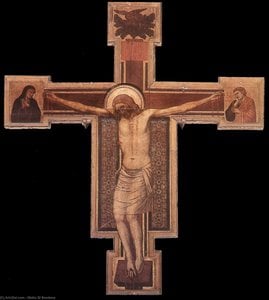
Cimabuejev "Križ" stoji kot monumentalno del iz konca 13. stoletja, ki utelja prehod od bizantinske ikonografije do začetnega realizma renesančne umetnosti. Ustvarjen okoli leta 1287, ta velikostni križ je spomenik Cimabuejevega inovativnega pristopa, saj združuje tradicionalno religiozno simboliko z prihajajočimi umetniškimi tehnikami, ki so pavedale pot prihodnjim mojstrom, kot je Giotto.
Motiv in kompozicija
Umetnostni izdelek prikazuje razpeljanje Jezusa Krista, osrednjo temo v kristjanski umetnosti. Kompozicija sledi tradicionalnemu križnemu razložilu, kjer je figura Jezusa v središču izpostavljena in prevladujoča. Na obeh straneh križa sta dva žalostnika, ki verjetno predstavljata Devi Mariji in svetemu Janezu Evangelistu, kar sceni dodaja globoko čustveno težo.
Stil in tehnika
Cimabuejev slog zaznamuje mešanica bizantinskih vplivov in novosti zgodnje renesanse. Uporaba bogatih barv, zlasti globokih modrih, rdečih in zlatih tonov, ustvarja občutek spoštovanja in božanstva. Figure so slikane z bolj živopisnimi proporcijami in sofisticirano senčenjem v primerjavi s prejšnjo srednjoveško umetnostjo, kar nakazuje volumensko plastičnost in globino.
Delo je izvedeno s tempero na lesenem leseni plošči, kar je bila običajna tehnika tistega obdobja. Akcenti zlata v listkih dodajajo svetlobno kakovost, ki povečuje svetost scene. Natančna pozornost detajlov pri prikazovanju kože in oblačil figur prikazuje Cimabuejevo mojstristvo v njegovi umetnosti.
Zgodovinski kontekst
Cimabue, rojen okoli leta 1240 v Florenci, je bil ključna figura v evoluciji italijanske umetnosti. Njegovo del je označilo pomembno odstopanje od ploščatih, shematičnih metod bizantinskega slikarstva, saj je uvedlo elemente realizma in čustvene izraznosti, ki so postali značilnosti renesanse.
"Križ" je eno Cimabuejevih najstarejših pripisovanih del, naročeno od strani dominikanskega reda za baziliko San Domenico v Arezzoju. To naročilo izpostavlja pomen religiozne umetnosti v srednjevečni družbi in vlogo umetnikov, kot je Cimabue, pri oblikovanju duhovnih izkušenj skozi vizualno pripovedovanje.
Simbolika in čustveni vpliv
Scena razpeljavanja je bogata s simbolnimi elementi, vključno s samim križem, ki predstavlja žrtvovanje in odkupnico, ter aureolami okoli glav figur, ki označujejo njihjo svetost. Žalostniki na obeh straneh izražajo bolečino in žalost, kar delu dodaja čustveno dimenzijo.
Cimabuejev prikaz Kristovega telesa, slikano z senčenjem in občutkom plastičnosti, prinaša globok občutek trpljenja in človečnosti. To odstopanje od togih bizantinskih figur Krista na križu napoveduje bolj ekspresivne in naravne predstavitve, ki bodo definiral renesančno umetnost.
Zakaj zbirati ali izpostaviti to umetniško delo
Za ljubitelje umetnosti, zbiratelje in oblikovalce notranjih prostorov Cimabuejev "Križ" ponuja edinstveno mešanjo zgodovinske pomembnosti in umetniške briljantnosti. Njegova bogata barvna paleta, zapleteni detajli in čustvena globina ga naredijo očarljivo dodajo v katero koli zbirko.
Kot visokokakovostna reprodukcija lahko to umetniško delo služi kot osupljiv središčni element tako v tradicionalnih kot v sodobnih notranjih prostorih. Njegove brezčasne teme in mojstrovska izvedba zagotavljajo, da bo ostalo cenjeno delo za prihajajoče generacije.
Doživite globoko lepoto in duhovni resonanco Cimabuejevega "Križa", mojstra, ki povezuje srednji vek in renesanso ter v vaš prostor prinaša dotik svetega umetniškega izražanja.
Vprašanja in odgovori
Katere velikosti bi moral "Križ Cimabua" natisniti za mojo sobo?
Priporočena kombinacija za "Križ Cimabua" avtorja Cimavbe: tiskanec v velikosti Velika dimenzija v Dnevna soba.
Kakšnih je originalnih dimenzij "Križ Cimabua"?
Originalne dimenzije dela "Križ Cimabua" znašajo 448 x 390 cm. Prvotne mere so koristna referenca pri izbiri velikosti reprodukcije.
V katero obdobje Cimavbeove kariere spada "Križ Cimabua", glede na datum njegove powstale?
"Križ Cimabua", ustvarjeno leta 1287, pripada Proto-Renaissance v karieri umetnika Cimavbe.



 Preverite v realnem okolju
 Naročite ročno slikano reprodukcijo
 Pošlji kot čestitko
 Deli
Deli
 Podrobnosti
 Priročnik

 Prenesi
 Podobni artefakti
 Rentgenski posnetek
 Predvajaj diaporama
 Statistika


 Preberi več






































 Možnost stekla je na voljo le za velikosti pod 110 cm