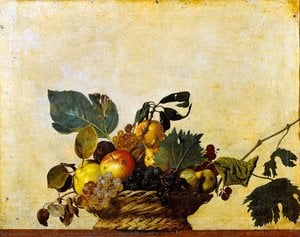
Biografija umetnika
Michelangelo Merisi da Caravaggio: Življenje v Senci in Svetlobi
Michelangelo Merisi da Caravaggio, ime tesno povezano z dramatično intenzivnostjo baročnega slikarstva, se je rodil leta 1571 v Milanu, v obdobju umetniškega razcveta in družbenih sprememb. Že zgodnje leto njegovega življenja je bilo zaznamovano s tragedijo; kuga je pustošila njegovem rodu, za sabo puščajoč številne žrtve, med njimi tudi njegovega očeta in dedka, ko je bil star le šest let. Odraščal je v relativni revščini, kar mu je vcepilo globoko zavedanje o človeškem trpljenju in odpornosti – temah, ki so kasneje prevladovale na njegovih platnih. Učil se je pri Simone Peterzanu v Milanu, sledniku Tiziana, kjer je osvojil osnove renesančne tehnike, a že takrat je kazal uporništvo, ki je kmalu razbilo ustaljene norme. Ta izobrazba mu je dala trdno podlago, vendar je bilo šele v Rimu, kamor se je preselil okoli leta 1592, da je Caravaggio našel svoj glas, čeprav ne brez prvih težav in preizkušenj. Mesto, živahno središče umetniškega mešetarjenja in verske gorečnosti, ga je privlačilo in hkrati preizkušalo kot ambicioznega mladega slikarja.
Revolucionarno Vizijo: Tehnika in Stil
Caravaggiova prisotnost v Rimu je napovedala dramatično spremembo v italijanskem umetniškem okolju. Zavrgel je tedanje manieristične stile, ki so bili značilni po svoji umetni eleganci in podaljšanih oblikah, in se odločil za neusmiljeno realnost, ki je šokirala in hkrati očarala občinstvo. Njegova najbolj prepoznavna inovacija je bila mojstrstvo v uporabi *chiaroscuro*, dramatičnem kontrastu med svetlimi in temnimi toni, ki ga je dvignil na novo raven izrazne moči. Ta tehnika, pogosto imenovana *tenebrism*, ni bila le estetska izbira; bila je sredstvo za intenziviranje čustvenega vpliva, potapljanje gledalcev v srce dogodka in obdaritev njegovih figur s prepoznavnim občutkom prisotnosti. Zavrgel je idealizirane prikaze in namesto tega je svoje slike posvetil navadnim ljudem – pogosto pobeglim z rimskih ulic – kot modelom za verske figure. Ta radikalna poteza je izzvala tradicionalne predstave o lepoti in svetočnosti, naredila pa je sveto razumljivo in globoko človeško. Njegove kompozicije so bile pogosto stroge in neposredne, osredotočene na ključne trenutke intenzivne drame, bodisi bruskega realizma v "Vzemu Kristusa" ali tihega razmišljanja v "Sv. Frančišku Asiškem v extazi".
Ključna Dela in Trajnostni Vpliv
Kljub relativno kratki karieri je Caravaggio ustvaril delo, ki še danes odzveneva pri občinstvu. Zgodnja dela, kot je "Vedeževalka" (1594), dokazujejo njegovo razvijajoč se talent za zajem realističnih podrobnosti in psihološke nians. "Večerja v Emausi" (1601-1602), ki jo hranijo v Narodni galeriji v Londonu, uteleša njegovo mojstrstvo chiaroscuro in sposobnost prenosa globoke čustvene globine znotraj svetopisemske pripovedi. "David z glavo Golijata" (okoli 1610) je posebej strahotesna, pogosto interpretirana kot avtoportret, ki odraža Caravaggiovo lastno moteno duševno stanje. Njegov vpliv se je razširil daleč izven Italije in navdihnil generacijo umetnikov, znanih kot *Caravaggisti* ali "sence", ki so po Evropi sprejeli njegov stil. Med pomembnimi privrženci so bili Peter Paul Rubens, Jusepe de Ribera in Gerrit van Honthorst, vsak od njih je prilagodil Caravaggiove tehnike svojemu edinstvenemu umetniškemu vidiku.
Neusmiljeno Življenje in Trajna Zapuščina
Caravaggiovo življenje je bilo tako dramatično in burno kot njegova umetnost. Njegov nestabilen značaj in nagnost k prepirovom so ga pogosto pripeljali v težave z zakonom, kar se je končalo s obtožbo za umor leta 1606, ki ga je prisilila, da pobegne iz Rima. Naslednje štiri leta je potoval po Neaplju, Malti in na Siciliji, medtem ko je še naprej slikal in obenem žalostno prosil za odpuščanje papeža. Kljub njegovim prizadevanjem je ostal begunec, pregonjen s svojo preteklostjo in mučenimi osebnimi konflikti. Umrl je v Porto Ercole na Siciliji leta 1610 v nerazjasnenih okoliščinah – vzrok njegove smrti še danes ni znan, teorije pa segajo od vročine do zastrupitve. Čeprav je bilo njegovo življenje kratko, Caravaggiova umetniška zapuščina ostaja priča njegovemu revolucionarnemu vidiku in neomajnemu zavezništvu s realizmom. Izpodbijal je konvencije svoje dobe, utiral pot sodobnejšemu pristopu k slikanju in pustil neizbrisov sled na poti zahodnoodevropske umetnosti. Njegovo delo še danes navdihuje čudovanje in sproža razmišljanja, opominja pa nas na moč umetnosti, da osvetli najtemnejše kote človeške izkušnje.



 Predogled v realnem okolju
 Kupite ročno slikano delo
 Pošlji
 Deli
Deli
 Podrobnosti o delu
 Priročnik

 Prenesi sliko
 Podobni izdelki
 Rentgenski posnetek
 Predvajaj diaporama
 Q&A
Q&A Statistika
 Preberi več






































 Možnost stekla je na voljo le za velikosti pod 110 cm