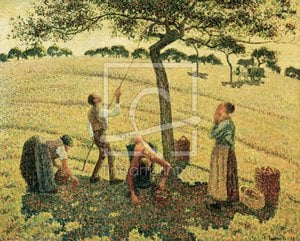
Življenje, zakoreninjeno v opazovanju: Svet Camillea Pissarra
Camille Pissarro, ime tesno povezano z nastankom in razvojem impresionizma, je bil slikar, čigar življenje odzivalo na spreminjajoče se pokrajine, ki jih je tako predano upodabljal na platnu. Rojen kot Jacob Abraham Camille Pissarro 10. julija 1830 v Charlotte Amalie, St. Thomas – takrat del Danskih otokov, zdaj ZDA Deviških otokov – so bila njegova porekla tako raznolika in živahna kot prizori, ki so kasneje definirali njegovo umetniško vizijo. Njegov oče, portugalski judovski trgovac s francosko državljanstvo, in mati iz družine francoških Judov na otoku sta mu vcepila edinstveno kulturno dediščino. Ta vzgoja, nekoliko neobičajna zaradi družinskih zapletov, je gojila zgodnjo občutljivost za svet okoli njega, kvaliteto, ki je postala temelj njegove umetniške prakse. Njegova prva formalna izobrazba v akademiji Savary blizu Pariza mu je dala osnovo tradicionalnih tehnik, vendar je bilo njegovo vrnitev na St. Thomas in kasnejše delo kot pomočnik tovornih posrednikov tisto, kar je resnično prižgalo njegovo strast do opazovanja. Razcvetoča pristanišče, živahno lokalno življenje in surova lepota karibskega kraja so postale njegove prve teme, ki so oblikovale oko, ki je bilo izjemno občutljivo na razlike vsakdanjega obstoja.
Od realizma do revolucije: Umetniški razvoj
Pissarrova umetniška pot je bila nenehno raziskovanje in izpopolnjevanje. Po obdobju, ko je pomagal danskemu slikarju Antonu Melbyeju v Parizu, se je poglobil v dela mojstrov, kot so Gustave Courbet, Jean-Baptiste-Camille Corot in Honoré Daumier – umetnikov, ki so zagovarjali realizem in družbene komentarje. Sprva si je prizadeval za sprejetje v uveljavljenem svetovnem likovnem svetu, razstavljal je na pariškem Salonu, vendar ga je kmalu začela ovirati njegova omejenost. Ključen trenutek je prišel z njegovim sprejemom slikanja *en plein air* – delo na prostem neposredno iz narave – prakse, ki jo je spodbujal Corot in postala osrednja za impresionizem. Ta premik ni bil le tehnične narave; predstavljal je filozofsko spremembo, željo po zajemanju minljivih učinkov svetlobe in atmosfere, bistva scene namesto natančne predstavitve. Začel je eksperimentirati z bolj prosto uporabo čopiča in svetlejšimi paletami, odmaknil se je od akademskih konvencij proti izrazitejšemu stilu. Njegove zgodnje krajine, čeprav še vedno utemeljene v realizmu, so napovedovale pot, po kateri se bo kmalu podal. To obdobje je zaznamovalo iskanje svojega glasu sredi burilnega umetniškega fermenta Pariza, mesta, ki doživlja hitre spremembe in nudi nešteto navdihov.
Oče impresionizma
Camille Pissarro ni bil le *eden* izmed impresionistov; je morda najbolj stalen in združevalni silovitost gibanja. Edinstveno je sodeloval na vseh osmih pariških impresionističnih razstavah med leti 1874 in 1886, deloval pa je kot stabilna prisotnost znotraj skupine, ki jo pogosto zaznamujejo notranji nesporazumi in individualne ambicije. Ni bil le prisoten – aktivno je spodbujal svoje sobožnike, jim nudil podporo, vodstvo in potrebno povezanost. Zaradi tega si je zaslužil ljubeznivo ime "očeta" gibanja. Njegova zaveza umetniški svobodi in inovativnosti je bila neomajna celo v primeru kritičnega prezira in javne nezainteresiranosti. Verjel je v moč kolektivnih akcij in zagovarjal idejo, da bi se umetniki razstavljali neodvisno od omejitev Salona. Poleg svojega dela je Pissarrov vpliv segal na mlajšo generacijo umetnikov, med katerimi so bili Paul Cézanne, Vincent van Gogh in Paul Gauguin, ki jih je mentoriral in globoko vplival nanj. Zagotovil jim je ne le tehnične nasvete, ampak tudi filozofski okvir za njihove umetniške raziskave. Njegova pripravljenost na eksperimentiranje ga je kratko popeljala v neoimpresionizem, pod vplivom točkastih tehnik Georga Seurata in Paula Signaca, preden se je nazadnje vrnil k bolj osebni stilu, ki je združeval njegovej zgodnejše vtise z novimi odkritji.
Pokrajine življenja: Teme in zapuščina
Pissarrov umetniški izhod je bil izjemno raznolik, vendar je dosledno osredotočen na svet okoli njega. Slavljen je zaradi svojih upodobitev tako podeželskih kot mestnih pokrajin, pogosto prikazuje prizore vsakdanjega življenja – kmetje, ki delajo na poljih, razcvetela pariška mesta, mirna vaška trga. Njegove slike niso bile le pitoreskne poglede; so bili družbeni komentarji, ki odražajo njegovo globoko empatijo do delavskega razreda in zavezanost upodabljanju njihovih življenj z dostojanstvom in spoštovanjem.
- Pokrajine: Znane po zajemanju lepote tako podeželja kot mestnega življenja.
- Scene pariškega življenja: Živahne predstavitve hitro spreminjajočega se glavnega mesta.
- Kmečko življenje: Odraža njegovo družbeno zavest in empatijo do delavskega razreda.
Njegova kasnejša dela, zlasti tista, ki so nastala v obdobjih politične nestabilnosti ali osebnih težav, pogosto nosijo občutek melanholije in družbene kritike. Pissarrova zapuščina sega daleč onkraj njegovih čudovitih slik. Bil je zagovornik umetniške svobode, mentor generacij umetnikov ter pionir v razvoju sodobne umetnosti. Njegova zavezanost slikanju *en plein air* je revolucioniral krajinsko umetnost, medtem ko mu je pripravljenost na eksperimentiranje z različnimi slogi dokazovala intelektualno radovednost in neomajno predanost svojemu poklicu. Danes so njegova dela shranjena v glavnih muzejih po vsem svetu in še naprej navdihujejo in očarajo občinstvo s svojo iskrenostjo, lepoto in globoko človečnostjo. Ostaja cenjen lik, katerega prispevki se še danes preučujejo in cenijo zaradi svoje trajne relevantnosti.
Umetnost Camillea Pissarra ni le zapis sveta, kot je bil; je priča moči opazovanja, empatije in umetniške inovacije.



 Preverite v realnem okolju
 Preklop na tiskanine
 Pošlji kot čestitko
 Deli
Deli
 Podrobnosti
 Navodila

 Prenesi
 Podobni artefakti
 Rentgenski posnetek
 Predvajaj diaporama
 Statistika

 Preberi več






































 Možnost stekla je na voljo le za velikosti pod 110 cm