


Umetniška dela, prikazana na tej strani, so zaščitena z avtorskimi pravicami, kar pomeni, da po zakonu ne moremo ustvarjati ali prodajati identičnih reprodukcij. Ta zaščita se izvaja v skladu z mednarodnimi sporazumi, kot so Bernska konvencija in po nacionalnih zakonih, vključno s tistimi, ki jih določa Zakon o avtorskih pravicah ZDA – naslov 17.
Ta način v celoti upošteva zakonodajo o avtorskih pravicah, saj ne vključuje kopiranja ali podvajanja zaščitenga umetniškega dela. Namesto tega gre za kreativno preinterpretacijo – novo sliko, ki je navdihnjen rezultat originala, vendar ni z njim identična.
Giclée ali platnati odtis muzejske kakovosti z hitro proizvodnjo in prilagodljivimi možnostmi končne obdelave. ( Kupite ročno slikano delo Preklop na digitalno sliko)





























Izberite eno od naših vnaprej določenih velikosti, ki ustrezajo prvotnim proporcijam umetničkega dela.

Vnesite širino in višino, ki jih potrebujete za svoj okvir ali steno. Tiskanje se lahko le odreže, vendar ga ni mogoče narediti večjega od slike, zato format z drugačno obliko pomeni izgubo dela slike. Pred tiskanjem vam pošljemo digitalni predogled za potrditev. Slika, prikazana na tej strani, ne prikazuje dejanskega izrezka — le predogled to omogoča.
Globalna dostava () v 2 tednih namesto standardnih 4/5 tednov. (8 november)
Armchair
Velikost reprodukcije
Bernardo Bernardi's "Armchair," meticulously reproduced here in a generous 68 x 68 cm format, represents more than just a piece of furniture; it embodies a pivotal moment in Croatian design history and the burgeoning ideals of functional modernism. Crafted in 1961 for the “Moša Pijade” Workers’ University – now the Open University – this chair was conceived by Bernardi himself, reflecting his deep commitment to accessible design and the transformative potential of tertiary education. The work speaks volumes about a period defined by social reform, architectural innovation, and a conscious effort to reshape public spaces with thoughtful, utilitarian forms.
The chair's aesthetic is strikingly austere, dominated by clean lines and a deliberately unadorned form. The primary material—black leather—conveys an immediate sense of sophistication and durability, while the wooden frame provides a grounding element, anchoring the piece to its functional purpose. Bernardi’s design eschews superfluous ornamentation in favor of pure geometric shapes, aligning with the principles of modernism that prioritized clarity and simplicity. The bowl-like silhouette, reminiscent of a shell or perhaps even a stylized echo of classical forms, introduces an unexpected layer of visual interest – a subtle nod to enduring artistic traditions within a decidedly contemporary context.
Beyond its purely functional role, “Armchair” carries a subtle symbolic weight. As the piece was designed for an institution dedicated to learning and social progress, it can be interpreted as representing comfort, contemplation, and the potential for intellectual growth. The chair’s starkness invites introspection, encouraging viewers to consider their own place within the broader context of knowledge and society. The presence of two additional chairs in the photograph further emphasizes this theme – a collective space designed for dialogue and shared experience.
This meticulously hand-painted reproduction captures the essence of Bernardi's original design with exceptional detail and fidelity. Utilizing archival quality materials and employing skilled artisans, WahooArt.com ensures that this artwork faithfully replicates the chair’s form, texture, and color palette. It is a perfect addition to any collection of modern design or a statement piece for contemporary interiors.
"Armchair" je na voljo kot umetniška grafika na bombažnem platnu ali arhivskem papirju za platno. Naročila lahko oddate na strani Kakovostna umetniška tiskanina v izbrani velikosti.
"Armchair" avtorja Bernardo Bernardi ima Bright Balance luminanco. Luminanca opisuje, koliko svetlobe se zdi, da barve odražajo.
Stopnja priljubljenosti za delo "Armchair" avtorja Bernardo Bernardi znaša Recognized.

Born in 1974 in the historic Italian town of Todi, Roberto Bernardi has emerged as a profound voice within the photorealist movement. His journey into the heart of visual precision began much earlier than his formal career, with his first artistic explorations dating back to the early 80s. After moving to Rome in 1993 following his high school graduation, Bernardi immersed himself in the delicate art of restoration, working at the church of San Francesco a Ripa. This intimate encounter with the preservation of beauty and the meticulous care required for historical artifacts undoubtedly laid the foundation for his later mastery of detail. By 1994, he transitioned into a full-time painter, moving away from initial forays into landscapes and portraits to embrace a contemporary still life that would define his legacy.
Bernardi’s work is a breathtaking meditation on the extraordinary hidden within the ordinary. As a master of photorealism, he possesses a singular ability to capture the exquisite beauty of everyday life through a sophisticated play of reflections and transparencies. His canvases often feature mundane objects—plates, glasses, kitchen appliances, dishwashers, and even colorful candies or lollipops—reimagined as subjects of intense light and complex optical phenomena. Through his brush, a simple glass becomes a vessel for light, and a kitchen surface transforms into a mirror of the surrounding world, inviting the viewer to rediscover the magic in the mundane.
The development of Bernardi's style is marked by an increasing fascination with how light interacts with various surfaces. His technique allows for a startlingly realistic depiction of textures, from the cold sheen of metal to the translucent glow of sugar. This pursuit of precision was further enriched by his meeting in 1999 with Raphaella Spence, also a photorealist artist and his frequent collaborative partner. Together, they have occasionally ventured beyond the intimate scale of still life to create large-scale series representing expansive social scenes, such as the vibrant energy of crowds at football stadiums, adding a communal dimension to his otherwise quiet, contemplative subject matter.
His professional trajectory has been characterized by significant international recognition and prestigious commissions. From working on pieces for the Cutler Collection in Beijing to being commissioned by the Italian multinational Eni, Bernardi's reach extends far beyond the borders of Italy. His work has been showcased in renowned institutions across the globe, including:
Through this vast exhibition history, Bernardi has solidified his place in the contemporary art landscape. His ability to bridge the gap between the hyper-real and the poetic ensures that his paintings are not merely technical exercises in mimicry, but emotional invitations to pause and observe the shimmering, often overlooked wonders of our daily existence.

1974 - , Italy

Explore 25 iconic Hokusai masterpieces and the soul of Ukiyo-e. Discover museum-quality art on WahooArt.com.

Odkrijte 25 ikoničnih mojstrovin Bostonskega muzeja umetnosti! Preberite zgodbe slikarjev, tehnike in navdih za vaše stene. Reprodukcije slik, impresizem, renesansa & več na WahooArt.com.
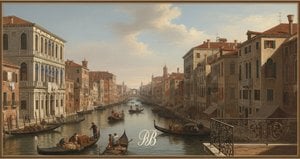
Explore the life & art of Bernardo Bellotto, Canaletto’s nephew and a master of veduta painting. Discover his stunning cityscapes of Dresden & Warsaw, artistic techniques, and lasting legacy. Expert insights for collectors.

Odkrijte 10 mojstrovin geometrične abstrakcije! Mondrian, Malevich, Kandinsky in drugi. Zgodbe umetnikov, tehnike ter navdih za vaš dom. Kvalitetne reprodukcije slik na WahooArt.com. Raziskajte celotno zbirko online!

Explore the revolutionary art of Piet Mondrian and the principles of Neo-Plasticism. Discover De Stijl's influence, iconic compositions like 'Composition with Red, Yellow and Blue,' and Mondrian’s lasting legacy on modern design.
 Predogled v realnem okolju
 Pošlji
 Deli
Deli
 Podrobnosti o delu
 Priročnik

 Prenesi sliko
 Podobni izdelki
 Rentgenski posnetek
 Predvajaj diaporama
 Vprašanja in odgovori
 Statistika


 Preberi več









 Možnost stekla je na voljo le za velikosti pod 110 cm


