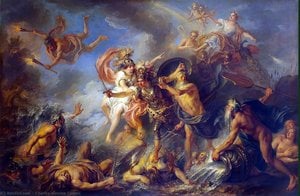
Pionir, ki je premostil svetove: Življenje in zapuščina Benjamina Westa
Benjamin West, rojen leta 1738 v razvijajoči se koloniji Pensilvanije, je postal ključna osebnost transatlantskega umetniškega sveta. Slikar, ki je spretno plul med tokovi neoklasicizma in romantike ter izoblikoval edinstveno ameriško umetniško identiteto. Njegova zgodba je zgodba o izjemnem samookovanju, neomajni ambiciji in neverjetni sposobnosti povezovanja z aristokratskimi pokrovitelji in revolucionarnimi ideali. Skromni začetki – njegov oče je bil gostilničar v Springfieldu – so Westovo prirojeno nadarjenost negovali zgodnji stiki z umetnostjo, kjer se je po poročilih naučil osnovnih tehnik od domorodcev, preden bi sploh dobil formalno izobrazbo. Ta nenavadni začetek mu je vlil duh inovativnosti, ki je zaznamoval celotno kariero. Hitro se je uveljavil kot iskani portretist v Philadelphiji in New Yorku, a želja po globljem umetniškem znanju ga je leta 1760 popeljala v Evropo, na potovanje, ki bi za vedno spremenilo pot ameriške umetnosti.
Od Italije do Londona: Utrjevanje poti do priznanja
Westov prihod v Italijo je pomenil prelomnico. Potopljen v umetniško srce Evrope, je študiral mojstre – Ticiana, Rafaela – in se spoprijateljil s sodobnimi neoklasicističnimi misleci, kot sta Anton Rafael Mengs in Angelica Kauffman. To obdobje je bilo ključno za oblikovanje njegove estetske občutljivosti, vcepilo mu je spoštovanje do klasične forme in zgodovinske naracije. Vendar pa je London končno postal njegov posvojeni dom in umetniško središče. Po prihodu leta 1763 se je West hitro povzpel na lestvici britanske umetniške scene, očaral občinstvo s svojimi ambicioznimi platni in si pridobil pokroviteljstvo kralja Jurija III. Ta kraljeva podpora mu ni zagotovila le finančne stabilnosti, ampak je tudi utrdila njegov položaj vodilne figure v establišmentu. Odločilni trenutek je bil njegova izvolitev v Kraljevo akademijo leta 1769, institucijo, ki jo bo kasneje predsedoval kot Predsednik od leta 1792 do svoje smrti. Njegov vpliv se je razširil onkraj lastne umetniške produkcije; West je postal zagovornik ameriških umetnikov, ki so iskali izobrazbo v tujini, nudil pa jim je napotke in podporo generacijam ambicioznih slikarjev, kot so Allston, Copley in Morse.
Revolucioniranje zgodovinskega slikanja: Tehnika in kontroverze
Westov vpliv na umetniški svet ni bil le doseganje tehnične mojstrovine; šlo je za izzivanje konvencij. Si je upal ponovno zamisliti zgodovinsko slikanje, odmakniti se od strogega spoštovanja klasičnih precedent in okleniti sodobnejšo občutljivost.
Smrt generala Wolfa (1770), morda njegovo najbolj znano delo, ponazarja ta revolucionarni pristop. Z upodabljanjem padlega generala obdanega s figurami v *sodobnih* vojaških uniformah namesto tradicionalne rimske obleke, je West sprožil precejšnje razprave. Kritiki so dvomili o zgodovinski točnosti, občinstvo pa je bilo očarano z neposrednostjo in čustvenim odzivom prizora. Ta krepka poteza je pomenila premik proti večjem realizmu in narativni moči v zgodovinskem slikanju, ki je vplival na številne umetnike, ki so sledili. Njegov slog se je sčasoma razvijal, v poznejša dela pa je vključeval elemente romantike, vendar je vedno ohranil zavezanost ambiciozni kompoziciji in podrobnemu izvedbi. Druga pomembna dela, kot so
Tetis prinaša oklep Ahilu,
Tri sestre,
Prestrašenost Astjanaksa in
Jama obupa, dokazujejo njegovo vsestranskost in mojstrstvo v različnih mitoloških in zgodovinskih temah.
Trajna zapuščina: Oblikovanje umetniške identitete
Benjamina Westa zapuščina sega daleč onkraj platna, ki jih je ustvaril. Temeljito je spremenil pokrajino ameriške umetnosti, uveljavil zgodovinsko slikanje kot izvedljiv žanr za ameriške umetnike in spodbudil občutek nacionalne umetniške identitete. Njegovo predsedovanje Kraljevi akademiji je utrdilo njegov vpliv na britansko umetnost, spodbujalo inovacije in podpiralo nadarjane talente.
- Zagovarjal je bolj dostopen in čustveno angažiran slog zgodovinske reprezentacije.
- Njegova delavnica je postala zatočišče za ameriške umetnike, ki so iskali izobrazbo v Evropi.
- Povezal je neoklasicistične ideale z nastajajočim romantizmom.
Westov inovativni duh, skupaj s njegovimi diplomatskimi spretnostmi in neomajno predanostjo svojemu poklicu, mu je prinesel trajno priznanje kot “ameriškega Rafaela”. Umrl je v Londonu leta 1820 in za seboj pustil delo, ki še vedno navdihuje občudovanje. Njegova zgodba je dokaz moči umetniške vizije, pomembnosti kulturnih izmenjav in trajne zapuščine umetnika, ki si je upal izzivati konvencije in utreti lastno pot.



 Predogled
 Preklop na tiskanine
 Pošlji
 Deli
Deli
 Podrobnosti o delu

 Prenesi
 Podobni izdelki
 Rentgenski posnetek
 Predvajaj diaporama
 Statistika


 Razviljaj več