Preverite v realnem okolju Predogled v AR Preklop na tiskanine Naročite ročno slikano reprodukcijo Pošlji kot čestitko
Podrobnosti Priročnik Dodaj v priljubljene Prenesi Podobni artefakti Rentgenski posnetek Predvajaj diaporama Statistika

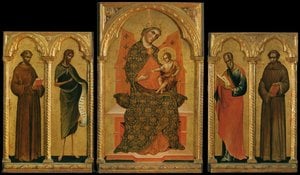
Conversano Polyptych

Explore Bartolomeo Vivarini’s Conversano Polyptych – a stunning 1475 Renaissance altarpiece! Admire its intricate details, gold leaf & religious symbolism at the Gallerie dell'Accademia.

A master of the Venetian Renaissance known for his luminous tempera works like the Madonna and Child, Bartolomeo Vivarini blended Byzantine tradition with new oil techniques to create a legacy waiting to be rediscovered.

Kupite digitalno sliko visoke ločljivosti z izboljšano kakovostjo, ki je precej višja od spletnega predogleda.

Vsako datoteko naše strokovnjake v ekipi z največjo mero natančnosti pripravijo z uporabo naprednih orodij in strokovne ročne obdelave. Zagotovimo, da je vsaka slika izjemno jasna, barvno natančna in polna finih podrobnosti.

Končna datoteka je po e-pošti dostavljena v 72 urah, optimizirana za takojšnjo uporabo v profesionalnem, uredniškem in tiskarskem okolju. To je kakovost, ki ji zaupajo vrhunska oblikovalna studia, založniki in galerije.

Digitalna slika

Prenesite datoteko visoke ločljivosti za osebno uporabo, tiskanje in kreativne projekte. ( Preklop na tiskanine Naročite ročno slikano reprodukcijo)

Skupna cena

€ 21,84

Vključeno v vsako naročilo digitalne slike

Zagotovljena strokovna digitalna dostava

Z izbiro WahooArt.com ne prejmete le slike – prejmete profesionalno urejeno digitalno umetniško delo, izdelano z največjo natančnostjo in zavestno podprto z garancijo za zadovoljstvo. Tukaj je vse, kar bo z vašim naročilom samodejno priloženo:

Hitra dostava po e-pošti

Vaša digitalna slika visoke ločljivosti bo na vaš e-naslov poslana v roku 72 ur od zaklopa naročila – pripravljena za takojšnjo uporabo.

Digitalna datoteka z uporabo AI

Vaše umetniško delo je strokovno optimizirano z uporabo naprednih orodij umetne inteligence in ročne obdelave, kar zagotavlja največjo stopnjo podrobnosti, jasnosti in barvne natančnosti.

Brezplačna doletna ponovna dostava

Ste datoteko zaradi nespremietne napake izgubili ali izbrisali? Ni težav – vam jo bomo ponovno poslali kadar koli in brezplačno.

Brez uvoznih pristojbin – vedno

Svoje umetniško del uživajte takoj, brez carin, davkov ali stroškov dostave – digitalni prenosi so vedno brezdavčni.

Zagotovilo natančnosti barv

Z uporabo profesionalnih orodij in procesov upravljanja barv zagotavljamo, da vaša digitalna slika čim bolj natančno odraža prvotne barve.

100-dnevna garancija zadovoljstva

Če niste zadovoljni s svojo digitalno sliko, jo bomo uredili ali vam v 100 dneh povrnili 100% denarja – brez kakršnih koli vprašanj.

100% Garancija povračila denarja

Niste zadovoljni? Zagotavljamo vam popoln povračilo sredstev v 100 dneh po prejemu digitalne datoteke – brez dodatnih vprašanj.

Popusti pri večjih naročilih

Kupite 3 slike, prihranite 10% - Kupite 5 slik, prihranite 15% - Kupite 10+ slik, prihranite 20%. Odlično za kreativne projekte, galerije in agencije.

Hitri podatki

  • Title: Conversano Polyptych
  • Dimensions: 157 x 271 cm
  • Subject or theme: Religious scenes and biblical figures
  • Year: 1475
  • Movement: Renaissance

A Divine Vision in Gold: The Majesty of the Conversano Polyptych

In the heart of the Venetian Renaissance, where the light of the lagoons meets the profound devotion of the era, Bartolomeo Vivarini crafted a masterpiece that transcends time. The Conversano Polyptych, completed in 1475, is not merely an altarpiece but a celestial window into the late Gothic and early Renaissance spirit. As one gazes upon this monumental work, housed within the prestigious Gallerie dell'Accademia, there is an immediate sense of being transported to a sacred realm. The composition, a complex arrangement of multiple panels, orchestrates a narrative of profound religious significance, centered around the Nativity and the presence of holy figures that seem to emerge from a gilded eternity.

The artistry of Vivarini is revealed through his masterful use of tempera on wood panels, a technique that demands absolute precision and foresight. This method allows for an extraordinary level of detail and a saturation of color that remains vibrant centuries later. The central panel serves as the emotional anchor, drawing the viewer into a gathering of figures surrounding a sacred relic, their faces etched with piety and reverence. The use of gold leaf in the background is particularly breathtaking; it does not merely decorate but creates an atmospheric opulence, suggesting a divine light that radiates from within the painting itself, casting a glow upon the intricate headdresses and heavy, embroidered robes of the saints.

Symbolism and the Language of Devotion

Every element within this polyptych is imbued with deep symbolic meaning, designed to guide the faithful through a visual liturgy. The architecture of the piece—divided into distinct sections that separate the heavenly from the earthly—mirrors the hierarchical structure of the universe as understood in the 15th century. Within these frames, the soft curves of halos and the rhythmic placement of figures create a sense of divine order. The Nativity scenes are rich with iconography: the humble manger, the swaddling clothes, and the watchful eyes of Mary and Joseph all serve to ground the miraculous event in a tangible, human reality.

For the discerning collector or interior designer, the Conversano Polyptych offers more than just historical value; it offers an unparalleled aesthetic experience. The interplay of chiaroscuro—the dramatic contrast between light and shadow—adds a sculptural depth to the figures, making them appear almost lifelike within their gilded niches. This tension between the flat, decorative tradition of the Gothic period and the emerging realism of the Renaissance creates a visual complexity that is both intellectually stimulating and emotionally resonant. It is a work that commands attention, bringing a sense of historical weight and spiritual serenity to any space it inhabits.

A Legacy for the Modern Collector

To possess a high-quality reproduction of such a significant work is to invite a piece of Venetian history into one's personal sanctuary. The warmth of the color palette, dominated by rich ochres, deep blues, and radiant golds, provides a sophisticated foundation for luxurious interior design. Whether placed in a grand gallery or a quiet study, the polyptych acts as a focal point of contemplation, echoing the craftsmanship of Bartolomeo Vivarini and the enduring legacy of the Italian masters. It remains a testament to an era where art was the ultimate bridge between the human soul and the divine.

Vprašanja in odgovori

Kakšna vrsta umetniškega dela je "Conversano Polyptych" avtorja Bartolomeo Vivarini?

"Conversano Polyptych" is a wall art piece.

Priporočena velikost tiska za "Conversano Polyptych" avtorja Bartolomeo Vivarini je?

Za delo "Conversano Polyptych" priporočamo tisk v velikosti Large. Na voljo so tudi druge velikosti z istimi proporcijami.

Kakšno je usmerjenje dela "Conversano Polyptych" avtorja Bartolomeo Vivarini?

Format dela "Conversano Polyptych" je Panoramic. To je koristno pri načrtovanju postavitve reprodukcije.


Biografija umetnika

A Legacy of Venetian Light and Devotion

In the vibrant, shimmering atmosphere of the Quattrocento, Bartolomeo Vivarini emerged as a pivotal figure in the evolution of Venetian painting. Born in the storied glassmaking hub of Murano, Italy, he was part of an influential dynasty of artists that helped shape the visual identity of the Republic of Venice. As a member of the Vivarini family, his life and work were deeply intertwined with the artistic pulse of his homeland, bridging the transition from the ornate, gilded traditions of the late Gothic period to the burgeoning humanism of the early Renaissance.

The artistry of Vivarini is characterized by a profound sense of spiritual depth and technical precision. While he was a master of tempera, often utilizing gold leaf to imbue his compositions with a celestial luxury, he was also an innovator in the use of new mediums. It is noted that he learned the art of oil painting from Antonello da Messina, and he is credited with producing what is believed to be the first oil painting in Venice around 1473. This mastery allowed him to manipulate light and texture in ways that brought a new level of intimacy and serenity to his religious subjects.

Mastery of Form and Symbolism

Vivarini’s work often presents a striking balance between hard, defined outlines and a rich, emotive color palette. His figures frequently possess a dignified and devout expression, capturing the solemnity required for the altarpieces that adorned Venetian basilicas. This ability to convey human emotion through structured forms made him a sought-after painter for significant religious commissions. A notable example of his skill is found in his Madonna and Child, where he uses light entering through windows and deep red drapery to create a sense of sacred space.

Beyond the figures themselves, Vivarini’s paintings are often layered with symbolic meaning:

  • The use of gold: His frequent application of gold leaf serves not only as decoration but as a medium to represent divine light.
  • Natural motifs: In a charming nod to his name—as vivarino translates to goldfinch in Italian—he occasionally included the small bird as a subtle signature within his works.
  • Architectural depth: His compositions, such as the Conversano Polyptych, demonstrate a sophisticated understanding of perspective and the integration of sacred figures into complex, multi-paneled structures.

Historical Significance and Artistic Influence

The historical importance of Bartolomeo Vivarini lies in his role as a bridge between eras. He stood at the crossroads of the Byzantine-influenced traditions of his predecessors and the revolutionary Renaissance styles brought by artists like Fra Angelico and Giovanni Bellini. By blending these diverse influences, he helped establish a unique Venetian visual language—one that prioritized luminous color and emotional resonance.

His influence extended through his family lineage, notably impacting the work of his nephew, Alvise Vivarini, who would become a leading artist in Venice before the rise of Bellini. Through his meticulous detail and his pioneering adoption of oil techniques, Bartolomeo Vivarini left an indelible mark on the history of Italian art, ensuring that the spiritual and aesthetic grandeur of Murano and Venice would be preserved for generations to come.

Bartolomeo Vivarini

Bartolomeo Vivarini

1440 - 1499 , Italija