Preverite v realnem okolju Predogled v AR Naročite ročno slikano reprodukcijo Preklop na digitalno sliko Pošlji kot čestitko
Podrobnosti Navodila Dodaj v priljubljene Prenesi Podobni artefakti Rentgenski posnetek Predvajaj diaporama Statistika

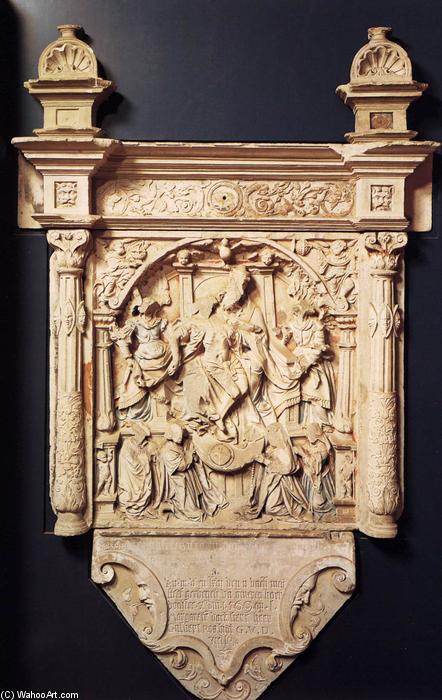
Epitaf družine Ros

Izjemna reprodukcija epitafa družine Ros iz Wageningenske katedrale, ustvarjena leta 1550 slovenskega umetnika Arnta van Trichta. Podroben pogled v zgodovinsko umetnost Renesanse.

Explore the evocative works of arnt van Tricht, a Dutch master (1530-1570) known for Ros Family Epitaphs & historical art. Discover his Cologne origins & Antwerp legacy.

Giclée tisk / Umetniški tisk

Giclée ali platnati odtis muzejske kakovosti z hitro proizvodnjo in prilagodljivimi možnostmi končne obdelave. ( Naročite ročno slikano reprodukcijo Preklop na digitalno sliko)

P118B $10
P118H $10
P118W $10
P438Z $10
P508JH $12
P508YH $12
P805H $10
P805Z $10
P919BZ $10
P919G $10
P919XJ $10
P959ZH $10
P968JZ $12
W106C $8
W218G $10
W218JH $8
W218Y $10
W307PJ $10
W316G $10
W316PJ $8
W316Y $10
W398PJ $8
W4111J $10
W500HY $15
W500JH $15
W692G $12
W849H $8
W940BG $15
W953PJ $8

Standardna velikost
po meri
CM
INCH

Izberite eno od naših vnaprej določenih velikosti, ki ustrezajo prvotnim proporcijam umetničkega dela.

širina
višina

Svoje dimenzije lahko vnesete sami, da bodo ustrezne za določen okvir ali prostor. Če izbrana velikost ne bo skladna z razmerji izvirne slike, bomo umetniško delo orezali ali podaljšali s pomočjo ogledalnega odraza ali barvno polnega roba. Pred začetkom proizvodnje vam bomo poslali digitalni predogled za potrditev.
Upoštevajte, da predogled na zaslonu ne prikazuje dejanskega orezovanja ali podaljševanja. Le digitalni predogled bo natančno prikazal končno kompozicijo.
Čeprav so na voljo prilagojene velikosti, priporočamo izbiro dimenzije s predhodno določenega seznama, da ohranite prvotna razmerja.

Globalna dostava () v 2 tednih namesto standardnih 4/5 tednov. (23 september)

why_choose_icon
Brezplačna ekspresna dostava po vsem svetu
why_choose_icon
Visokokakovostno laneno platno
why_choose_icon
Popolno zavarovanje pošiljke
why_choose_icon
Garancija povračila carine in uvoznih davkov
why_choose_icon
Garancija popolnega barvnega ujemanja
why_choose_icon
Politika vračila v 100 dneh (le v primeru okvar)
why_choose_icon
Garancija 100% povračila denarja
why_choose_icon
Popust pri večjem naročilu

Skupna cena

$ 68

reproduction

Epitaf družine Ros

Giclée tisk / Umetniški tisk

Velikost reprodukcije

-

Skupna cena

$ 68

Hitri podatki

  • Notable elements or techniques: Detailed drapery, expressive faces
  • Influences: Flemish Renaissance
  • Artistic style: Monumental sculpture
  • Artist: Arnt van Tricht
  • Subject or theme: Religious iconography
  • Title: Ros Family Epitaph
  • Year: 1550

Kviz o umetnosti

Pri vsakem vprašanju je na voljo le eden pravilen odgovor.

Vprašanje 1:
What is the primary subject matter depicted in ‘Ros Family Epitaph’?
Vprašanje 2:
In what city was Arnt van Tricht primarily trained as an artist?
Vprašanje 3:
What significant event occurred in Wageningen in 1578 that impacted the Ros Family Epitaph?
Vprašanje 4:
What artistic style is characteristic of ‘Ros Family Epitaph’?
Vprašanje 5:
The image description mentions the deliberate damage inflicted upon the epitaph. What was the reason for this vandalism?

Ros Family Epitaph: A Testament to Faith Amidst Turbulent Times

Arnt van Tricht’s Ros Family Epitaph stands as a poignant emblem of the High Renaissance in Antwerp and Cologne, circa 1550. More than just a funerary monument—a practice common during this period—it embodies profound theological symbolism interwoven with masterful artistic execution. The panel itself, measuring 144 x 104 cm, depicts God the Father offering his son Jesus Christ to the faithful, underscored by the dove of the Holy Ghost symbolizing divine grace and redemption. This imagery speaks directly to the spiritual anxieties prevalent in Europe during the Reformation, reflecting a fervent desire for solace and reassurance amidst religious upheaval. The artist’s workshop in Cologne undoubtedly instilled in Van Tricht a rigorous understanding of sculptural technique—evident in the meticulous carving of stone—a hallmark of Antwerp’s artistic milieu at the time. Influenced by figures like Johann Georg Fytz and Michael Sweerts, Van Tricht skillfully employed chiaroscuro to illuminate the central scene, creating dramatic depth and emphasizing the solemnity of the occasion. The drapery folds are rendered with painstaking detail, conveying movement and texture—a testament to the artist’s dedication to realism within a stylized framework. Beyond its technical prowess, the epitaph resonates deeply with symbolic significance. The seated figure representing God embodies paternal benevolence and divine authority, while Jesus Christ symbolizes sacrifice and atonement for humanity's sins. Surrounding him are supplicating figures – members of the Ros family – pleading for mercy, embodying the universal human yearning for spiritual salvation. This depiction aligns perfectly with the humanist ideals championed during the Renaissance, prioritizing moral virtue and contemplation alongside artistic beauty. Interestingly, documented accounts reveal a disturbing episode in 1578 when soldiers loyal to John of Nassau deliberately vandalized the monument during Wageningen’s Catholic church iconoclasm. The heads of the figures were brutally severed or defaced—a devastating act that underscores not only the religious tensions of the era but also the vulnerability of artistic heritage under siege. Despite this tragic desecration, the Ros Family Epitaph retains its power to inspire awe and contemplation, serving as a timeless reminder of faith’s enduring legacy.
  • Artist: Arnt van Tricht
  • Date: Circa 1550
  • Location: Wageningen Church (Netherlands)
  • Material: Stone
  • Style: High Renaissance
Further Exploration: The Rijksmuseum’s online collection offers a detailed examination of the monument and its history (Epitaph for the Ros Family with the Seat of Mercy - Rijksmuseum) and Google Arts & Culture provides access to high-resolution images (Epitaph for the Ros Family with the Seat of Mercy - Arnt van Tricht ...) allowing for a deeper appreciation of Van Tricht’s artistic vision.

Biografija umetnika

A Quiet Voice Amidst the Flemish Renaissance

Arnt van Tricht remains a figure shrouded in relative obscurity compared to his more famous contemporaries, such as Pieter Bruegel the Elder or Hans Holbein the Younger. Yet, for those who look closely at the artistic landscape of the mid-16th century, his contribution to the cultural fabric of Antwerp and Cologne is undeniable. Born around 1530, Van Tricht’s formative years coincided with a period of intense intellectual ferment, fueled by humanist scholarship and a profound rediscovery of classical ideals. While precise biographical details regarding his early upbringing are scarce, evidence suggests he was a master of both wood and stone, honing his skills in the prestigious workshops of the Lower Rhine region.

His artistic journey likely began under the guidance of Hendrick Douverman, a prominent sculptor of the era. This early training instilled in him a meticulous craftsmanship that would define his career. Though he may have had roots in Utrecht—as suggested by the stylistic similarities between his work and the influential sculptors of that city—he established much of his reputation in Kalkar. In these early years, Van Tricht was a prolific wood-carver, often creating innovative adaptations of late Gothic models. However, as the winds of the Reformation began to sweep through Northern Europe, his medium shifted. The religious upheavals necessitated a change in artistic focus, leading him to specialize in stone relief carving, memorial tablets, and exquisite chimney-pieces that blended durability with profound spiritual narrative.

The Mastery of Form and Devotion

By the mid-1560s, Van Tricht had relocated to Antwerp, a vibrant, bustling hub of international trade and artistic innovation. This move proved pivotal, as the Antwerp patronage system encouraged artists to push the boundaries of their medium. It was during this period that his work began to reflect the sophisticated influences of the High Renaissance and Mannerism. He absorbed the grace of Italian masters like Andrea del Piero della Francesca and the subtle emotional depth of Leonardo da Century, incorporating elements of idealized beauty into his sculptural reliefs.

His most celebrated achievement remains the Ros Family Epitaphs, a series of monumental funerary sculptures commissioned for St. Elisabeth’s Church in Antwerp. Executed in fine Carrara marble, these works transcend mere decoration to become profound theological contemplations. In these pieces, one can witness a masterful command of chiaroscuro—the dramatic interplay of light and shadow—carved directly into the stone. The central figures, often depicting divine grace through the presentation of Christ, are rendered with such precision that the folds of drapery and the nuances of facial expression seem almost palpable. These works served as a microcosm of the era's anxieties, capturing the tension between religious devotion and the looming threat of iconoclasm.

Legacy and Historical Significance

The tragedy of Van Tricht’s legacy is inextricably linked to the turbulent history of Antwerp itself. The Iconoclasm of 1578, a period of violent Protestant reform, saw many of his most precious works targeted by zealous soldiers. The Ros Family Epitaph, for instance, suffered the heartbreak of defaced figures, with heads shattered in an act of religious defiance. Despite such destruction, the surviving fragments of his oeuvre continue to speak volumes about the transition from late Gothic traditions to the sophisticated humanist ideals of the Renaissance.

Today, Arnt van Tricht is remembered not just as a sculptor, but as a bridge between eras. His ability to pivot from the intricate wood-carving of the North to the monumental stone reliefs of the South demonstrates a remarkable versatility and resilience. His work stands as a testament to:

  • Technical Versatility: The seamless transition from late Gothic woodcraft to Renaissance marble carving.
  • Cultural Synthesis: The blending of Netherlandish precision with Italianate Mannerist elegance.
  • Historical Endurance: The survival of profound religious artistry through the most transformative and violent periods of European history.

Through his hands, the stone and wood were given a voice—a quiet, enduring voice that continues to resonate within the halls of art history.

arnt van tricht

arnt van tricht

1530 - 1570 , Netherlands

Ključne informacije

  • Artistic Movement Or Style: Renaissance Art
  • Date Of Birth: 1530
  • Full Name: arnt van Tricht
  • Nationality: Dutch
  • Notable Artworks: ['Ros Family Epitaphs']
  • Place Of Birth: Cologne, Netherlands
Raziščite umetniška dela, razvrščena po temah, slogih in značilnostih.