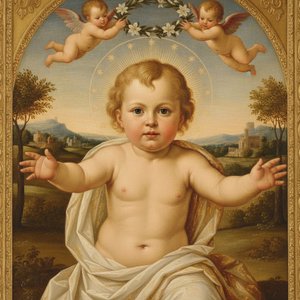
Antonio Vivarini – A Monk’s Vision of Paradise Reflected in Paint
Fra Angelico – Guido di Pietro – conjures an image of serene contemplation, a life dedicated to both art and faith. Born around 1395 in the Mugello region of Tuscany, he wasn't simply a painter; he was a Dominican friar, deeply immersed in the spiritual life of his order. This unique confluence of artistic talent and religious devotion profoundly shaped his work, imbuing it with an ethereal beauty and a profound sense of peace that continues to resonate centuries later. His story is one of quiet brilliance, a testament to the power of faith to inspire extraordinary creativity.
Angelico’s early training remains somewhat shrouded in mystery, though scholars generally believe he honed his skills under the tutelage of Lorenzo Monaco, a prominent Florentine painter and manuscript illuminator. Monaco's influence is evident in Angelico’s initial works – particularly the vibrant plant forms that adorn the opening letters of illuminated manuscripts. These delicate blossoms symbolize purity and divine grace, mirroring the core tenets of monastic spirituality.
Varini’s masterpiece, “Triptych (detail),” exemplifies this aesthetic sensibility. Executed in 1446, it stands as a remarkable achievement of Venetian Renaissance painting. The triptych depicts Saints Ambrose and Augustine, figures revered for their piety and theological scholarship – symbols of intellectual contemplation alongside spiritual devotion.
- Style: Venetian Renaissance – Characterized by meticulous realism combined with idealized beauty, reflecting humanist ideals and a fascination with classical art.
- Technique: Vivarini employed tempera paint on wood panels, a technique favored for its luminosity and durability. The artist skillfully blended pigments to achieve subtle gradations of color, creating an atmosphere of diffused light that enhances the solemn grandeur of the scene.
- Historical Context: Commissioned during the Quattrocento, “Triptych (detail)” reflects the burgeoning artistic fervor of Venice at the time – a city eager to assert its cultural dominance and embrace humanist principles. It’s considered one of Vivarini's finest works, showcasing his mastery of composition and color.
The painting’s emotional impact is palpable. The serene expressions of Saints Ambrose and Augustine convey an unwavering faith and a profound understanding of divine wisdom. Viewers are drawn into the contemplative space depicted, invited to contemplate the virtues embodied by these saints – humility, compassion, and intellectual rigor.
“Triptych (detail)” transcends mere representation; it aspires to capture the essence of spiritual contemplation. Vivarini’s meticulous attention to detail—the drapery folds, the facial expressions, the architectural setting—creates a visual experience that is both aesthetically pleasing and emotionally resonant. It remains an enduring symbol of faith and artistic excellence.
- Interior Designer Inspiration: Consider incorporating muted tones reminiscent of Vivarini’s palette into your interior design scheme – creating spaces that foster tranquility and reflection.
- Collectors' Perspective: This artwork embodies the humanist spirit of its era, appealing to collectors who appreciate intellectual depth alongside artistic beauty. Its provenance adds to its prestige and ensures its place in art history.
A reproduction of “Triptych (detail)” would bring a touch of Venetian Renaissance elegance into any home or gallery space—a reminder that true artistry can inspire both visual delight and spiritual contemplation.
Vprašanja in odgovori
Kakšna je tehnika in datum nastanka dela "Triptych (detail)" avtorja Antonio Vivarini?
"Triptych (detail)" je bila izdelana leta 1446 z uporabo tehnike Akril na platnu.
Ali se lahko slika dela "Triptych (detail)" avtorja Antonio Vivarini prosto reproducira?
"Triptych (detail)" avtorja Antonio Vivarini je v v javni domeni – njegova avtorska pravica je zastarela. Ta status določa način, kako se lahko reproducira slika dela.
Katero temo in vzdušje združuje "Triptych (detail)" avtorja Antonio Vivarini?
"Triptych (detail)" avtorja Antonio Vivarini prikazuje virgin mary, jesus christ, church architecture, religious iconography, medieval art, italian painting, renaissance tradition v Serojno vzdušju. Motiv in atmosfera skupaj opisujeta delo.



 Preverite v realnem okolju
 Naročite ročno slikano reprodukcijo
 Pošlji kot čestitko
 Deli
Deli
 Podrobnosti
 Priročnik

 Prenesi
 Podobni artefakti
 Rentgenski posnetek
 Predvajaj diaporama
 Statistika


 Preberi več






































 Možnost stekla je na voljo le za velikosti pod 110 cm