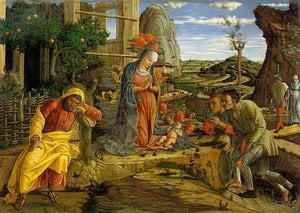
Andrea Mantegna: Renesančni Mojster Perspektive in Skulpturne Podrobnosti
Andrea Mantegna, rojen okoli leta 1431 blizu Padve, je ključna figura, ki povezuje zgodnjo in visoko renesanso. Njegovo umetniško potovanje ni bilo zgolj posnemovanje klasicističnih oblik; temveč poglobljena raziskava antike, strastno prizadevanje za oživitev duha Rima v cvetoči italijanski renesansi. Za razliko od mnogih sodobnikov, ki so črpali navdih iz klasičnih vzorcev, je Mantegna imel edinstveno gorečnost do arheološke natančnosti. Ta obsedenost izvira iz njegovih začetnih let pod vodstvom Francesca Squarcioneja, slikarja in zbiralca, katerega delavnica ni bila tradicionalno slikarsko središče, temveč akademija, posvečena proučevanju rimskih ostankov, kiparstva in napisov. V teh stenah, obdobljen z fragmenti izgubljenega imperija, se je začela oblikovati Mantegnova umetniška vizija – vizija, zaznamovana s skulpturnimi formami, dramatično perspektivo in skoraj obsesivno pozornostjo do podrobnosti. Njegovo zgodnje življenje ostaja nekoliko skrivnostno; govorice kažejo, da je bil odkrit kot obetaven vajenec, njegov prirojeni talent prepoznan in negovan s strani Squarcioneja kljub skromnemu rodu. Ta neobičajni začetek je morda spodbudil njegovo nenehno iskanje umetniškega mojstrstva in odločenost ustvariti slog, ki je izjemno njegov.
Gonzagova Dvor in Iluzija Resničnosti
Mantegnova kariera je resnično razcvetela, ko se je pridružil družini Gonzaga v Mantovi, kjer je postal dvorni slikar leta 1488. Ta pokroviteljstvo mu je zagotovilo brezprecedenten umetniški prostost in platformo za uresničevanje njegovih najambicioznejših projektov. Gonzagovi niso bili zgolj pokrovitelji; bili so sodelavci, ki so naročali dela, ki so potiskanja meje umetniške inovacije. V tem obdobju je Mantegna ustvaril to, kar velja za njegovo mojstrovino: freske v *Camera degli Sposi* (Poročna Sobota) v Palazzo Ducale. To revolucionarno delo presega okrasitev; gre za popolno iluzionistično okolje, ki brezhibno združuje arhitekturo in slikarstvo ter ustvarja razširjen občutek prostora. Freske prikazujejo prizore iz življenja družine Gonzaga, portrete, ki so neverjetno realistični in privlačni, ter osupljivo ploščo stropa *di sotto in sù* (videna od spodaj), ki ustvarja iluzijo odprte nebe. Ta mojstrstvo manipulacije perspektive ni bila zgolj tehnična spretnost; šlo je za ustvarjanje sveta v sobi, kjer se izbrisujejo meje med resničnostjo in predstavljanjem. Poleg *Camera degli Sposi* je Mantegna še naprej ustvarjal dela izjemne kakovosti za Gonzagovo dvor, vključno z monumentalnim nizom *Triumfov cesarja*. Ta slikanja, navdihnjena s rimskimi triumfalnimi procesijami, niso zgolj zgodovinska prizorišča; so slovesne alegorije, ki slavijo moč in prestiž družine Gonzaga, predstavljene z veličinostjo, ki konkurira cesarskim ambicijam stare Rima.
Mojster Perspektive in Anatomske Natančnosti
Mantegnove umetniške inovacije so se razširile daleč onkraj iluzionističnih okolij. Bil je pionir pri uporabi perspektive, pogosto uporabljal tehnike, ki so šle v nasprotje s konvencionalnimi metodami za dosego dramatičnih učinkov. Pogosto je prilagajal obzorje, kar je ustvarjalo občutek monumentalnosti in imponente lestvice. Ta tehnika, skupaj z njegovo skrbno pozornostjo do anatomske podrobnosti, je njegovim figuram dodelila neprimerljivo težo in prisotnost. Ni se zadovoljil le z upodabljanjem človeške oblike; jo je razčlenil, proučil njeno mišico in jo ponazoril s natančnostjo, ki je bila revolucionarna za njegovo obdobje. Njegovo mojstrstvo *trompe-l'oeil* – ustvarjanje iluzij tako prepričljivih, da zavajajo oko – je dodatno okrepilo ta učinek in izbrisalo meje med slikanjem in resničnostjo. Ta predanost anatomske natančnosti ni bila zgolj vaja tehnične spretnosti; odražala je njegovo globoko angažiranost do klasičnega kiparstva in željo posnemati idealizirane oblike antike. Iskal ni le, da bi upodabljal človeško telo, temveč da bi zajel njegov notranji dostojanstvo in moč. Njegov vpliv na prihodnje generacije umetnikov, vključno z Rafaelom in Mikelandželom, je neizogiben, saj so gradili na njegovih temeljih perspektive, anatomije in kompozicije.
Zapuščina in Trajna Vpliv
Andrea Mantegna je umrl leta 1506 v Mantovi in za seboj pustil zapuščino, ki še danes odzvanja pri umetnostnih zgodovinarjih in navdušencih. Njegovo delo predstavlja ključno točko v zgodovini renesančne umetnosti, saj povezuje vrzel med zgodnjo in visoko renesanso. Ni bil zgolj posnemovalec klasicističnih oblik; bil je interpret, ki je prilagajal antike motive in tehnike, da bi ustvaril nekaj povsem novega in izjemno svojega.
Njegova skrbna pozornost do podrobnosti, njegovo mojstrstvo perspektive in njegova globoka angažiranost do antike so ga uveljavili kot vodjo svoje dobe. Mantegnova raziskava klasičnih tem je pomagala oživiti zanimanje za starodavno umetnost in kulturo, s čimer je utrla pot umetniškim dosežkom visoke renesanse. Njegov vpliv je mogoče videti v delih številnih umetnikov, ki so sledili, od Rafaelove graciozne kompozicije do Mikelandželovih močnih figur. Danes so njegova slikanja shranjena v glavnih muzejih po vsem svetu, med drugim v Narodni galeriji v Londonu in Pinakoteki di Brera v Milanu, kjer še naprej navdihujejo občudovanje in spoštovanje.
- Njegova inovativna uporaba perspektive se še danes proučuje pri umetnikih in umetnostnih zgodovinarjih.
- Njegova anatomska natančnost ostaja merilo za realistično predstavitev.
- Njegova predanost klasičnim temam je pomagala oblikovati potek renesančne umetnosti.
Mantegnova trajna zapuščina leži ne samo v njegovi tehnični briljantnosti, ampak tudi v njegovi sposobnosti, da napolni svoja dela s čutom intelektualne globine in čustvene moči, kar ga uveljavlja kot eno najpomembnejših in najbolj vplivnih umetnikov italijanske renesanse.



 Predogled
 Kupi ročno naslikano sliko
 Pošlji
 Deli
Deli
 Podrobnosti o delu

 Prenesi
 Podobni izdelki
 Rentgenski posnetek
 Predvajaj diaporama
 Statistika
 Razviljaj več






































 Možnost stekla je na voljo le za velikosti pod 110 cm