Alfred Sisley: Tihi mojster impresionizma in utelešenje svetlobe
Alfred Sisley, ime, ki se pogosto šepeta skupaj z Monetom, Renoirjem in Pissarrom, zavzema edinstveno in globoko lepo mesto v gibanju impresionizma. Rojen leta 1839 v Parizu, v družini britanskih staršev – William Sisley, trgovca s svilo, in Felicie Sell, glasbene navdušenke – je nosil dvojno dediščino, ki je subtilno oblikovala njegovo umetniško vizijo. Čeprav je preživel skoraj vse svoje življenje v Franciji, je ohranil britansko državljanstvo, kar mu je kasneje povzročilo razočaranje, ko so mu zavrnili prošnjo za francoško državljanstvo. Njegova zgodnja leta so bila udobna in buržoazna, kar mu je omogočalo študije, prvotno namenjene poslovni karieri v Londonu pri osemnajstih letih. Vendar ga je pritegnila umetnost in se je leta 1861 vrnil v Pariz, kjer je začel formalno usposabljanje pod vodstvom švicarskega umetnika Marca-Charlesa-Gabriela Gleyrea na École des Beaux-Arts. Tukaj je okrepil ključne prijateljske vezi z Monetom, Renoirjem in Bazillem – odnosi, ki so globoko oblikovali njegovo umetniško pot. Ti sopotniki so delili uporni duh, zavračajoč stroge konvencije akademskega slikarstva v prid zajemanju minljivih učinkov svetlobe in atmosfere neposredno iz narave.
Slikanje na prostem: Sisleyjeva predanost
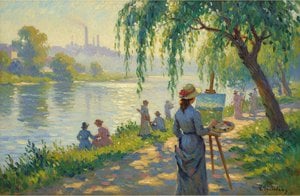
Sisleyeva neomajna predanost *plein air* slikanju – delu na prostem, neposrednem opazovanju narave – je bila temelj njegovega dela. Za razliko od nekaterih njegovih sodobnikov, ki so eksperimentirali z različnimi žanri, je ostal zvest krajini skozi svojo kariero. Ta osredotočenost mu je omogočila izpopolniti značilen slog, zaznamovan s spokojnostjo, nežnimi barvnimi paletami in subtilnim upodabljanjem svetlobe. Njegove platna so pogosto prežeta v bledih odtenkih zelene, roza, vijolične, prašne modre in smetanaste, kar ustvarja vzdušje mirnega razmišljanja. Čeprav so zgodnja dela večinoma izgubljena, njegove zasede platna razkrivajo skrbno opazovanje narave v kombinaciji s pesniško občutljivostjo. Ni bil zainteresiran za grandiozne pripovedi ali dramatične geste; namesto tega je našel lepoto v vsakdanjem – v nežnem toku reke, v posvetljenih žarkih svetlobe skozi drevesa in v tihem šarmu podeželske življenjske slike. Njegove zgodnje težave pri prepoznavanju so se še povečale zaradi finančnih težav njegovega očeta po francosko-pruski vojni leta 1870, kar je zahtevalo od Sisleyja, da se za svoje preživetje zanaša izključno na prodajo svojega dela – negotovo obstojnost, ki je zaznamovala veliko njegovih let. Bil je pravi impresionist, a eden, ki je med svojim življenjem pogosto deloval v relativni neopaznosti.
Rečne krajine in utelešenje prostora
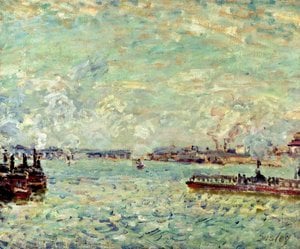
Ponavljajoče se teme prežemajo Sisleyevo ustvarjanje, najbolj opazen pa je njegov fascinacija z vodo. Krajine ob rekah so postale značilna tema, kot kaže serija slik, ki jo je ustvaril med potjo v Anglijo leta 1874 ob Temzi blizu Moleseyja. Ta dela, ki zajemajo spokojno lepoto reke in njene okolice, veljajo za eno njegovih vrhunskih dosežkov – "popoln trenutek impresionizma", kot ga je opisal umetnostni zgodovinar Kenneth Clark. Razvil je tudi globoko povezanost z Moret-sur-Loingom, kjer je prebivel leta in večno upodoblil njegove kanale, mostove in okoliško podeželje na številnih platnih. Slike kot "Vodeni mlin blizu Moreta", "Barke na Loing kanalu, pomlad" in “Polja okrog gozda” kažejo njegovo sposobnost, da navadne scene napolni s pesniškim sijajem. Ni le prikazal teh krajev; ujel je njihovo *esenco*, ne samo to, kako so izgledali, ampak tudi kako so se počutili – nežno vetričasto, toploto sonca in tih šum vode. Ta občutljivost za vzdušje in razpoloženje je morda Sisleyjeva najbolj trajna zapuščina.
Vplivi in trajna zgodovina
Sisleyevi umetniški vplivi so bili večplastni. Gleyrejeva akademska izobrazba mu je dala tehnične temelje, medtem ko mu prijateljstvo z Monetom, Renoirjem in Bazillem je spodbudilo skupno zavezanost impresionističnim načelom. Absorbiral je njihov poudarek na zajemanju minljivih trenutkov svetlobe in atmosfere, vendar je razvil svoj edinstven glas – zaznamovan s zadržkom in subtilnostjo. Čeprav je med svojim življenjem pogosto deloval v relativni neopaznosti, se njegovo delo danes proslavlja zaradi svoje lepote, občutljivosti in neomajne predanosti upodabljanju narave. Njegov vpliv je mogoče videti v delih kasnejših krajinskih slikarjev, ki so si prizadevali ujeti prehodne kvalitete svetlobe in atmosfere s podobno nianso. Umrl je 29. januarja 1899 v Moret-sur-Loing star petinštirideset let in za seboj pustil delo, ki še naprej navdihuje občudovanje in spoštovanje. Alfred Sisley stoji kot priča moči mirne opazovalnosti, dokazuje, da prava umetniška mojstrnost ne leži v grandioznih gestah, temveč v sposobnosti razkriti izjemno lepoto, skrito v navadnem svetu. Predstavlja ključno povezavo med šolo Barbizon, s poudarkom na realističnem slikanju krajine, in polnim razcvetom impresionizma.
Trajna pomembnost
Sisleyeva zgodovinska pomembnost sega onkraj njegove tehnične spretnosti in estetske občutljivosti. Njegova neomajna predanost slikanju na prostem, celo v težkih finančnih razmerah in kritični nezaupnosti, je utrla pot prihodnjim generacijam umetnikov, ki so si prizadevali osvoboditi se akademskih konvencij in sprejeti neposrednejšo interakcijo z naravo. Njegove slike ponujajo vpogled v hitro spreminjajoč se svet – svet na pragu sodobnosti – in nas spominjajo na trajno moč umetnosti, da ujame lepoto in spokojnost, ki ju je mogoče najti celo v najbolj skromnih krajinah. Bil je in ostaja mojster svetlobe, atmosfere in tihe poezije narave.
- Glavne teme: Krajine, rečne krajine, kanali, podeželsko življenje, atmosferski učinki.
- Ključne značilnosti: Nežne barvne palete, subtilno upodabljane svetlobe, miren razpoloženje, slikanje na prostem.
- Vplivi: Marc-Charles-Gabriel Gleyre, Claude Monet, Pierre-Auguste Renoir, Frédéric Bazille, slikarji šole Barbizon.



 Preverite v realnem okolju
 Naročite ročno slikano reprodukcijo
 Pošlji kot čestitko
 Deli
Deli
 Podrobnosti
 Navodila

 Prenesi
 Podobni artefakti
 Rentgenski posnetek
 Predvajaj diaporama
 Statistika

 Preberi več






































 Možnost stekla je na voljo le za velikosti pod 110 cm