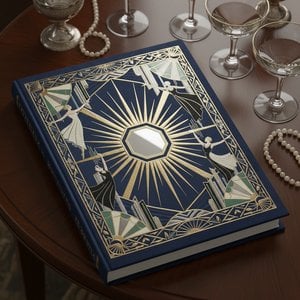
The Architect of Opulence: The Life and Legacy of Émile-Jacques Ruhlmann
In the shimmering twilight of the Belle Époque and the roaring exuberance of the 1920s, few names evoked the essence of Parisian luxury quite like Émile-Jacques Ruhlmann. To step into a room designed by Ruhlmann was not merely to enter a space, but to be enveloped in a meticulously choreographed dream of modernity and prestige. Born in Paris in 1879, Ruhlmann was a child of craftsmanship, the son of a decorating contractor whose expertise in painting and wallpapering provided the foundational textures for the young artist's future masterpieces. His early years were spent absorbing the intricate details of interior construction, a period that instilled in him a profound respect for the structural integrity and the tactile soul of materials.
As he matured, Ruhlman’s vision expanded far beyond the mere application of ornament. Following his father's passing in 1907, he took command of the family business, eventually forging a transformative partnership with designer Pierre Laurent. This era marked his transition from a skilled tradesman to a visionary creator. He began to move away from the undulating, organic whimsy of Art Nouveau, gravitating instead toward a more disciplined, architectonic approach. His work started to breathe with a new kind of rhythm—one defined by geometric clarity and a sophisticated restraint that would soon become the hallmark of the Art Deco movement.
A Symphony of Exotic Materials and Global Inspiration
Ruhlmann’s genius lay in his ability to translate Neoclassical motifs into a contemporary language of sleek, modern proportions. He did not merely use wood; he curated textures that spoke of distant lands and immense wealth. His furniture became a canvas for the world's most precious substances. One might encounter a writing desk surfaced in ebony, accented with delicate inlays of ivory, or a chair draped in the smooth, tactile luxury of sharkskin. This fearless use of exotic materials—rosewood, lacquer, and precious metals—was not just an aesthetic choice but a profound statement of status and global connectivity.
During the transformative years of World War I, Ruhlmann found unexpected inspiration in the grandeur of Venetian design, which helped refine his sense of balance and light. He possessed an uncanny ability to harmonize bold, straight lines with subtle, flowing curves, creating pieces that felt both structurally grounded and ethereally light. His process was one of total immersion; he envisioned entire environments where the furniture, lighting, ceramics, and even the carpets were part of a singular, cohesive narrative. This holistic approach turned him into more than a furniture designer—he became an orchestrator of atmosphere.
The Zenith of Art Deco and the Twilight of an Era
The pinnacle of Ruhlmann’s international acclaim arrived in 1925 at the Exposition Internationale des Arts Décoratifs et Industriels Modernes in Paris. His pavilion was the undisputed star of the exhibition, a dazzling display of innovation that captured the imagination of the global elite. At this moment, he was the most sought-after designer of his generation, commanding a massive team of over five hundred skilled artisans to realize his ambitious visions. For the newly wealthy class of post-war Paris, owning a Ruhlmann piece was the ultimate symbol of discernment and triumph.
However, the very luxury that defined his success also rendered his work vulnerable to the shifting tides of history. The devastating economic depression following the 1929 stock market crash signaled the end of the era of unbridled opulence. As the world moved toward the more functional, austere aesthetics of mid-century modernism—championed by contemporaries like Le Corbusier—the lavish, material-heavy world of Ruhlmann began to fade. When he passed away in Paris in 1933, he left behind a legacy that remains an untouchable standard of elegance.
Today, the significance of Émile-Jacques Ruhlmann transcends the era of his creation. His work is studied not just as furniture, but as the definitive sculptural expression of a period when design sought to marry the ancient traditions of craftsmanship with the soaring ambitions of the modern age. His pieces remain timeless icons, reminding us of a time when every line, every inlay, and every surface was an invitation to experience the sublime.
Otázky a odpovede
Kde a kedy sa narodil/a Émile-Jacques Ruhlmann?
Émile-Jacques Ruhlmann sa narodil v meste Paris v roku 1879.
Existuje kompletný zoznam diel umelca Émile-Jacques Ruhlmann?
Každé dielo umelca Émile-Jacques Ruhlmann na táto webstránka si môžete prehliadnuť na jeho stránke Všetky diela.
Môžem si prehliadnuť diela umelca Émile-Jacques Ruhlmann podľa tém?
Atlas predmetov umelca Émile-Jacques Ruhlmann je stránka, ktorá mapuje diela tohto umelca podľa ich tém.