Biografia umelca
A Life Immersed in Sentiment: The World of William Collins
Born in London in 1788, William Collins emerged as a significant voice within the British Romantic tradition, though his path to artistic recognition was subtly interwoven with familial and societal currents. His father, also named William Collins, was a respected painter and writer, providing young William with an early immersion into the world of art. This foundational exposure shaped his aesthetic sensibilities, yet his journey wasn’t simply one of direct imitation. While initially intended for a career mirroring his father's, Collins ultimately carved out a distinctive niche for himself, focusing on scenes that resonated deeply with Victorian audiences – idyllic portrayals of rural life and tender depictions of childhood innocence. His early education included time spent in Italy and France, experiences which instilled within him not only linguistic skills but also an appreciation for the light and atmosphere that would later characterize his landscapes. A period as a clerk at Antrobus & Co., tea merchants, proved deeply unsatisfying, yet it perhaps sharpened his observational skills, providing glimpses into the lives of ordinary people that would inform his artistic vision.
The Blossoming of a Romantic Vision
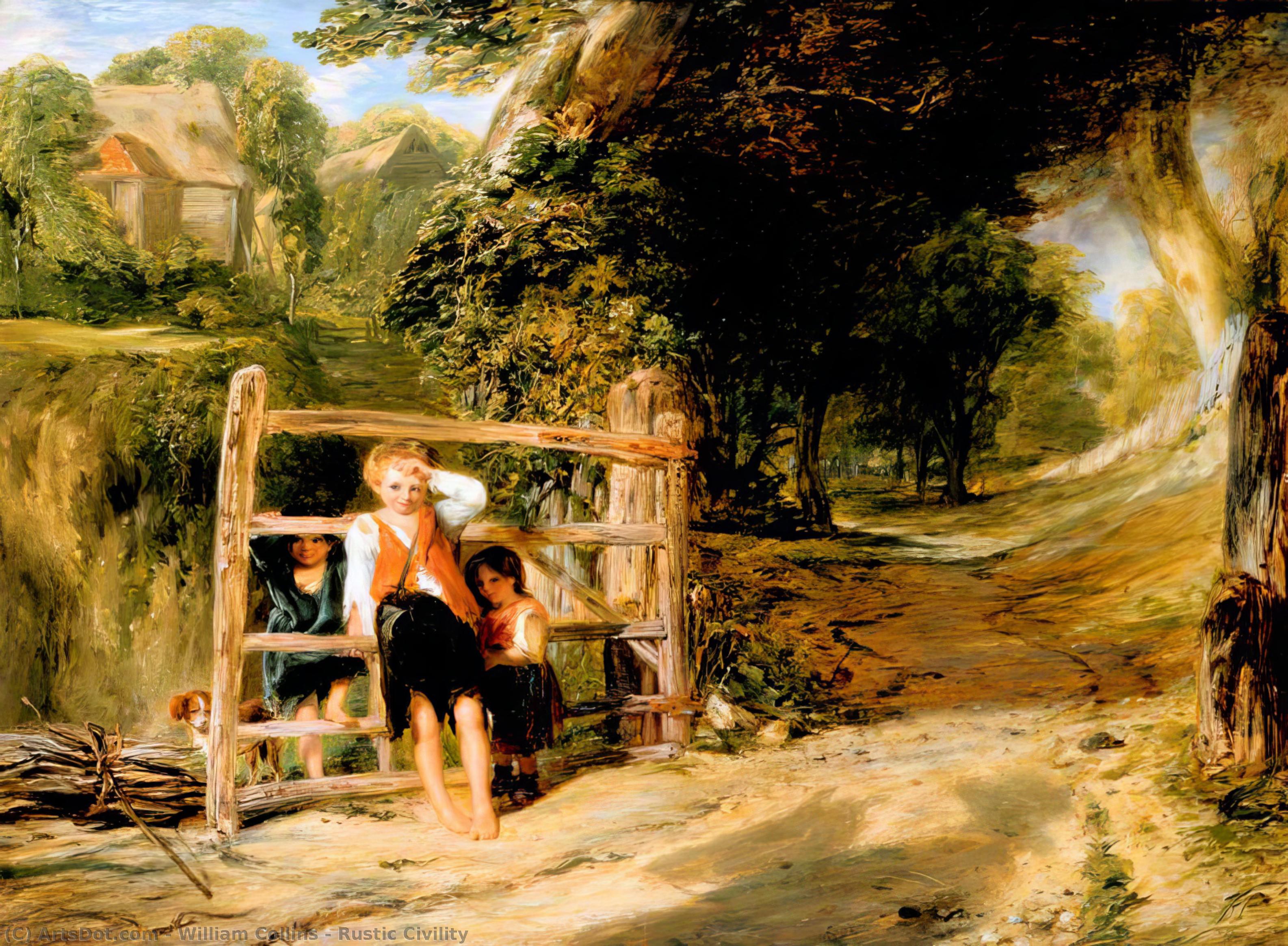
Collins’s formal training began at the Royal Academy Schools in 1807, where he honed his technical abilities and developed his unique style. He quickly gained recognition, winning awards and exhibiting regularly. However, it was his departure from grand historical narratives or portraiture towards genre painting – scenes of everyday life – that truly defined him. Influenced by the Romantic movement, Collins didn’t merely depict landscapes; he imbued them with emotion. His paintings weren't simply representations of places but rather evocations of feeling, capturing fleeting moments of beauty and tranquility. He possessed a remarkable ability to portray children and those on the margins of society with dignity and compassion. Muted tones and a careful attention to natural light became hallmarks of his work, creating an atmosphere of gentle nostalgia. His paintings like “Barmouth Sands” or "Figures By A Cottage In An Extensive Wooded Landscape" exemplify this approach, inviting viewers into a world of quiet contemplation. He rivaled the popularity of John Constable, demonstrating his significant impact on British art during his time.
Notable Works and Artistic Style
Collins’s oeuvre comprises approximately 150 paintings, predominantly landscapes and genre scenes that capture the essence of Victorian England. Among his most celebrated works are “Barmouth Sands,” a masterful depiction of the Welsh coastline bathed in golden light—a testament to his command of atmospheric perspective—and "The Stray Kitten," which exemplifies his sensitivity to detail and emotional resonance. Furthermore, “Three Children Under Tree” showcases his ability to convey warmth and innocence through composition and color palette. His artistic style is characterized by a restrained palette dominated by earthy hues—greens, browns, blues—reflecting the Romantic preoccupation with nature’s sublimity. Collins meticulously observed natural light, striving to recreate its effects on surfaces and creating an illusion of depth that transported viewers into the depicted environments. He skillfully blended realism with expressive brushstrokes, conveying not just visual information but also intangible feelings of peace and contemplation.
Family Legacy and Artistic Influence
William Collins’s personal life was inextricably linked to his artistic pursuits. He is best known as the father of Wilkie Collins, the celebrated novelist whose works like *The Woman in White* and *The Moonstone* captivated Victorian readers—a connection that undoubtedly fostered a creative environment within their household. His early exposure to both art and literature undoubtedly influenced his son's literary endeavors, fostering a profound appreciation for storytelling and imaginative vision. Moreover, Collins’s meticulous attention to detail and emotional depth served as an inspiration to subsequent generations of artists, particularly those embracing the Romantic aesthetic. He championed the genre painting movement, demonstrating that artistic excellence could be found beyond grand historical narratives or aristocratic portraits—a perspective that continues to resonate with art historians today.
A Lasting Impression: Historical Significance
William Collins’s contribution to British art history extends far beyond his individual paintings; he helped solidify the Romantic tradition as a dominant force in Victorian culture. His work embodies the movement's core tenets – reverence for nature, exploration of emotion, and concern for human experience—values that profoundly shaped artistic sensibilities during his lifetime. He stands alongside Constable and Turner as one of the foremost landscape painters of his era, securing his place among the giants of British Romanticism. Collins’s legacy endures not only in the beauty of his paintings but also in their enduring ability to evoke feelings of nostalgia and contemplation—a testament to his artistic genius and its lasting impact on the cultural landscape of Victorian England.