Umelecké dielo zobrazené na tejto stránke je chránené autorským zákonom, čo znamená, že nemôžeme legálne vytvárať ani predávať jeho identickú reprodukciu. Táto ochrana je vymáhaná na základe medzinárodných dohôd, ako napríklad Bernská konvencia a národnými zákonmi, vrátane tých, ktoré sú stanovené v Autorské právo USA – Title 17. Všetky práva vyhradené.
Táto metóda plne dodržiava autorské práva, pretože nezahŕňa kopírovanie ani duplikovanie chráneného diela. Ide skôr o kreatívnu reinterpretáciu – nový obraz, ktorý je ovplybnený originálom, no nie je s ním identický.
Giclée tlač alebo plátno múzeálnej kvality s rýchlou výrobou a rôznymi možnosťami povrchovej úpravy. ( Kúpiť ručne maľovaný obraz Prepnúť na digitálny obraz)





























Vyberte si z našich preddefinovaných rozmerov, ktoré zodpovedajú pôvodným pomeroḿ diela.

Zadajte šírku a výšku, ktoré potrebujete, aby sa reprodukcia hodila k vášmu rámu alebo stene. Print možno len orezávať, nikdy však nemennú veľkosť zvětšiť oproti pôvodnému obrázku, preto pri inom formáte stráca časť obrazu. Pred samotným vytlačiacím procesom vám pošleme digitálny náhľad na schválenie. Obrázok zobrazený na tejto stránke nezobrazuje reálny rez — len digitálny náhľad ukazuje presný výsledok.
Celosvetová doprava () do 2 týždňov namiesto štandardných 4 až 5 týždňov. (10 november)
The Glazier
Veľkosť reprodukcie
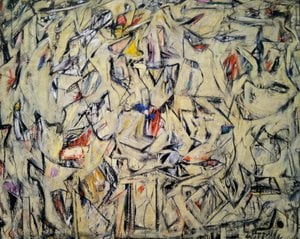
Willem de Kooning’s “The Glazier,” painted in 1940, isn't a straightforward portrait; it’s an arresting glimpse into the artist’s evolving psyche and a potent reflection of the anxieties simmering beneath the surface of mid-20th century America. This work, part of a series exploring male figures, immediately captivates with its unsettling blend of figuration and abstraction – a hallmark of De Kooning's distinctive style that foreshadowed his later, more radical explorations within Abstract Expressionism. The painting presents a woman seated before what appears to be a workbench or studio space, yet the scene feels fundamentally off-kilter, imbued with an atmosphere of quiet contemplation tinged with unease. It’s a deliberate departure from traditional portraiture, opting instead for a fractured representation that prioritizes emotional resonance over realistic depiction.
The color palette of “The Glazier” is dominated by a rich tapestry of earthy tones – ochres, browns, muted greens, and the occasional flash of teal-blue. These somber hues are strikingly reminiscent of the frescoes found in Boscoreale, Italy, which De Kooning had frequently visited and deeply admired. This connection to Italian Renaissance art subtly informs the painting’s mood, suggesting a yearning for classical beauty juxtaposed with the complexities of modern life. The visible brushstrokes, thick and deliberate, contribute significantly to the texture of the work, creating a tactile surface that draws the viewer in. Notice how the red garment worn by the figure provides a vital point of visual contrast against the predominantly muted background – a small but significant element that anchors the composition.
Technically, “The Glazier” is a masterful demonstration of De Kooning’s evolving approach. The artist employs loose, gestural lines and simplified shapes to deconstruct traditional forms. The woman's figure isn’t rendered with precise anatomical detail but rather through abstracted planes and suggestive curves, creating a sense of ambiguity about her identity and emotional state. Behind her, geometric shapes – squares and rectangles – interlock with organic forms, generating a fragmented spatial arrangement that defies easy interpretation. There is no clear horizon line or depth perspective; instead, the painting operates within a flattened plane, contributing to its overall feeling of disorientation and psychological intensity. This deliberate distortion challenges the viewer’s expectations of representation, forcing them to engage with the work on an emotional rather than purely visual level.
The symbolism within “The Glazier” remains open to interpretation, reflecting the artist’s own complex inner world. The woman herself could be seen as a representation of the modern individual grappling with uncertainty and alienation. The abstract background elements – hinting at tools, architectural fragments, or perhaps even internal landscapes – suggest a preoccupation with the complexities of contemporary life and the challenges of self-expression. The pensive expression on her face invites speculation about her thoughts and feelings, adding another layer of intrigue to this enigmatic portrait. Ultimately, “The Glazier” serves as a powerful meditation on the nature of identity, perception, and the emotional landscape of a rapidly changing world.
„The Glazier“ od Willem De Kooning zachytáva portrait, fragmentation, earth tones, abstraction, melancholy, boscoreale, de kooning v Earthy nálade. Predmet a atmosféra spoločne definujú toto dielo.
Medzi ďalšie známe mená umelca Willem De Kooning, autora diela „The Glazier“, patria aj De Kooning.
Vnímaná jasnosť diela „The Glazier“ od Willem De Kooning je shadow. Je možné ju prispôsobiť osvetleniu určeného priestoru.


1904 - 1997 , Holandsko

Ponorte sa do sveta Wassilyho Kandinského s WahooArt.com! Objavte top 25 diel abstraktného umenia, expresionizmu a farebných kompozícií. Kúpiť reprodukcie obrazov pre dokonalý dizajn interiéru. Explore the full collection online.

Ponorte sa do sveta abstraktného expresionizmu s Pollockom, Rothkom a ďalšími majstrami. Objavte príbehy za 10 ikonických diel, techniky a farby, ktoré definovali toto revolučné umenie. Kvalitné reprodukcie na WahooArt.com.

Explore the evolution of Willem de Kooning's iconic Abstract Expressionist paintings. Discover his signature style, key themes & investment potential with expert insights for discerning art collectors.

Explore the captivating world of earth tones in art! Discover historical context, emotional resonance & artistic techniques behind these timeless colors. Find inspiration for your home decor and museum-quality reproductions.

Ponorte sa do sveta Francisca Goya a jeho 25 najvýznamnejších diel. Objavte príbehy za ikonickými obrazmi romantizmu, portrétmi a Čiernymi maľbami. Reprodukcie obrazov pre váš interiér na WahooArt.com – luxusné dekorácie s umením.
 Náhľad v interiéri
 Odoslať ako digitálnu kartu
 Zdieľať
 Podrobnosti o dielo
 Príručka

 Stiahnuť obraz
 Podobné položky
 RTG skúška
 Prehliadanie diapozoje
 Otázky a odpovede
 Štatistiky

 Zobraziť viac









 Možnosť skla je dostupná len pri rozmeroch pod 110 cm