Predávajte
x
Kúpiť tlač Kúpiť tlačKúpiť ručne maľovaný obraz Kúpiť ručne maľovaný obraz OdoslaťOdoslať
Podrobnosti o dieloPodrobnosti o dielo Pridať do obľúbených Pridať do obľúbených StiahnuťStiahnuť Podobné dielaPodobné diela PrezentáciaPrezentácia

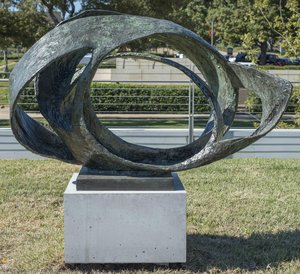
Ferryman

A striking metal sculpture of a rabbit by contemporary master Tony Cragg captures fragmented forms within a serene landscape, offering a unique opportunity to explore this iconic piece for your collection.

Sir Anthony Cragg (b. 1949) is a leading British sculptor known for his innovative assemblages, 'Early Forms,' & 'Rational Beings.' Exploring materials like fiberglass & bronze, Cragg's work challenges perceptions of form, space, and the natural worl

Kúpte si digitálnu snímku vo vysokom rozlíšení s vylepšenými detailmi, ktorá je oveľa kvalitnejšia než online náhľad.

Každý súbor starostlivo pripravujú naši interní špecialisti pomocou pokročilých nástrojov a odborného manuálneho retušovania. Zabezpečujeme, aby každý obrázok disponoval výnimočnou čistotou, presnou farebnou vernosťou a jemnými detailmi.

Konečný súbor vám bude doručený e-mailom do 72 hodín, optimalizovaný pre okamžité použitie v profesionálnom, redakčnom aj tlačovom prostredí. Ide o rovnakú kvalitu, ktorej dôverajú špičkové dizajnérske štúdiá, vydavateľstvá a galérie.

Digitálny obraz

Stiahnite si vysokorozlíšený súbor na osobné zobrazovanie, tlačenie a kreatívne projekty. (Kúpiť tlač Kúpiť tlačKúpiť ručne maľovaný obraz Kúpiť ručne maľovaný obraz)

Celková cena

$ 24,90

Súčasťou každej objednávky digitálneho obrazu

Expetórne digitálne doručenie, garantované

Keď si vyberiete WahooArt.com, nedostávate len obrázok – získate profesionálne upravené digitálne umenie, vytvorené s precíznosťou a so zárukou vašej maximálnej spokojnosti. Tu je všetko, čo je súčasťou vašej objednávky automaticky:

shipping_icon
Rýchle doručenie e-mailom

Vaša vysokorozlíšená digitálna súprava obrázkov vám bude zaslaná e-mailom do 72 hodín od objednávky – pripravená na okamžité použitie.

canvas_icon
Digitálny súbor s vylepšením AI

Vaše dielo je profesionálne optimalizované pomocou pokročilých nástrojov umelej inteligencie a manuálnej editácie, čo zaručuje maximálnu úroveň detailov, čistotu a presnosť farieb.

insurance_icon
Bezplatné celoživotné opätovné doručenie

Náhodou ste zmazali alebo ste stratili svoj súbor? Nebavžte sa – pošleme vám ho kedykoľvek znova, úplne bez poplatkov.

tax_icon
Bez poplatkov za dovoz – navždy

Užite si svoje umelodelo okamžite bez colných poplatkov, daní alebo nákladov na dopravu – digitálne stiahnutia sú vždy oslobodené od dane.

color_icon
Garantovaná presnosť farieb

Pomocou profesionálnych nástrojov a farebného manažmentu zabezpečujeme, aby vaša digitálna fotografia čo najpresnejšie odrážala pôvodné farby.

return_icon
60-dňová záruka spokojnosti

Ak nebudete spokojní so svojou digitálnou fotografiou, upravíme ju alebo vám vrátime 100% v priebehu 60 dní – bez zbytočných otázok.

guarantee_icon
100% Záruka vrátenia peňazí

Nie ste spokojní? Získajte plnú náhradu peňazí do 60 dní od prijatia vášho digitálneho súboru – bez zbytočných otázok.

discount_icon
Zľavy pri veľkom odbere

Kúpte si 3 obrazy, ušetrite 10% - Kúpte si 5, ušetrite 15% - Kúpte si 10+, ušetrite 20%. Ideálne pre kreatívne projekty, galérie a agentúry.

Základné informácie

  • Artist: Tony Cragg
  • Notable elements or techniques: Metal sculpture resembling a bunny
  • Subject or theme: Rabbit sculpture in a landscape
  • Title: Ferryman
  • Year: 1997

Popis zberateľského predmetu

A Visionary Encounter with Form

In the vast, open expanse of a verdant landscape, where the whispers of nature meet the silent strength of human ingenuity, stands Ferryman. This striking work by the renowned British sculptor Tony Cragg invites the viewer into a profound dialogue between the organic and the industrial. At first glance, the sculpture presents a captivating paradox: a large-scale, metallic rabbit perched with unexpected grace upon a rugged concrete base. The figure, though clearly recognizable in its soft, familiar silhouette, is transformed by its medium, rendered in a way that suggests both the lightness of a living creature and the enduring weight of modern art. It is a piece that commands attention, not through aggression, or noise, but through a quiet, monumental presence that anchors the surrounding field.

The artistry of Cragg lies in his ability to manipulate material to evoke complex emotional responses. In Ferryman, the metallic surface catches the shifting light of the sky, creating a dynamic interplay of shadows and highlights that breathes life into the sculpture's form. The contrast between the smooth, engineered precision of the metal and the raw, unyielding texture of the concrete pedestal creates a tension that is central to the work's allure. This juxtaposition serves as a metaphor for the contemporary condition—the intersection of our biological origins and our increasingly technological existence. For the collector or interior designer, this piece offers a sophisticated focal point, bringing a sense of sculptural depth and intellectual curiosity to any curated space.

The Alchemy of Material and Memory

To understand Ferryman, one must look toward the historical trajectory of Tony Cragg himself. Emerging from the vibrant assemblage movement, Cragg has spent decades redefining how we perceive fragments and forms. This work, dating from 1997, reflects a period of mastery where the artist moved beyond the mere accumulation of discarded objects toward a more fluid, integrated approach to three-dimensional space. The sculpture does not merely sit upon the earth; it seems to emerge from it, bridging the gap between the man-made and the natural world. The presence of distant buildings and the subtle inclusion of human observers in the landscape further emphasize this connection, placing the artwork within a living, breathing ecosystem.

The symbolism within the piece is as layered as the artist's technique. The rabbit, often a symbol of fertility, rebirth, and sudden movement, is here frozen in a moment of stillness, acting as a silent sentinel over the landscape. This stillness invites a meditative state in the viewer, encouraging a slow, rhythmic observation of the surrounding environment. For those seeking to incorporate high-quality reproductions into their homes or galleries, Ferryman represents more than just a decorative object; it is an invitation to contemplate the permanence of art amidst the transience of life. It is a masterpiece of balance, offering a sophisticated aesthetic that resonates with anyone who finds beauty in the harmony of contrasting elements.


Životopis umelca

The Architect of Fragmented Forms

Sir Anthony Cragg, a titan of British contemporary sculpture, possesses the rare ability to breathe life into the inanimate. Born in Liverpool in 1949, Cragg’s artistic consciousness was shaped by an early mastery of painting, yet it was his profound fascination with the three-dimensional realm that would eventually redefine the boundaries of modern sculpture. His journey through the Gloucestershire College of Arts and Technology and Wimbledon School of Art provided a rigorous foundation, but it was his move to Germany in 1977 that acted as a true catalyst, thrusting him into an international dialogue with the avant-garde and expanding his sculptural vocabulary beyond the limits of traditional medium.

In the early stages of his career, Cragg emerged as a pioneer of the assemblage movement, finding profound beauty in the discarded and the mundane. He possessed a singular vision for transforming everyday detritus—stacked chairs, weathered tables, and forgotten boxes—into complex, rhythmic reliefs. Through works such as “Stack” (1975), he demonstrated an uncanny ability to manipulate spatial arrangement and color, turning fragments of plastic and wood into vibrant geometric abstractions. This period was defined by a philosophical rejection of representational imagery; instead, Cragg sought to distill visual language into its purest essence, forcing the viewer to confront the raw energy of form and texture without the distraction of recognizable subjects.

Evolution of Material and Motion

As his career progressed through the mid-1970s and into the 1980s, Cragg’s ambitions grew from the intimate scale of wall-mounted reliefs to the monumental presence of large-scale installations. He began to bridge the gap between architecture and sculpture, creating works that engaged aggressively with the spaces they inhabited. His mastery over diverse materials—ranging from the industrial coldness of fiberglass to the timeless weight of bronze—allowed him to explore a spectrum of textures and densities. In pieces like “Red Indian” (1982–3), one can observe his meticulous method of arranging individual fragments to generate larger, more complex images that simultaneously evoke organic, natural growth and rigid, geometric precision.

The brilliance of Cragg’s development lies in his ability to navigate the tension between the artificial and the biological. His later series, such as 'Early Forms' and 'Rational Beings', showcase a sculptor deeply invested in the concept of emergence—the way complex structures arise from simple components. His sculptures often appear to be in a state of flux, caught in a moment of transformation or unfolding. This sense of kinetic energy, even within static bronze or resin, creates a psychological depth that challenges our perceptions of stability and permanence.

Legacy and Artistic Significance

The historical significance of Sir Anthony Cragg cannot be overstated; he has fundamentally altered the trajectory of contemporary sculpture by dismantling the distinction between found objects and fine art. His work serves as a bridge between the sculptural traditions of the past and the fragmented, multi-material reality of the present. By treating the fragment not as a broken piece, but as a building block for new realities, he has provided a visual language for an era defined by complexity and interconnectedness.

Today, Cragg remains a vital force in the global art scene, his influence felt in the way contemporary artists approach materiality and spatial intervention. His achievements are marked by:

  • Innovation in Assemblage: Redefining the use of discarded materials to create high-art aesthetics.
  • Material Versatility: The seamless integration of fiberglass, bronze, and plastic into a cohesive sculptural language.
  • Spatial Dialogue: A profound ability to transform architectural environments through monumental installations.
  • Philosophical Depth: Exploring the intersection of geometric abstraction and organic, biological forms.

Tony Cragg

Tony Cragg

1949 -

Základné informácie

  • Artistic Movement Or Style: Assemblage art
  • Artists Who Influenced This Artist:
    • Robert Irwin
    • Donald Judd
  • Date Of Birth: 1949
  • Date Of Death: Living
  • Full Name: Tony Cragg
  • Nationality: British
  • Notable Artworks:
    • Axehead
    • Opening Spiral
    • Dining Motions
  • Place Of Birth: Liverpool, UK