x
NáhľadNáhľad AR náhľadAR náhľad Kúpiť ručne maľovaný obraz Kúpiť ručne maľovaný obrazKúpiť obrázok Kúpiť obrázok OdoslaťOdoslať
Podrobnosti o dieloPodrobnosti o dielo Pridať do obľúbených Pridať do obľúbených StiahnuťStiahnuť Podobné dielaPodobné diela RTG skúškaRTG skúška PrezentáciaPrezentácia

St Jerome and the Angel

Discover Simon Vouet's masterpiece, 'St Jerome and the Angel,' a stunning Baroque painting showcasing divine guidance & artistic brilliance from 1622. Explore its rich details & historical context.

Objavte život a umenie Simona Voueta (1590-1649), kľúčovej postavy francúzskeho baroka, ktorý predstavil talianske štýly a ovplyvnil 17. storočie!

Giclée / Umenotlač

Giclée tlač alebo plátno múzeálnej kvality s rýchlou výrobou a flexibilnými možnosťami povrchovej úpravy. (Kúpiť ručne maľovaný obraz Kúpiť ručne maľovaný obrazKúpiť obrázok Kúpiť obrázok)

P118B $10
P118H $10
P118W $10
P438Z $10
P508JH $12
P508YH $12
P805H $10
P805Z $10
P919BZ $10
P919G $10
P919XJ $10
P959ZH $10
P968JZ $12
W106C $8
W218G $10
W218JH $8
W218Y $10
W307PJ $10
W316G $10
W316PJ $8
W316Y $10
W398PJ $8
W4111J $10
W500HY $15
W500JH $15
W692G $12
W849H $8
W940BG $15
W953PJ $8

Štandardné
na mieru
CM
INCH

Vyberte si z našich preddefinovaných rozmerov, ktoré zodpovedajú pôvodným pomeroḿ diela.

šírka
výška

Môžete zadať vlastné rozmery, aby sa reprodukcia prispôsobila konkrétnemu rámu alebo priestoru. Ak zvolená veľkosť nebude zodpovedať proporciám originálu, dielo buď orežeme, alebo obraz rozšírime pomocou zrkadlenia či farebného doplnenia okrajov. Pred začatím výroby vám pošleme digitálnu ukážku na schválenie.
Máte na vedomí, že náhľad na obrazovke neodzrkadľuje skutočné orezanie alebo rozšírenie. Len digitálna ukážka presne zobrazí finálnu kompozíciu.
Hoci sú k dispozícii vlastné rozmery, pre zachovanie pôvodných proporcií odporúčame vybrať si rozmer z vopred definovaného zoznamu.

Celosvetová doprava () do 2 týždňov namiesto štandardných 4/5 týždňov. (6 september)

why_choose_icon
Bezplatná expresná doprava po celom svete
why_choose_icon
Prémiové lnianske plátno
why_choose_icon
Kompletné poistenie prepravy
why_choose_icon
Záruka vrátenia colného poplatku
why_choose_icon
Záruka presného farebného zhodnutia
why_choose_icon
60-dňá politika vrátenia (iba pri defektoch)
why_choose_icon
100% záruka vrátenia peňazí
why_choose_icon
Výhodná množstevná zľava

Celková cena

$ 68

reproduction

St Jerome and the Angel

Giclée / Umenotlač

Veľkosť reprodukcie

-

Celková cena za vybrané možnosti

$ 68

Základné informácie

  • Artistic style: Italian Baroque
  • Influences: Caravaggio
  • Title: St Jerome and the Angel
  • Location: National Gallery of Art
  • Dimensions: 145 x 180 cm
  • Subject or theme: Religious scene
  • Year: 1622

Kvíz o umení

Pri každej otázke je iba jedna správna odpoveď.

Otázka 1:
What is the primary subject depicted in ‘St Jerome and the Angel’?
Otázka 2:
According to the image description, what is the overall atmosphere of the painting?
Otázka 3:
In what year was ‘St Jerome and the Angel’ painted?
Otázka 4:
Who is the artist who created ‘St Jerome and the Angel’?
Otázka 5:
The image description mentions several other figures present in the painting. What is one of them?

St Jerome and the Angel: A Dialogue of Faith and Light

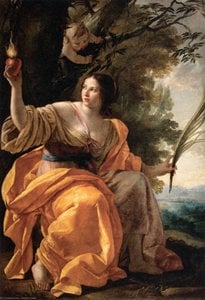
Simon Vouet’s “St. Jerome and the Angel,” painted in 1622, is more than just a depiction of a biblical scene; it's a carefully constructed meditation on divine guidance, spiritual contemplation, and the interplay between earthly and celestial realms. This masterful work, housed within the National Gallery of Art in Washington D.C., exemplifies the burgeoning Baroque style’s embrace of dramatic lighting, nuanced emotion, and a heightened sense of realism that distinguished it from the preceding Mannerism. The painting immediately draws the viewer into a scene brimming with quiet intensity – a moment of profound communication between the venerable Saint Jerome, known for his dedication to prayer and translation of the Bible, and the radiant angel who appears before him.

Vouet’s technical prowess is evident in every brushstroke. He skillfully employs *chiaroscuro*, a technique borrowed from Caravaggio, to create a dramatic contrast between light and shadow. The angel, bathed in an ethereal glow, stands in sharp relief against the darker, more muted tones of Jerome's robe and the shadowed background. This deliberate use of light isn’t merely aesthetic; it serves to emphasize the angel’s divine presence and the transformative nature of his message. The composition is carefully balanced – Jerome, a figure of venerable age and contemplative posture, occupies the lower portion of the canvas, while the dynamic angel dominates the upper register, creating a visual hierarchy that underscores their roles in the narrative.

A Renaissance Vision with Baroque Flair

Painted during Vouet’s extended sojourn in Rome, “St. Jerome and the Angel” reflects the profound influence of Italian art on French painting at the time. Vouet had immersed himself in the works of masters like Caravaggio, Paolo Veronese, and the Carracci brothers, absorbing their techniques and philosophies. However, he didn’t simply mimic these artists; instead, he synthesized their innovations with his own distinctive style, creating a uniquely French interpretation of the Baroque aesthetic. The painting showcases a move away from the stylized poses and flattened perspectives of Mannerism towards a more naturalistic approach to form and space – a hallmark of the emerging Baroque style.

The historical context is crucial to understanding the work’s significance. The early 17th century was a period of intense religious fervor in Europe, fueled by the Counter-Reformation. Paintings like this one were often commissioned by the Catholic Church as didactic tools – intended to inspire piety and reinforce orthodox doctrine. The scene of St. Jerome receiving divine guidance speaks directly to this purpose, offering a visual representation of faith, humility, and the promise of salvation.

Symbolism and Emotional Resonance

Beyond its religious subject matter, “St. Jerome and the Angel” is rich in symbolic detail. The book held by Jerome represents his life’s work – the translation of the Bible into Latin. The angel's outstretched hand and pointing finger symbolize divine instruction and revelation. The cup at the center of the image may represent the Holy Spirit or a symbol of spiritual nourishment. Notably, the angel is depicted not as a majestic, imposing figure but as a youthful, almost mischievous presence – suggesting that divine guidance can be both challenging and joyful.

The emotional impact of the painting is profound. The quiet intensity of Jerome’s expression, combined with the radiant beauty of the angel, evokes a sense of reverence and wonder. The scene invites viewers to contemplate their own relationship with faith and the possibility of receiving divine guidance in their lives. It's a moment suspended in time – a dialogue between man and God, rendered with exquisite skill and profound sensitivity.

A Legacy of Light and Shadow

Simon Vouet’s “St. Jerome and the Angel” stands as a testament to his artistic genius and his pivotal role in shaping the course of French painting. It exemplifies the transition from Mannerism to Baroque, showcasing the innovative techniques and stylistic choices that defined this transformative period. Today, reproductions of this captivating work continue to inspire artists and collectors alike, offering a glimpse into a world where faith, beauty, and light converge in a timeless tableau.


Biografia umelca

Simon Vouet: Francúzsky Barokový Majster a Most medzi Itáliou a Francúzskom

Simon Vouet, narodený v Paríži 9. januára 1590 a zomretý 30. júna 1649 v tom istom meste, je dnes uznávaný ako kľúčová postava vo vývoji francúzskeho maliarstva. Jeho meno sa spája s prechodom od manierizmu k dynamickému a expresívnemu štýlu baroka, ktorý ovplyvnil celé generácie umelcov. Pochádzal z rodiny zasvätenej umeniu – jeho otec Laurent bol tiež maliarom a brat Aubin sa venoval podobnej umeleckej dráhe – čo mu umožnilo od útleho veku dychtiť po poznaní a rozvíjať svoj talent pod ich vedením. Neskôr, jeho vnuk Ludovico Dorigny pokračoval v rodinnej umeleckej tradícii, čím upevnili Vouetovo dedičstvo.

Cestovanie, Vzdelávanie a Formovanie Umelca

Vouetova kariéra začala s portrétmi, kde sa prejavil jeho raný talent. Už ako štrnásťročný podnikol cestu do Anglicka na základe objednávky, čo naznačovalo jeho rýchlo rastúcu povesť. Neskôr nasledovala cesta cez Osmanskú ríšu a až do Benátok v roku 1612, kde sa ponoril do bohatého kultúrneho prostredia. Najvýznamnejšou etapou jeho formovania však boli trinásť rokov strávené v Ríme (1614-1627). Tieto roky boli pre neho transformačné – stal sa súčasťou pulzujúcej umeleckej scény, ktorá bola srdcom rozvíjajúceho sa baroka. V Ríme sa učil od majstrov ako Caravaggio, s ktorého dramatickým svetlom si oboznámil svoje obrazy, a študoval diela talianskych manieristov. Dôkladne analyzoval farebné palety a techniku di sotto in su (perspektívu zdola nahor) od Paola Veroneseho. Inšpiráciu čerpal aj z tvorby Carracciho, Guercina, Lanfranca a Guido Reniho, pričom postupne syntetizoval tieto rôznorodé vplyvy do svojho vlastného, jedinečného umeleckého štýlu.

Vrchol Kariéry a Návrat do Francúzska

Vouetova rímska kariéra vyvrcholila jeho voľbou za prezidenta prestížnej Accademia di San Luca v roku 1624, čo potvrdzovalo jeho majstrovstvo a uznanie v talianskom umeleckom svete. Jeho štýl sa vyznačoval schopnosťou absorbovať a spracovať rôzne umielecké vplyvy, pričom ich integroval do koherentnej a výrazne talianskej barokovej estetiky. V roku 1627 ho francúzsky kráľ Ľudovít XIII. zavolal späť do Francúzska, kde sa stal Premier peintre du Roi (Prvým maliarom kráľa) – pozíciou s obrovskou prestížou a vplyvom. V Paríži sa rýchlo etabloval ako dominantná sila, vytvárajúc oltárne obrazy a alegorické výzdoby pre súkromných mecenášov.

Dedičstvo a Vplyv na Francúzske Umenie

Vouetova dielňa bola živnou pôdou pre celú školu francúzskych maliarov nasledujúcej generácie. Medzi jeho najvýznamnejších učeníkov patril Charles Le Brun, ktorý neskôr vytvoril všetky interiérové dekoratívne maľby vo Versailles a definoval oficiálny umelecký štýl na dvore Ľudovíta XIV., hoci v žiarosti nechal Voueta vyradiť z Kráľovskej akadémie v roku 1648. Okrem Le Bruna boli jeho učeníci Valentin de Boulogne, jeden z hlavných francúzskych „caravaggistov“, Pierre Mignard, Eustache Le Sueur, Nicolas Chaperon a flámsky umelec Abraham Willaerts. Vouetov vplyv presahoval rámec jeho vlastných prác; jeho študenti šírili jeho štýl a techniky po celej Francúzsku, čím položili základy charakteristickej barokovej školy maliarstva. Jeho odkaz je obzvlášť zreteľný vo veľkých dekoratívnych schémach objednaných Ľudvíkom XIV., kde sa jeho vplyv prejavuje v monumentálnosti a dynamike kompozícií.

Simon Vouet zostáva v dejinách umenia ako most medzi talianskym a francúzskym barokom. Úspešne preniesol dynamiku a grandióznu krásu talianskeho baroka do Francúzska, čím výrazne ovplyvnil umeleckú krajinu krajiny a zanechal trvalý odkaz na generácie umelcov.

Simon Vouet

Simon Vouet

1590 - 1649 , Francúzsko

Základné informácie

  • Artistic Movement Or Style: Baroková maľba
  • Artists Or Movements Influenced By This Artist:
    • Charles Le Brun
    • Valentin de Boulogne
    • Francúzska baroková maľba
  • Artists Who Influenced This Artist:
    • Caravaggio
    • Paolo Veronese
    • Carracci
    • Guercino
    • Lanfranco
    • Guido Reni
  • Date Of Birth: 9. január 1590
  • Date Of Death: 30. jún 1649
  • Full Name: Simon Vouet
  • Nationality: Francúzsky
  • Notable Artworks:
    • Crucifixion (1622)
    • Allégorie de la richesse
    • Vénus Endormie (1630/40)
  • Place Of Birth: Paríž, Francúzsko
Preskúmajte umelecká diela usporiadané podľa tém, štýlov a charakteristík.