Predávajte svoje umenie
x
Prejsť na tlač Prejsť na tlačPrepnúť na obrázok Prepnúť na obrázok OdoslaťOdoslať
Podrobnosti o dieloPodrobnosti o dielo Pridať do obľúbených Pridať do obľúbených StiahnuťStiahnuť Podobné dielaPodobné diela PrezentáciaPrezentácia

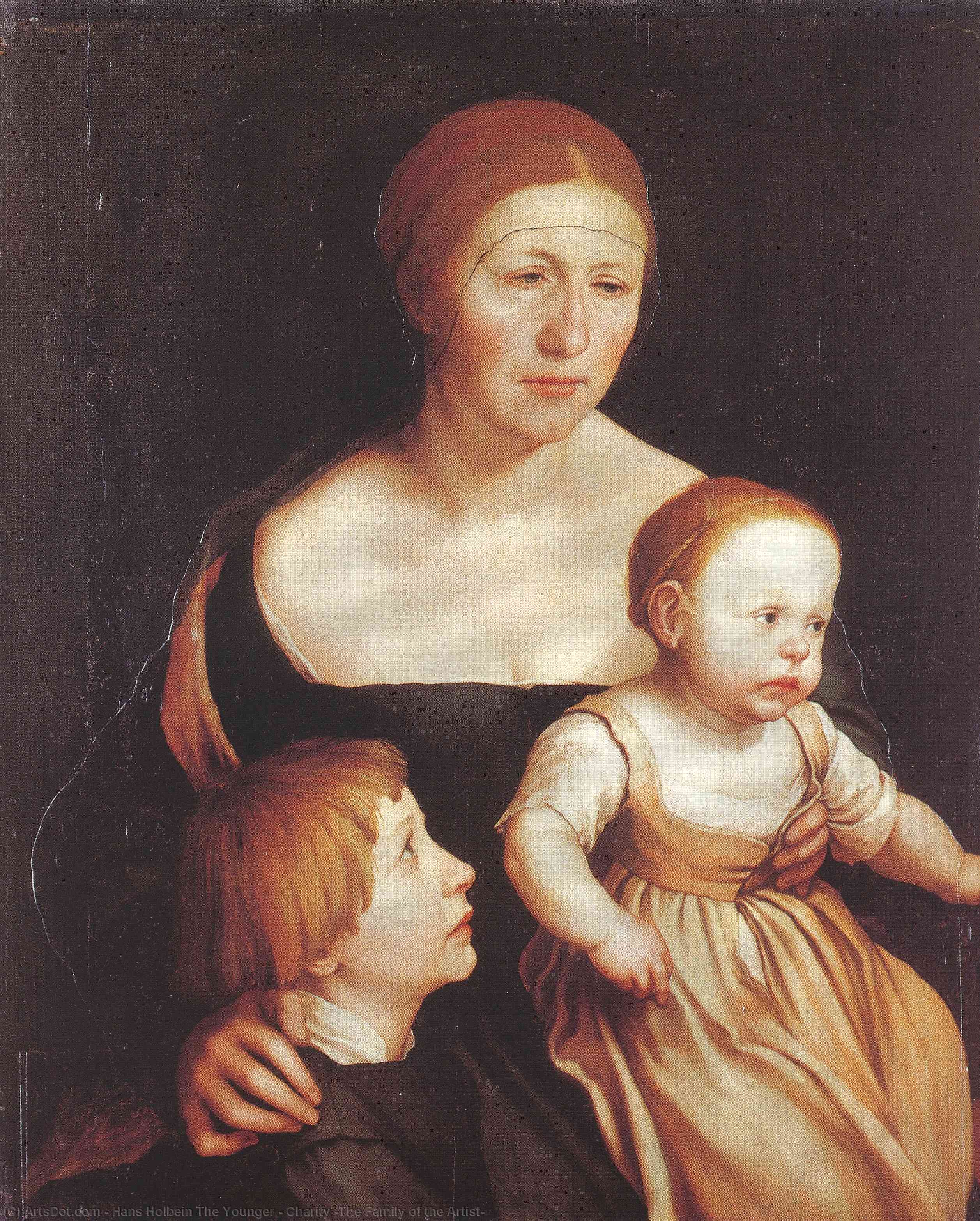
"Charity (The Family of the Artist)" - Milosť (Rodina umelca)

"Milosť (Rodina umelca)" - Klasické obrazové dielo Hansa Holbeina mladšieho zobrazujúce lásku a starostlivosť o rodinu, vytvorené v roku 1528. Pozrite si nádhernú reprodukciu tejto ikonickej dielnosti!

Obraz "Ambasádori" od Holbeina zobrazuje dvoch diplomatov a je plný symboliky, upozorňuje na náboženské a politické napätia v 16. storočí. Pozrite si detailné prevedenie a význam jednotlivých predmetov!

Ručne maľovaná olejová reprodukcia

Ručne maľovaný olej na plátne vo vašej zvolenej veľkosti a v ráme, vyrobený na mieru našimi umelcami. (Prejsť na tlač Prejsť na tlačPrepnúť na obrázok Prepnúť na obrázok)

P118B $10
P118H $10
P118W $10
P438Z $10
P508JH $12
P508YH $12
P805H $10
P805Z $10
P919BZ $10
P919G $10
P919XJ $10
P959ZH $10
P968JZ $12
W106C $8
W218G $10
W218JH $8
W218Y $10
W307PJ $10
W316G $10
W316PJ $8
W316Y $10
W398PJ $8
W4111J $10
W500HY $15
W500JH $15
W692G $12
W849H $8
W940BG $15
W953PJ $8

Standard
custom
CM
INCH

Vyberte si z našich preddefinovaných rozmerov, ktoré zodpovedajú pôvodným pomeroḿ diela.

šírka
výška

Môžete zadať vlastné rozmery tak, aby sa hodili do konkrétneho rámu alebo priestoru. Ak sa váš zvolený rozmer nezhoduje s pôvodnými proporciami obrazu, dielo buď orezáme, alebo ho doplníme ručne maľovanými prvkami. Pred začiatkom výroby vám zašleme digitálny náhľad na schválenie.
Upozorňujeme, že ukážka na obrazovke neodráža skutočné orezanie alebo doplnenie. Skutočnú finálnu kompozíciu zobrazuje iba digitálny náhľad.
Hoci sú k dispozícii vlastné rozmery, odporúčame vybrať rozmer z preddefinovaného zoznamu, aby sme zachovali pôvodné proporcie.

Príklady možných zmien: nahradiť tvár fotografiou zákazníka; pridať domáce zviera (napr. nahradiť mačku psom); vložiť skryté posolstvo do pozadia; zmeniť krajinu alebo prvky pozadia.
Po odoslaní objednávky vám tím WahooArt.com pošle e-mail s pokynmi a poskytne náhľad na návrh.

Celosvetová doprava () za 3 až 4 týždne namiesto štandardných 5 týždňov. (5 august). Bez kompromisov v kvalite.

why_choose_icon
Bezplatná expresná doprava po celom svete
why_choose_icon
Prémiové lnianske plátno
why_choose_icon
Kompletné poistenie prepravy
why_choose_icon
Záruka vrátenia colného poplatku
why_choose_icon
Záruka presného farebného zhodnutia
why_choose_icon
60-dňá politika vrátenia (iba pri defektoch)
why_choose_icon
100% záruka vrátenia peňazí
why_choose_icon
Výhodná množstevná zľava

Celková cena

$ 272

reproduction

"Charity (The Family of the Artist)" - Milosť (Rodina umelca)

Technika reprodukcie

Veľkosť reprodukcie

-

Celková cena za vybrané možnosti

$ 272

Základné informácie

  • Year: 1528
  • Movement: Northern Renaissance
  • Subject or theme: Familial love
  • Artist: Hans Holbein the Younger
  • Artistic style: Realistic, emotional
  • Notable elements: Family portrait, detail
  • Title: Charity (The Family of the Artist)

Kvíz o umení

Pri každej otázke je iba jedna správna odpoveď.

Otázka 1:
What is the primary subject of Hans Holbein the Younger’s ‘Charity (The Family of the Artist)’?
Otázka 2:
In what year was ‘Charity (The Family of the Artist)’ painted?
Otázka 3:
What medium was primarily used by Holbein in creating ‘Charity (The Family of the Artist)’?

Otázka 4:
Which artistic movement heavily influenced Holbein’s work, as evidenced in ‘Charity (The Family of the Artist)’?
Otázka 5:
Where is ‘Charity (The Family of the Artist)’ currently housed?

Popis diela

A Tender Moment Captured: Exploring ‘Charity (The Family of the Artist)’ by Hans Holbein the Younger

Hans Holbein the Younger, a pivotal figure in the Northern Renaissance, possessed an extraordinary ability to distill profound emotion onto canvas. Among his most cherished works stands “Charity (The Family of the Artist),” painted in 1528, a deceptively simple portrait that resonates with layers of meaning and technical mastery. More than just a depiction of a family, it’s a poignant meditation on love, devotion, and the quiet dignity of domestic life – a window into the heart of a Renaissance artist himself. The painting immediately draws the eye to Elsbeth Binzenstock, Holbein's wife, seated at the center, cradling their two young children. Her posture exudes a serene grace, her gaze direct and engaging, inviting the viewer into this intimate tableau. The children, positioned on either side, are rendered with remarkable detail – one sporting a charming hat, the other gazing intently forward. Holbein’s meticulous attention to clothing, hairstyles, and even the subtle textures of fabric reflects not only his artistic skill but also the prevailing fashions of the era, offering a valuable glimpse into 16th-century life. This careful observation is characteristic of Holbein’s approach—he sought to capture not merely appearance but the very essence of his subjects.

The Significance of a Title – And a Portrait

The title itself, “Charity,” is laden with symbolism. It’s a deliberate choice by Holbein, suggesting that this portrait isn't merely about familial likeness; it’s an embodiment of selfless love and care. Within the context of 16th-century Europe, charity was a deeply valued virtue, often associated with religious piety and social responsibility. By naming the work “Charity,” Holbein elevates his family to a position of moral significance, imbuing their image with a sense of timeless worth. This reflects Holbein’s humanist convictions—he believed that art could inspire noble sentiments and contribute to the betterment of society. Interestingly, this wasn’t simply a commissioned portrait for wealthy patrons. It was painted for Holbein himself – a rare and deeply personal undertaking. This self-portrait within a family setting offers an unprecedented insight into the artist's own values and priorities. It speaks to his belief in the importance of family, faith, and the simple joys of domestic life—themes that would frequently inform his later works. Holbein’s artistic vision extended beyond mere representation; he sought to convey complex ideas about human nature and morality.

A Masterclass in Technique – Oil on Panel

Executed in oil on panel, “Charity” showcases Holbein’s exceptional technical skill. The use of oil paint allowed for a remarkable level of detail and luminosity, capturing the subtle nuances of light and shadow with breathtaking precision. Note the delicate modeling of Elsbeth's face, the soft folds of her dress, and the way the light catches on the children’s hair – all achieved through masterful brushwork. The panel medium itself contributed to the painting’s rich texture and depth. Holbein’s meticulous layering of pigments—a technique perfected during his time in Basel—created an illusion of three-dimensionality that was revolutionary for its era. Furthermore, Holbein’s use of perspective is subtly sophisticated. The figures are arranged within a shallow space, creating a sense of intimacy and immediacy. The background, though simple, serves to anchor the composition and draw attention to the central subjects. It's a testament to his ability to create a convincing illusion of depth on a relatively small scale—a feat that distinguishes Holbein’s work from many of his contemporaries.

Echoes of the Northern Renaissance – A Historical Context

“Charity” is firmly rooted in the traditions of the Northern Renaissance, an artistic movement characterized by its realism, attention to detail, and focus on portraiture. Holbein’s work reflects the influence of artists like Jan van Eyck and Rogier van der Weyden, who pioneered the use of oil paint and developed a meticulous approach to rendering natural forms. However, Holbein transcends mere imitation; he infuses these techniques with his own unique style – one marked by psychological depth and emotional resonance. The painting’s creation coincided with a period of significant social and political upheaval in Europe, as the Reformation challenged traditional religious beliefs. Holbein's work, while seemingly serene, subtly reflects this atmosphere of uncertainty and change—a reminder that art can serve as both reflection and commentary on its time. Holbein’s legacy endures not only for his technical brilliance but also for his profound understanding of human emotion. He captured the quiet dignity of domestic life with unparalleled sensitivity, creating a portrait that continues to inspire admiration centuries later.

Biografia umelca

A Life Etched in Detail: The World of Hans Holbein the Younger

Born around 1497 in Augsburg, Germany, Hans Holbein the Younger emerged as a defining figure of the Northern Renaissance—a master portraitist whose work continues to resonate with breathtaking realism and psychological depth. His upbringing within an artistically gifted family laid the foundation for his exceptional talent; his father, Hans Holbein the Elder, was a respected painter and printmaker who instilled in young Hans a meticulous approach to observation and technique. This early training wasn’t merely about mastering brushstrokes or mixing pigments—it was about learning to *see*, to capture not just likeness but the very essence of a subject. Holbein's initial artistic explorations occurred within his father’s workshop, where he honed his skills before embarking on a journey that would lead him through Switzerland and ultimately to the heart of the English court.

From Basel to the Tudor Court: A Rising Star

After completing his apprenticeship, Holbein traveled extensively throughout Switzerland, establishing himself as an independent artist with a growing reputation. He spent several formative years in Basel, creating not only striking portraits but also religious works and intricate woodcut designs—most notably the haunting series depicting the *Dance of Death*. These early pieces reveal a burgeoning mastery of composition and a developing fascination with capturing the complexities of human emotion. He admired the work of Albrecht Dürer and other German masters while also studying Italian art during his travels, absorbing their techniques and incorporating them into his own unique style. His innovative compositions further enhanced the impact of his work, often employing symbolic objects or backgrounds to convey deeper meaning. It was in 1526 that fate intervened, drawing Holbein towards England, an event that would irrevocably alter his artistic trajectory. He arrived bearing a letter of introduction from Erasmus, the renowned humanist scholar, which opened doors to the influential circles of English society. His talent quickly captivated prominent figures like Sir Thomas More, who became both a patron and a subject for several compelling portraits. This connection proved pivotal, leading to Holbein’s appointment as a court painter to King Henry VIII in 1536—a position he held, with some interruptions, until his untimely death in 1543.

The Art of Perception: Style and Masterpieces

Holbein's artistic style is characterized by an extraordinary commitment to realism, achieved through painstaking attention to detail in rendering textures, fabrics, and the subtle nuances of facial features. He didn’t simply *paint* portraits; he meticulously constructed them, layer upon layer, capturing not just physical appearances but also the personality and inner life of his sitters. His innovative compositions further enhanced the impact of his work, often employing symbolic objects or backgrounds to convey deeper meaning. The Ambassadors (1533) stands as a testament to this approach—a complex and symbolically rich double portrait showcasing both Holbein’s technical brilliance and intellectual depth. The anamorphic skull subtly embedded within the painting serves as a stark *memento mori*, reminding viewers of the inevitability of death. His numerous portraits of Henry VIII established a lasting image of Tudor power, while his depiction of Erasmus of Rotterdam captures the scholar's profound intellectual gravitas. Other notable works include the stunning *Portrait of Nikolaus Kratzer* (1528), a masterpiece of realism and scientific detail.
  • His depictions of Henry VIII became iconic representations of royal power.
  • His portraiture provides a window into the lives of prominent humanists like Erasmus and More.
  • His innovative use of symbolism adds layers of meaning to his work, inviting viewers to contemplate deeper themes.
Holbein’s artistry transcends mere technical skill; it is an embodiment of intellectual curiosity, artistic innovation, and a profound understanding of the human condition. He remains one of the most admired and studied painters of the Renaissance—a master whose legacy continues to inspire and enthrall.

Legacy and Influence: A Lasting Impression

Holbein’s influence extended far beyond his own lifetime, shaping the course of portraiture for decades to come. His meticulous observation and masterful technique established a new standard for realism, inspiring artists across Europe to emulate his approach. He demonstrated that art could convey not only visual likeness but also psychological insight—a breakthrough that fundamentally altered how portraits were conceived and executed. He didn't merely record appearances—he captured moments in time, preserving them for posterity. His work serves as a powerful testament to the enduring power of art to document, interpret, and illuminate the past.
Hans Holbein mladší

Hans Holbein mladší

1497 - 1543 , Nemecko

Základné informácie

  • Artistic Movement Or Style: Norddeutsche Renaissance
  • Artists Or Movements Influenced By This Artist: ['Spätere Porträtmaler']
  • Artists Who Influenced This Artist: ['Albrecht Dürer']
  • Date Of Birth: c. 1497
  • Date Of Death: 1543
  • Full Name: Hans Holbein der Jüngere
  • Nationality: Deutsch-Schweizer
  • Notable Artworks:
    • Die Botschafter
    • Porträt Heinrich VIII.
    • Porträt Erasmus von Rotterdam
  • Place Of Birth: Augsburg, Deutschland
Preskúmajte umelecká diela usporiadané podľa tém, štýlov a charakteristík.