Biografia umelca
Rudolf Láng: A Visionary of Shadows and Dreams
Rudolf Láng, born in Budapest in 1904, was a Hungarian artist whose career spanned nearly nine decades, marked by a singular vision—a haunting blend of expressionism, etching mastery, and a fascination with the theatrical and the fantastical. His work, often characterized by stark contrasts, dramatic lighting, and symbolic imagery, reveals an artist deeply influenced by both European artistic traditions and his own uniquely melancholic sensibility. Láng’s journey from early representational painting to a distinctive style rooted in monochrome exploration is a testament to his evolving artistic voice, culminating in works that continue to resonate with viewers today. He passed away in 1991, leaving behind a legacy of evocative prints and drawings that offer glimpses into the subconscious and explore themes of isolation, mystery, and the human condition.
Early Life and Artistic Training
Láng’s early life was shaped by a rigorous artistic education. Born into a family with strong cultural ties, he initially pursued studies in art history at the University of Budapest, laying the groundwork for his later appreciation of artistic heritage. However, it was his enrollment at the Accademia di Belle Arti in Italy that truly ignited his passion for visual arts. This period exposed him to diverse European styles—Impressionism, Symbolism, and early Expressionism—influences that would profoundly shape his own artistic development. Crucially, Láng’s training emphasized technical skill, particularly in etching, a medium he would master with exceptional precision and emotional depth. His early work demonstrated a more traditional representational style, but it was during this Italian period that the seeds of his distinctive aesthetic began to germinate.
The Rise of Expressionism and Stage Design
Returning to Hungary, Láng quickly established himself as a versatile artist, excelling not only in painting and printmaking but also in stage design. From 1953 until 1970, he served as principal stage and costume designer at the Budapest Opera House, a role that demanded both artistic creativity and technical expertise. This period was particularly significant, allowing him to experiment with innovative scenography for over two hundred productions encompassing opera, theater, and historical films. Notably, his 1969 staging of Kalevala earned him the prestigious Knight’s Cross of the Order of the Finnish Lion, a recognition that underscored his contribution to Hungarian cultural life. The demands of stage design honed his ability to convey complex narratives through visual elements—a skill that would later translate powerfully into his prints and drawings.
Monochrome Explorations: ‘Unicornis’ and Beyond
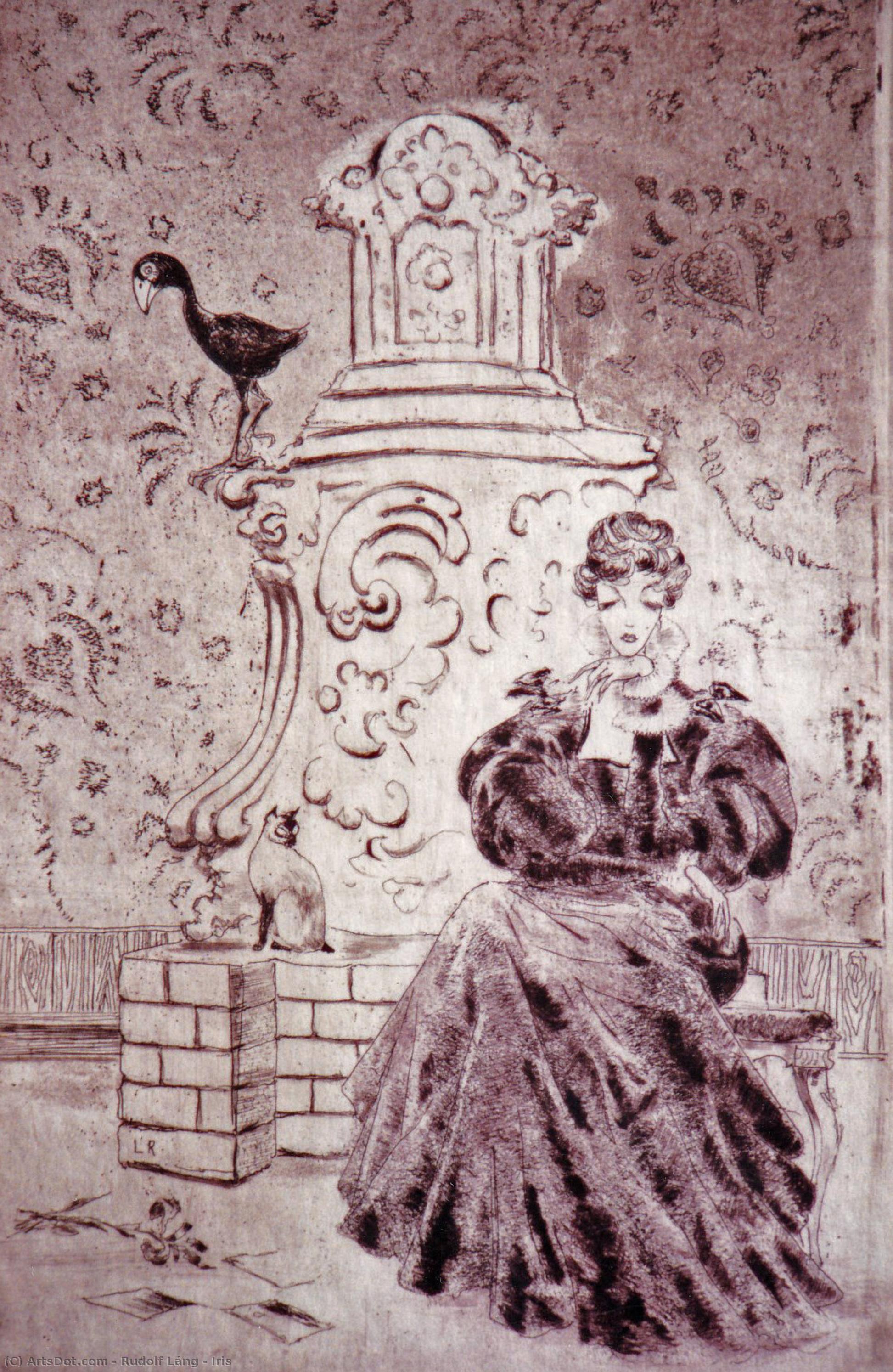
In the latter part of his career, Láng increasingly focused on monochrome works, particularly etchings and pen-and-ink drawings. This shift is evident in pieces like “Unicornis” (1971) and “Magician” (1971), both characterized by intricate linework, a deliberate reduction to essential forms, and a haunting atmosphere. These works often draw inspiration from medieval symbolism, mythology, and the darker corners of the human psyche. The use of black and white—or shades of gray—amplifies the emotional intensity of his subjects, creating a sense of timelessness and universality. The meticulous detail in these monochrome pieces reveals Láng’s extraordinary technical skill and his ability to evoke profound emotions through subtle variations in tone and texture. His work “Mussorgsky: A Night on the Bald (Bare) Mountain” is a prime example of this style, capturing the dramatic intensity of Mussorgsky's iconic scene with striking expressionist flair.
Legacy and Influence
Rudolf Láng’s contribution to Hungarian art is undeniable. His work transcends mere technical proficiency; it possesses a deeply personal quality—a sense of melancholy, mystery, and an exploration of the human condition. While his auction records indicate modest sales during his lifetime, his influence on subsequent generations of artists in Hungary is significant. His distinctive style has been recognized by institutions such as the Victoria and Albert Museum (London) and the Hungarian National Gallery (Budapest), solidifying his place within European art history. Láng’s legacy lies not only in his individual works but also in his ability to evoke powerful emotions through a carefully crafted visual language—a testament to the enduring power of artistic vision. His work continues to be exhibited and studied, offering viewers a glimpse into the soul of a truly remarkable artist.


 Zobraziť v interiéri
 Objednať ručne maľovanú reprodukciu
 Odoslať
 Zdieľať
 Podrobnosti
 Príručka

 Stiahnuť
 Podobné položky
 RTG skúška
 Prehliadanie diapo\]
 Štatistiky


 Prečítať si viac






































 Možnosť skla je dostupná len pri rozmeroch pod 110 cm


