A Bold Statement of Pop and the American West
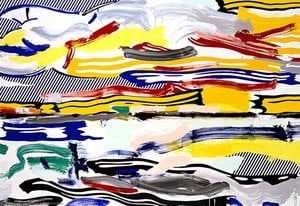
Roy Lichtenstein’s “The Cowboy (Red)” isn't merely a painting; it’s an explosion of color, a deliberate provocation, and a masterful distillation of the Pop Art movement’s core tenets. Completed in 1951, this work immediately establishes Lichtenstein’s signature style – a vibrant collision of comic book aesthetics with a distinctly American subject matter. The image depicts a lone cowboy, rendered in bold black outlines against a field of intense red, holding a gun and a bottle, all framed by the stark geometry of a crimson door. It's a scene both familiar and unsettling, instantly recognizable yet imbued with an underlying tension.
Lichtenstein’s technique is crucial to understanding the painting’s impact. He eschews traditional brushwork in favor of Ben-Day dots – tiny, colored circles meticulously applied to create shading and tonal variations. This method, borrowed from commercial printing processes, lends a mechanical quality to the image, mimicking the look of mass-produced advertisements and comic strips. The red dominates, not just as a background but as an active element, pulsating with energy and demanding attention. It’s a deliberate choice, referencing both the fiery sunsets of the American West and the bold, eye-catching colors favored by advertisers of the era.
The Genesis of a Pop Visionary
Born in Manhattan in 1923, Roy Fox Lichtenstein's artistic journey was shaped by a unique confluence of influences. His early training focused on realistic drawing and painting, reflecting a traditional academic sensibility. However, his exposure to museums – particularly the works of Reginald Marsh, who taught him at the Art Students League – and the vibrant energy of jazz music ignited a desire to break free from conventional artistic boundaries. This period coincided with the rise of Abstract Expressionism, but Lichtenstein quickly recognized the potential of incorporating popular imagery into his work. His upbringing in an upper-middle-class Jewish family fostered both a cultural awareness and an early appreciation for visual culture – a key ingredient in his later exploration of consumerism and mass media.
Symbolism and Context: Cowboy, Door, and Red
The central figures—the cowboy and the door—are laden with symbolic weight. The cowboy, a quintessential American archetype, represents rugged individualism, frontier spirit, and often, a romanticized vision of the West. However, Lichtenstein’s depiction is far from sentimental; the gun in his hand suggests danger, violence, and perhaps even a certain isolation. The red door acts as a framing device, simultaneously inviting and rejecting entry – a visual metaphor for the complexities of American identity. The color red itself carries significant connotations: passion, aggression, warning, and the raw energy of the landscape.
Furthermore, “The Cowboy (Red)” emerged during a period of rapid social and cultural change in America. The post-war era witnessed an explosion of consumerism, fueled by mass media and advertising. Lichtenstein’s work directly engages with this phenomenon, using comic book imagery – a product of the same culture – to critique its impact on American values. It's a commentary on how images are consumed and interpreted, raising questions about authenticity and representation.
A Reproduction for Your Space
WahooArt offers meticulously crafted hand-painted reproductions of “The Cowboy (Red)” that capture the essence of Lichtenstein’s original masterpiece. We utilize archival-quality materials and skilled artisans to faithfully recreate the painting's vibrant colors, dynamic composition, and distinctive Ben-Day dot technique. Whether you’re a seasoned art collector or seeking a striking addition to your interior design scheme, our reproduction provides an authentic and engaging representation of this iconic work. Explore the options available on our website – each reproduction is a testament to Lichtenstein’s enduring legacy and a vibrant celebration of American Pop Art.
Otázky a odpovede
Kde sa nachádza „The Cowboy (Red)“ v rámci opakujúcich sa tém umelca Roy Lichtenstein?
„The Cowboy (Red)“ zobrazuje cowboy, red door, roy lichtenstein, pop art, gun, bandana, 1951, zatiaľ čo zaznamenané témy umelca Roy Lichtenstein zahŕňajú comic book aesthetics, american themes, consumer culture critique, bold visuals, pop art movement, mass media, exploring identity, visual commentary. Porovnanie týchto dvoch aspektov ukazuje, ako sa toto dielo viaže na bežné témy tohto umelca.
Je k dispozícii vysokorozlíšiteľné stiahnutie diela „The Cowboy (Red)“?
Ak si chcete kúpiť digitálnu verziu diela „The Cowboy (Red)“ od Roy Lichtenstein, objednajte si stiahnutie digitálneho obrázka vo vysokom rozlíšení na jeho stránke Digitálna snímka.
Kde môžem kúpiť ručne maľovanú reprodukciu diela „The Cowboy (Red)“ od Roy Lichtenstein?
Ručne maľovanú reprodukciu diela „The Cowboy (Red)“ od Roy Lichtenstein si môžete objednať priamo na jeho stránke Ručne maľovaná reprodukcia: ručne maľovaná olejná reprodukcia na plátne z ľanu, vyrábanú na mieru.



 Zobraziť v interiéri
 Objednať ručne maľovanú reprodukciu
 Odoslať
 Zdieľať
 Podrobnosti
 Príručka

 Stiahnuť
 Podobné položky
 RTG skúška
 Prehliadanie diapo\]
 Štatistiky

 Prečítať si viac






































 Možnosť skla je dostupná len pri rozmeroch pod 110 cm