Biografia umelca
Pietro Longhi – Pietro Falca
Pietro Longhi, born Pietro Falca in Venice on November 5th, 1701, wasn’t painting grand historical narratives or mythological scenes; he was capturing the quiet dramas unfolding within the city's elegant homes and bustling streets. He became renowned for his witty genre paintings – intimate glimpses into the lives of 18th-century Venetians, a departure from the prevailing artistic trends of his time. The son of Alessandro Falca, a silversmith, Longhi’s early training began under the Veronese painter Antonio Balestra, who recognized and nurtured the young artist's talent. This foundation in traditional technique would later serve as a subtle counterpoint to the innovative spirit he brought to his chosen subject matter. He adopted the surname “Longhi” upon beginning his artistic career, a symbolic shedding of his father’s trade for the pursuit of painting.
Early Life and Artistic Beginnings
Pietro Longhi's formative years were marked by a grounding in classical art principles. His father, Alessandro Falca, was a respected silversmith, instilling in him an appreciation for craftsmanship and meticulous detail – qualities that would permeate his artistic endeavors throughout his life. Recognizing Longhi’s innate aptitude for drawing and painting, Balestra took on the role of mentor, guiding him through the fundamentals of Venetian art tradition. This apprenticeship with Balestra proved invaluable, shaping Longhi's stylistic sensibilities and establishing a connection to the broader artistic landscape of Venice during his time. He diligently studied the works of Giuseppe Maria Crespi, another influential Bolognese painter who championed a more informal approach to composition and color—a deliberate divergence from the prevailing academic conventions.
Religious Commissions and Initial Technique
Longhi’s early career was largely devoted to religious painting, reflecting the dominant artistic ethos of Venice during his era. His 1732 altarpiece for the church of San Pellegrino exemplifies Balestra's influence—characterized by broken brushwork and luminous color glazes—a hallmark of Venetian painting technique. These works demonstrate Longhi’s mastery of traditional methods, prioritizing accuracy and emotional resonance over stylistic experimentation. However, it was in the late 1730s that Longhi embarked on a transformative journey toward genre painting, responding to the burgeoning social consciousness of the time. This pivotal shift wasn't merely about altering subject matter; it represented a conscious embrace of the evolving artistic sensibilities of his contemporaries.
The Birth of Venetian Genre Painting
The 18th century witnessed an unprecedented fascination with the domestic sphere and everyday life—a trend that profoundly impacted artistic production. Longhi skillfully captured this cultural preoccupation, offering viewers perspectives on Venetian society that were both charming and subtly satirical. His paintings depict scenes of aristocratic salons, bustling marketplaces, and intimate interiors—often populated by masked figures—reflecting the Carnival celebrations that captivated Venice’s elite. Unlike many of his peers who adhered to rigid academic formulas, Longhi prioritized observation and psychological insight—qualities that distinguished him as a pioneer of Venetian genre painting. His canvases are imbued with a remarkable sensitivity to nuance and detail, capturing fleeting expressions and subtle gestures—elements that convey the essence of human experience.
“The Venetian Hogarth” – Observation and Social Commentary
Pietro Longhi earned the moniker “the Venetian Hogarth,” acknowledging his stylistic kinship with William Hogarth—a British painter who championed realism and social critique. Like Hogarth, Longhi eschewed grand historical narratives in favor of portraying human behavior within familiar contexts—a bold decision that challenged artistic conventions of his time. However, while Hogarth’s satire often carried moralistic undertones, Longhi's approach was more understated—characterized by gentle irony and a keen awareness of social contradictions. His paintings are populated with characters engaged in seemingly trivial activities—gambling, flirtation, clandestine meetings—yet these scenes reveal profound truths about human nature and societal dynamics. Longhi’s ability to convey these complexities is what elevates his genre paintings beyond mere visual representation into insightful explorations of the human condition.
## Notable Works and Legacy
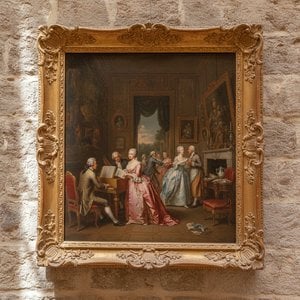
Longhi's oeuvre comprises a diverse collection of paintings that showcase his artistic versatility—ranging from monumental altarpieces to intimate portraits and captivating landscapes. Among his most celebrated works are “The Tailor,” “The Baptism,” “Painter in His Studio,” “The Concert,” “The Charlatan” and “Exhibition of a Rhinoceros.” These canvases exemplify Longhi’s meticulous technique—characterized by soft brushwork, luminous color glazes, and an unwavering commitment to capturing the subtleties of human emotion. Furthermore, Longhi served as Director of the Academy of Drawing and Carving from 1763, shaping the artistic education of future generations in Venice. His influence extended beyond his own lifetime, inspiring artists who followed him—solidifying his position as a pivotal figure in Venetian art history. Pietro Longhi died on May 8th, 1785, leaving behind a legacy that continues to resonate with admiration for its stylistic innovation and profound engagement with the human experience.



 Zobraziť v interiéri
 Objednať ručne maľovanú reprodukciu
 Odoslať
 Zdieľať
 Podrobnosti
 Príručkovo

 Stiahnuť
 Podobné položky
 RTG skúška
 Prehliadanie diapo\]
 Štatistiky


 Prečítať si viac






































 Možnosť skla je dostupná len pri rozmeroch pod 110 cm