


Ručne maľovaný olej na plátne vo vašej zvolenej veľkosti a v ráme, vyrobený na mieru našimi umelcami. ( Kúpiť tlač Kúpiť obrázok)





























Vyberte si z našich preddefinovaných rozmerov, ktoré zodpovedajú pôvodným pomeroḿ diela.

Môžete zadať vlastné rozmery tak, aby sa hodili do konkrétneho rámu alebo priestoru. Ak sa váš zvolený rozmer nezhoduje s pôvodnými proporciami obrazu, dielo buď orezáme, alebo ho doplníme ručne maľovanými prvkami. Pred začiatkom výroby vám zašleme digitálny náhľad na schválenie.
Upozorňujeme, že ukážka na obrazovke neodráža skutočné orezanie alebo doplnenie. Skutočnú finálnu kompozíciu zobrazuje iba digitálny náhľad.
Hoci sú k dispozícii vlastné rozmery, odporúčame vybrať rozmer z preddefinovaného zoznamu, aby sme zachovali pôvodné proporcie.
Celosvetová doprava () za 3 až 4 týždne namiesto štandardných 5 týždňov. (6 september). Bez kompromisov v kvalite.


Composition with Grid IX
Veľkosť reprodukcie
Piet Mondrian’s “Composition with Grid IX,” created in 1919, stands as a cornerstone of Neoplasticism – Mondrian's radical departure from representational art and his unwavering commitment to pure abstraction. This deceptively simple painting isn’t merely about color; it’s an exploration of fundamental visual elements—horizontal lines and vertical lines—arranged in a grid pattern that embodies Mondrian’s belief in universal harmony.
Initially trained as a landscape painter, Mondrian's artistic journey took him beyond the picturesque beauty of nature. Influenced by Impressionism and Pointillism, he experimented with capturing fleeting moments of light and color, yet these styles ultimately failed to capture his deeper desire for artistic expression. The yearning for simplification persisted—a conviction that art should distill its essence into its purest form.
“Composition with Grid IX” marks the definitive arrival of Mondrian’s groundbreaking style, Neoplasticism. Rejecting illusionistic techniques and embracing a rigorously geometric aesthetic, he sought to liberate painting from the constraints of naturalism. Inspired by Zen Buddhism and Russian Constructivism, Mondrian envisioned art as a vehicle for conveying spiritual truth—a belief that visual forms could communicate concepts beyond mere sensory perception.
The palette employed in “Composition with Grid IX” is deliberately restrained, consisting primarily of muted shades of yellow, red, blue, and white. These colors are applied in blocks or rectangles within the grid framework, creating a striking contrast between solid hues and empty spaces. This juxtaposition isn’t accidental; it reflects Mondrian's philosophical preoccupation with opposing forces—the masculine vertical lines representing stability and order, while the feminine horizontal lines symbolize dynamism and expansion.
More than just aesthetically pleasing, “Composition with Grid IX” carries profound symbolic weight. The grid itself represents a universal structure underlying all existence – mirroring the cosmic order envisioned by Mondrian’s intellectual influences. Each color is imbued with spiritual significance; yellow symbolizes enlightenment and optimism, red embodies passion and energy, blue signifies tranquility and contemplation, and white represents purity and transcendence.
The painting's impact extends far beyond the realm of art history. Mondrian’s uncompromising vision influenced countless designers, architects, and artists who sought to create environments that fostered balance and harmony. Today, reproductions of “Composition with Grid IX” continue to inspire collectors and interior decorators alike—serving as a reminder that beauty can be found in simplicity and that true artistic expression lies in embracing fundamental geometric principles.


1872 - 1944 , Holandsko
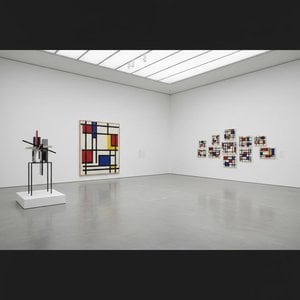
Explore the profound essence of Neoplasticism. Discover how Piet Mondrian and De Stijl masters used pure color and geometric form to redefine modern art. An essential guide for collectors seeking to understand the enduring power of abstract harmony and universal order.

Explore the profound elegance of De Stijl. Discover how Piet Mondrian and the masters of Neoplasticism utilized geometric harmony and primary colors to redefine modern abstraction. An authoritative guide for the discerning collector seeking timeless, structured beauty.

Explore the profound spiritual depth of geometric abstraction. From Malevich's Suprematism to modern masters, our expert guide reveals how pure form and color command presence in fine art collections.

 Náhľad
 Odoslať
 Zdieľať
 Podrobnosti o dielo

 Stiahnuť
 Podobné diela
 RTG skúška
 Prezentácia

 Zobraziť viac







 Možnosť skla je dostupná len pri rozmeroch pod 110 cm


