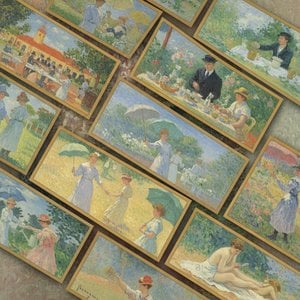
Život v kúpeľoch svetla: Svet Pierra-Augusta Renoira
Pierre-Auguste Renoir, rodený v provinčnom francúzskom meste Limoges v roku 1841, prešiel pozoruhnou cestou od skromných začiatkov ako maliara porcelánu až po uznávaného majstra impresionizmu. Jeho rané detstvo bolo poznačené sťahovaním sa do Paríža so svojou rodinou, hľadajúc ekonomické príležitosti – skúsenosť, ktorá zásadne ovplyvnila jeho umeleckú citlivosť. Rušné mesto, s jeho živým pouličným životom a rozmanitými postavami, sa stalo prameňom inšpirácie pre mnohé z jeho neskorších diel. Pôvodne učeník na maľovanie porcelánu – praktická nevyhnutnosť diktovaná finančnými obmedzeniami – mladý Renoir nachádzal útechu v častých návštevach Louvru, kde starostlivo študoval starých majstrov, absorbujúc ich techniky a rozvíjajúc ocenenie pre krásu, ktoré sa stalo charakteristickým znakom jeho štýlu. Táto skorá expozícia zažiahla v ňom vášeň, ktorá presahovala obyčajné remeslo; bol to volanie zachytiť pomíjajúce kvality svetla a života na plátne. Neskôr sa zapísal do ateliéru Charlesa Gleyrea, kde nadviazal celoživotné priateľstvá s budúcimi umelcami Claudeom Monetom, Alfredom Sisleym a Frédéricom Bazillem – kľúčový moment, ktorý položil základy impresionistického hnutia.
Od realizmu k žiarivým dojmom
Umelecký vývoj Renoira bol fascinujúca evolúcia ovplyvnená rôznorodými majstrami. Spočiatku inklinoval k realizmu Gustava Courbeta a Édouarda Maneta, obdivujúc ich oddanosť zobrazovaniu súčasného života s úprimnosťou a priamosťou. Skutočne ho však uchvátili žiarivé palety a zmyselné formy Petra Paula Rubensa a Jeana-Antoina Watteaua, ktoré v jeho práci vzbudili hlboké ocenenie pre krásu a sklon k zobrazovaniu scén radosti a voľného času. Tieto skoré vplyvy sa spojili, keď Renoir začal vytvárať svoj vlastný jedinečný štýl, charakterizovaný živými farbami, rozbitými ťahmi štetcom a zameraním na zachytenie prchavých efektov svetla. Jeho účasť na prvej impresionistickej výstave v roku 1874 bol prelomový moment, hoci spočiatku sa stretol s kritikou zo strany tradičných umeleckých kruhov. Tento odvážny krok signalizoval odmietnutie akademických konvencií a prijatie novej umeleckej vízie – ktorá sa snažila zachytiť nielen to, čo vidí oko, ale aj to, ako *cíti* zažiť určitý okamih v čase. Obrazy ako
Tanec na Moulin de la Galette (1876) exemplifikujú tento prístup a ponárajajú divákov do živého prostredia parížskeho nočného života so svojím roztrúseným slnečným svetlom a radostnými postavami.
Zachytávanie pomíjajúcich momentov života: Kľúčové diela a témy
Dielo Renoira je oslavou jednoduchých pôžitkov života – intímnych stretnutí, slnkom zaliatych krajín a žiarivej krásy ľudskej formy.
Obed v člne (1880-81) stojí ako jedno z jeho najikonickejších diel, zobrazujúce spoločenskú skupinu užívajúcu si pokojné popoludnie na Seine. Obraz je majstrovskou triedou zachytávania svetla a pohybu, s postavami kúpanými v teplom slnečnom svetle a odleskoch ligotajúcich sa vo vode.
Po kúpeli (1885-87) demonštruje Renoirovu vynikajúcu zručnosť pri zobrazovaní ženského aktu, zdôrazňujúc jemné tóny pleti a pôvabné pózy. Jeho obrazy nie sú len reprezentáciami reality; sú presiaknuté pocitom tepla, intimity a radosti, ktoré hlboko rezonujú s divákmi. Nezaujímal sa o veľké historické príbehy alebo dramatické alegórie; namiesto toho sa sústredil na zachytenie krásy inherentnej v každodennom živote, povýšenie bežných momentov na umelecké diela.
Tanec v Bougivale, ďalšie oslavované dielo, demonštruje jeho schopnosť zachytiť prchavé dojmy a atmosférické efekty, vytvárajúc pocit pohybu a spontánnosti.
Posun smerom k forme a štruktúre: Neskoršie roky a odkaz
V 90. rokoch 19. storočia prešiel štýl Renoira výraznou transformáciou. Hoci nikdy úplne nezanechal svoje impresionistické korene, začal sa posúvať smerom k viac sochárskeho a klasického prístupu, ovplyvneného cestami do Talianska a obnoveným záujmom o formu a štruktúru. Tento posun bol čiastočne vyvolaný fyzickými obmedzeniami – artritída postupne obmedzovala jeho pohyblivosť, čo ho nútilo prispôsobiť svoju techniku. Napriek týmto výzvam Renoir pokračoval v maľovaní s neochvejnou oddanosťou a produkoval diela charakterizované plnšími postavami a teplejšou paletou farieb. Jeho neskoršie obrazy často odrážajú kontemplatívnejšiu náladu, no zachovávajú si rovnakú základnú oslavu krásy, ktorá definovala jeho skoršiu prácu. Okrem umeleckých úspechov siaha Renoirov odkaz aj do jeho rodiny; jeho syn Jean Renoir sa stal renomovaným filmárom a niesol kreatívneho ducha cez generácie. Pierre-Auguste Renoir zomrel v roku 1919, zanechal po sebe trvalé dielo, ktoré naďalej inšpiruje a potešuje publikum po celom svete. Zostáva jedným z najobľúbenejších osobností v dejinách umenia, oslavovaným pre jeho schopnosť zachytiť radosť zo života a krásu ľudskej skúsenosti s bezkonkurenčnou citlivosťou a gráciou.
Trvalý vplyv
- Vplyv Renoira na nasledujúce generácie umelcov je nepopierateľný. Jeho dôraz na svetlo, farbu a zachytávanie pomíjajúcich momentov pripravil cestu mnohým moderným umeleckým hnutiam.
- Jeho oslava krásy a zmyselnosti rezonuje s publikom dodnes a robí jeho prácu univerzálne príťažlivou.
- Zohral kľúčovú úlohu pri etablovaní impresionizmu ako významnej sily v dejinách umenia, spochybňoval tradičné konvencie a otváral nové možnosti umeleckého vyjadrenia.
- Trvalá popularita jeho obrazov – reprodukovaných na nespočetných plagátoch, kalendároch a inom tovare – svedčí o nadčasovej kvalite jeho práce.



 Náhľad
 Kúpiť ručne maľovaný obraz
 Odoslať
 Zdieľať
 Podrobnosti o dielo

 Stiahnuť
 Podobné diela
 RTG skúška
 Prezentácia
 Štatistiky

 Zobraziť viac






































 Možnosť skla je dostupná len pri rozmeroch pod 110 cm