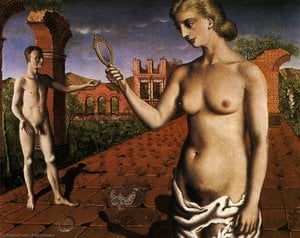
Biografia umelca
Paul Delvaux: Vytvoriteľ Tajomných Sní – Život a Diálovanie s Podvedomím
Paul Delvaux, jeden z najvýraznejších predstaviteľov surrealizmu, sa narodil 23. septembra 1897 v malebnej belgickej dedinke Wanze. Jeho životný príbeh je fascinujúcou rozprávkou o kontrastoch – od rigorózneho vzdelania v klasických jazykoch až po fantázii ovplyvnené Julesom Vernem a Homérovou *Odyseas*. Tento protiklad medzi poriadkom a predstavivosťou sa stal základom jeho umeleckého videnia, ktoré sa stalo jedinečným a nezabudnuteľným. Jeho rané roky boli ovplyvnené ambíciami rodičov – chcú ho pripraviť na právnickú kariéru – no Paul sa nakoniec rozhodol pre maľbu, čo ho viedlo k štúdiu na Kráľovskej akadémii Beaux-Arts v Bruseli. Hoci mu matematika a architektúra prinášali ťažkosti, získané znalosti perspektívy a formy boli neskôr využívané pri tvorbe znepokojivého realizmu jeho snových krajín. Jeho prvé diela odrážajú akademický základ, prevažne krajinky v post-impressionistickom štýle, no už v nich začínali prenikovať prvky zvláštneho atmosféry, ktoré sa neskôr stali charakteristické pre jeho dospelé diela.
Narodenie Surrealistického Videnia
Kľúčový moment v Delvauxovej umeleckej kariére nastal s objavením diel Giorgio de Chirica. De Chiricoove metafyzické maľby – temné, záhadné scény s tieňmi a klasickou architektonikou – hlboko rezonovali s Delvauxom a otvorili mu nový svet možností. Začal povoľovať sa vytvárať obrazy s nude postavami, často ich umiestňoval do monumentálnych architektonických konštrukcií alebo do rozsiahlych, pustých krajín. Tieto postavy neboli len jednoduché zobrazenia ľudského tela; boli to skúmania túžby, osamelosti a podvedomia. Vplyv flámskych expresionistov, ako Constant Permeke a Gustave De Smet, sa v tomto období prejavil v jeho palete a technikách, čo dodalo jeho dielom sombernú intenzitu. Avšak Delvaux rýchlo prekonal tieto vplyvy a vytvoril svoj vlastný, jedinečný štýl – kombináciu klasickej precízelosti a snového iracionálneho charakteru. Jeho maľby začali evokovať pocit znepokojenia, pocit, že pod povrchom reality sa skrývajú tajomstvá. Začal vytvárať typické motívy: vlaky, kostly, zakryté ženy – všetky prispievajú k znepokojivej atmosfére jeho diel.
Opakujúce Sa Motívy a Symbolický Jazyk
Delvauxov umelecký jazyk je bohatý na symboliku, hoci sa neustále bránil priamemu psychoanalytickému interpretovaniu. Nude žena, stredobodom mnohých jeho obrazov, často zjavuje ako pasívna alebo melancholická, reprezentuje túžbu aj zraniteľnosť. Vlaky a železničné stanice sa často objavujú ako symboly prechodu, vyhnanstva a obáv moderného sveta. Kostly, ktoré nie sú len morbidnými symbolmi smrti, predstavujú strašidelnú prítomnosť – pripomínajú nám smrteľnosť, ktorá preniká aj do najidýlických scén. Klasická architektúra poskytuje pozadie poriadku a trvácnosti, no často je znázorňovaná zvláštne deformovane alebo neúplne, čo naznačuje zraniteľnosť pod povrchom. Tieto prvky nie sú len dekoratívne; sú neoddeliteľnou súčasťou emocionálneho a psychologického dopadu jeho diel. Napríklad obraz *Nočný vlak* zachytáva tieto témy – anonymné postavy, impozantná architektúra a pocit prichádzajúcej hrozby. Samotný umelec uviedol, že jeho motívy pochádzali z osobných spomienok a dojmov, najmä z detstva, a nie z úmyselného pokusu o rozluštenie podvedomia.
Vplyvy a Dielania
Delvaux bol ovplyvnený mnohými umelcami a smermi, vrátane De Chirica, ale zároveň sa odlišoval od nich. Jeho diela boli vnímané ako súčasť surrealistického hnutia, no on si udržal určitú nezávislosť, odmietol striktne dodržiavať jeho pravidlá. Jeho maľby pokračujú v fascinovaní a znepokojovaní divákov po celé desaťročia. Kľúčové diela, ako *Letná noc*, *Grašien mesto* a mnohé verzie *Spánková Venúsa*, sú uložené v renomovaných múzeách po celom svete, vrátane Tate Gallery v Londýne a Musée de Toyama v Japonsku. Jeho vplyv sa prejavuje aj v dielach súčasných umelcov, ktorí skúmajú témy spomienok, túžby a podvedomia. Delvaux dokázal, že surrealizmus môže existovať za hranicami automatického písania a analýzy snov – objímal skôr precíznu techniku a hlboko osobné videnie. Jeho diela dodnes evokujú silnú atmosféru a nezabudnuteľný zážitok. Paul Delvaux Museum v Saint-Idesbald, Belgicko, predstavuje najväčšiu zbierku jeho diel a ponúka návštevníkom pohľad do fascinujúceho sveta jeho fantázie.
Záver
Paul Delvaux zomrel 20. júla 1994 v meste Veurne. Jeho diela, plné tajomných snových krajín, zostávajú jedným z najvýraznejších prejavov surrealistického umenia a pokračujú v fascinovaní divákov po celom svete.



 Náhľad
 Prepnúť na tlač
 Odoslať
 Zdieľať
 Podrobnosti o dielo

 Stiahnuť
 Podobné diela
 RTG skúška
 Prezentácia
 Štatistiky


 Zobraziť viac






































 Možnosť skla je dostupná len pri rozmeroch pod 110 cm