NáhľadNáhľad AR náhľadAR náhľad Prepnúť na tlač Prepnúť na tlačKúpiť ručne maľovaný obraz Kúpiť ručne maľovaný obraz OdoslaťOdoslať
Podrobnosti o dieloPodrobnosti o dielo Pridať do obľúbených Pridať do obľúbených StiahnuťStiahnuť Podobné dielaPodobné diela RTG skúškaRTG skúška PrezentáciaPrezentácia ŠtatistikyŠtatistiky

LE MOULIN A EAU

Discover "Le Moulin à Eau" by Meindert Hobbema – a serene Dutch landscape masterpiece showcasing meticulous detail and atmospheric light from the Golden Age. Explore its rich history & artistic legacy.

Meindert Hobbema: Dutch landscape master known for serene wooded scenes & atmospheric light. Explore his detailed paintings of canals, roads, & buildings from 17th-century Amsterdam.

Kúpte si digitálnu snímku vo vysokom rozlíšení s vylepšenými detailmi, ktorá je oveľa kvalitnejšia než online náhľad.

Každý súbor starostlivo pripravujú naši interní špecialisti pomocou pokročilých nástrojov a odborného manuálneho retušovania. Zabezpečujeme, aby každý obrázok disponoval výnimočnou čistotou, presnou farebnou vernosťou a jemnými detailmi.

Konečný súbor vám bude doručený e-mailom do 72 hodín, optimalizovaný pre okamžité použitie v profesionálnom, redakčnom aj tlačovom prostredí. Ide o rovnakú kvalitu, ktorej dôverajú špičkové dizajnérske štúdiá, vydavateľstvá a galérie.

Digitálny obraz

Stiahnite si vysokorozlíšený súbor na osobné zobrazovanie, tlačenie a kreatívne projekty. (Prepnúť na tlač Prepnúť na tlačKúpiť ručne maľovaný obraz Kúpiť ručne maľovaný obraz)

Celková cena

$ 24,90

Súčasťou každej objednávky digitálneho obrazu

Expetórne digitálne doručenie, garantované

Keď si vyberiete WahooArt.com, nedostávate len obrázok – získate profesionálne upravené digitálne umenie, vytvorené s precíznosťou a so zárukou vašej maximálnej spokojnosti. Tu je všetko, čo je súčasťou vašej objednávky automaticky:

shipping_icon
Rýchle doručenie e-mailom

Vaša vysokorozlíšená digitálna súprava obrázkov vám bude zaslaná e-mailom do 72 hodín od objednávky – pripravená na okamžité použitie.

canvas_icon
Digitálny súbor s vylepšením AI

Vaše dielo je profesionálne optimalizované pomocou pokročilých nástrojov umelej inteligencie a manuálnej editácie, čo zaručuje maximálnu úroveň detailov, čistotu a presnosť farieb.

insurance_icon
Bezplatné celoživotné opätovné doručenie

Náhodou ste zmazali alebo ste stratili svoj súbor? Nebavžte sa – pošleme vám ho kedykoľvek znova, úplne bez poplatkov.

tax_icon
Bez poplatkov za dovoz – navždy

Užite si svoje umelodelo okamžite bez colných poplatkov, daní alebo nákladov na dopravu – digitálne stiahnutia sú vždy oslobodené od dane.

color_icon
Garantovaná presnosť farieb

Pomocou profesionálnych nástrojov a farebného manažmentu zabezpečujeme, aby vaša digitálna fotografia čo najpresnejšie odrážala pôvodné farby.

return_icon
Záruka spokojnosti 100 dní

Ak nebudete spokojní so svojím digitálnym obrázkom, upravíme ho alebo vám v priebehu 100 dní vrátime 100% – bez zbytočných otázok.

guarantee_icon
100% Záruka vrátenia peňazí

Nie ste spokojní? Získajte plnú náhradu platby do 100 dní od prijatia digitálneho súboru – bez zbytočných otázok.

discount_icon
Zľavy pri veľkom odbere

Kúpte si 3 obrazy, ušetrite 10% - Kúpte si 5, ušetrite 15% - Kúpte si 10+, ušetrite 20%. Ideálne pre kreatívne projekty, galérie a agentúry.

Základné informácie

  • Subject or theme: Rural Dutch landscape; water mill
  • Artistic style: Landscape painting
  • Title: Le Moulin à Eau
  • Medium: Oil on canvas
  • Notable elements or techniques: Atmospheric perspective; detailed textures

Kvíz o umení

Pri každej otázke je iba jedna správna odpoveď.

Otázka 1:
What is the primary subject matter depicted in Meindert Hobbema's 'Le Moulin à Eau'?
Otázka 2:
Which artistic period is Meindert Hobbema most closely associated with?
Otázka 3:
The color palette of the artwork is described as predominantly:
Otázka 4:
What atmospheric effect is noticeable in the sky of 'Le Moulin à Eau', contributing to its tranquil mood?
Otázka 5:
The technique used by Hobbema to suggest depth in the landscape is known as:

The Tranquil Embrace of Dutch Countryside Life

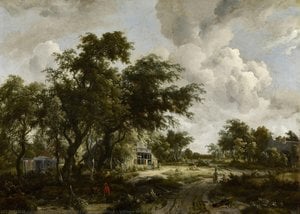
To gaze upon Meindert Hobbema's "Le Moulin à Eau" is to step directly into the hushed, contemplative heart of 17th-century Holland. This masterpiece of landscape painting does more than merely depict a scene; it invites the viewer into an atmosphere—a profound sense of pastoral calm punctuated by the steady rhythm of rural industry. The composition unfolds with masterful balance, drawing the eye from the gentle curve of the water in the foreground, which acts as a liquid invitation, leading us deeper into the pictorial space toward the central subject: the venerable water mill.

Hobbema’s genius lies in his ability to capture not just what was seen, but how it felt. The surrounding wooded area, dominated by the stately presence of large trees, frames the architecture with an organic embrace. It is a scene steeped in the quiet dignity of everyday life, where nature and human endeavor—represented by the mill—coexist in perfect, muted harmony.

Mastery of Light and Earth Tones

The technical brilliance evident in this work speaks to Hobbema's meticulous observation. The palette itself is a study in restraint, dominated by the rich, earthy tones of browns, deep greens, and soft greys. These are not the vibrant hues of high noon, but rather the nuanced shades found under an overcast sky—a light that diffuses all harsh edges into a gentle, pervasive glow. This diffused lighting technique minimizes stark contrast, lending the entire scene a dreamlike quality.

Observe the texture: the rough bark of the trees, the subtle sheen on the water's surface, and the varied density of the foliage are rendered with palpable realism through visible brushwork. Hobbema employs atmospheric perspective so skillfully that the distant elements recede into a soft haze, giving the entire canvas an astonishing sense of depth and spatial recession. It is a lesson in pictorial illusion executed with the precision of a master craftsman.

Symbolism of Industry and Contemplation

Historically, the water mill was more than just a structure; it was a vital artery of Dutch prosperity and ingenuity. In art, such elements often symbolize human mastery over nature, yet Hobbema presents this industry not with fanfare, but with quietude. This juxtaposition suggests that true strength is found in enduring rhythm rather than dramatic display. The overcast sky, far from suggesting gloom, lends an air of deep contemplation—a perfect backdrop for the collector or designer seeking to infuse a space with thoughtful serenity.

The overall emotional resonance of "Le Moulin à Eau" is one of peaceful nostalgia. It speaks to a slower pace, a time when life unfolded according to the steady turning of the wheel and the slow drift of the water. Owning a reproduction allows one to curate this feeling of timeless repose within a modern setting.

A Timeless Aesthetic for Inspired Interiors

For those curating an interior space that demands both historical gravitas and soothing calm, this artwork is unparalleled. Its muted, natural color scheme—the deep forest greens against the soft greys and warm beiges—integrates seamlessly into sophisticated design palettes. Whether placed above a mantelpiece or serving as a focal point in a study, its composition anchors a room with an undeniable sense of established beauty.

The reproduction captures not only the visual splendor but also the tactile quality of the original oil on canvas, allowing you to bring home a piece that feels both historically significant and immediately comforting. It is an investment in atmosphere itself—a permanent echo of Dutch Golden Age tranquility.


Životopis umelca

The Quiet Master of Dutch Landscape

Meindert Lubbertszoon Hobbema remains a figure shrouded in relative obscurity compared to his contemporaries like Rembrandt and Vermeer, yet he stands as one of the most distinctive voices within the Golden Age of Dutch art. His landscapes—characterized by an exquisite level of detail and imbued with a palpable sense of atmosphere—capture the serene beauty of rural Holland with remarkable precision. While biographical documentation remains somewhat elusive, scholars have pieced together a portrait of an artist deeply rooted in his era, profoundly influenced by the masters of his time and committed to capturing the subtle nuances of light, texture, and the natural world. Born in Amsterdam around 1638, Hobbema’s early life was shaped by the vibrant artistic energy of the Dutch Golden Age. He entered the professional sphere through a formal apprenticeship under Jacob van Ruysdael beginning approximately 1657. This formative period was essential, as it allowed him to absorb Ruysdael's masterful technique for rendering landscapes with luminous color palettes and meticulous observation. Through this lineage, Hobbema inherited a tradition of storytelling through scenery, where the placement of a tree or the bend of a path served to guide the viewer’s eye through a carefully composed natural drama.

Evolution of Style and Technique

The partnership with Ruysdael was far more than a mere educational period; it fostered an intellectual and stylistic exchange that propelled Hobbema’s artistic evolution. While his early works often mirrored the river scenes and compositions of his mentor, Hobbema gradually developed a distinctive vision marked by a heightened sensitivity to light and color. By around 1662, the influence of Ruysdael had solidified into a style that was uniquely his own—one characterized by a preference for muted tones, textured brushstrokes, and an unwavering focus on capturing the natural world as it appeared to the eye. His mature works are celebrated for their ability to capture the subtle interplay of sunlight filtering through dense foliage and the way light dances across woodland paths. Unlike the more dramatic or stormy landscapes found in other Dutch traditions, Hobbema’s oeuvre often leans toward a peaceful, structured realism. He possessed an unparalleled ability to render:
  • The intricate textures of bark and moss on ancient trees.
  • The atmospheric depth created by receding woodland vistas.
  • The quiet, rhythmic movement of sunlight through leafy canopies.
  • The humble beauty of rural roads, canals, and rustic buildings.

Legacy and Historical Significance

Hobbema’s contribution to the Dutch landscape tradition lies in his ability to elevate the mundane aspects of the countryside into subjects of profound contemplative beauty. His paintings do not merely document the topography of 17th-century Holland; they evoke a sense of stillness and permanence. Through his mastery of light and composition, he transformed simple wooded scenes into complex studies of nature's quiet grandeur. Though he may not have achieved the global celebrity of the era's portraitists, his historical significance is cemented by his role in perfecting the landscape genre. His work serves as a vital link in the evolution of Dutch realism, providing a window into a period where the mastery of light and the observation of nature became the ultimate expressions of artistic truth. Today, his paintings remain cherished for their ability to transport the viewer to a tranquil, sun-dappled world that feels both intimately real and timelessly poetic.
Meindert Hobbema

Meindert Hobbema

1638 - 1709 , Netherlands

Základné informácie

  • Artistic Movement Or Style: Golden Age Dutch Landscape Art
  • Artists Or Movements Influenced By This Artist: Rembrandt
  • Artists Who Influenced This Artist: Jacob van Ruysdael
  • Date Of Birth: Amsterdam, Netherlands (1638)
  • Date Of Death: December 1709
  • Full Name: Meindert Lubbertszoon Hobbema
  • Nationality: Dutch
  • Notable Artworks:
    • A Watermill 1
    • Wooded Landscape with Cottages
    • Cottages in a Wood
  • Place Of Birth: Amsterdam