A Descent into the Subconscious: The Enigma of Max Ernst’s Untitled (2316)
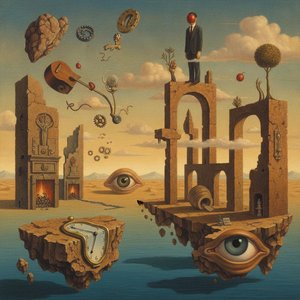
In the hauntingly beautiful tableau of Max Ernst’s “untitled (2316),” viewers are invited to step through a portal into a realm where logic dissolves and the boundaries of the psyche blur. Painted during the tumultuous years between 1940 and 1945, this Surrealist masterpiece serves as a profound exploration of the subconscious mind. The painting captures a dramatic, singular moment: a solitary figure plunging downwards into deep, dark water. This descent is immediately evocative of vulnerability and surrender, a visceral image that strikes at the heart of human anxiety. Above this falling form, two shadowy figures cling precariously to a rocky cliff edge, their presence suggesting a desperate, perhaps futile, attempt at resistance against an overwhelming and inevitable force.
The emotional weight of the piece is inextricably linked to its historical moment. Created amidst the global upheaval of World War II, the artwork reflects the pervasive fears of destruction and mortality that defined the era. Yet, beyond the historical tension, Ernst utilizes the language of Surrealism to delve into deeper psychological truths. Influenced by the psychoanalytic theories of Sigmund Freud, Ernst crafts a scene that functions as a dreamscape, where the water represents not just a physical element, but the fluid, mysterious depths of the human experience and the transformative power of confronting one's own fears.
Mastery of Texture and Technique
What distinguishes “untitled (2316)” is Ernst’s rejection of traditional, smooth painting methods in favor of a tactile, experimental approach. He employs a masterful blend of frottage and grattage to achieve an aesthetic that feels both ethereal and grounded in physical reality. Through frottage—the process of rubbing textures onto a surface—Ernst generates random, organic patterns that provide the compositional inspiration for his dreamlike landscapes. This is complemented by grattage, where paint is scraped across the canvas to expose underlying layers and create evocative, weathered effects.
This deliberate manipulation of texture adds a layer of physical depth to the surreal imagery, making the rocky landscape and the churning water feel tangibly present. For the discerning collector or interior designer, a high-quality reproduction of this work offers more than just visual interest; it provides a sophisticated conversation piece. The interplay of light, shadow, and complex textures brings an arresting energy to any contemporary space, serving as an enduring emblem of artistic innovation and a window into the profound mysteries of the human soul.
Otázky a odpovede
Pôsobia farby diela „untitled (2316)“ výrazne alebo jemne?
Intenzita farieb diela „untitled (2316)“ je Balanced. Intenzita popisuje, ako silné pôsobia farby.
Z akého materiálu je vyrobené dielo „untitled (2316)“ a v akom je štýle?
V diele „untitled (2316)“ sa spája technika Oil On Canvas s movementom Surrealist Movement.
Kto vytvoril "untitled (2316)" a v akom štýle je ladené?
Max Ernst vytvoril/a „untitled (2316)“ v rámci smeru Surrealist Movement.
Patrí „untitled (2316)“ od Max Ernst medzi známe umelecké diela?
Úroveň popularity zaznamenaná pre „untitled (2316)“ od Max Ernst je Iconic.
Aký typ umeleckého diela predstavuje „untitled (2316)“ od Max Ernst?
„untitled (2316)“ od Max Ernst je klasifikovaný ako WallArt. Táto kategória určuje druh diela, ktorým je originál.
Aké je historické umiestnenie diela „untitled (2316)“?
Z historického hľadiska je „untitled (2316)“ dielo zastúpedobiteľné pre smer Surrealist Movement širšej éry Modern.
Akú náladu a emóciu vyjadruje „untitled (2316)“ od Max Ernst?
Zaznamenaná nálada diela „untitled (2316)“ od Max Ernst je Dramatic a jeho emocionálny tón je Dramatic.
Môžem si objednať olejную reprodukciu diela "untitled (2316)"?
Ručne maľované kópie diela „untitled (2316)“ od Max Ernst sú na predaj na táto webstránka: ručne maľovaná olejná reprodukcia na plátne z ľanu, objednať môžete cez táto stránka.



 Zobraziť v interiéri
 Objednať ručne maľovanú reprodukciu
 Odoslať
 Zdieľať
 Podrobnosti
 Príručka

 Stiahnuť
 Podobné položky
 RTG skúška
 Prehliadanie diapo\]
 Štatistiky

 Prečítať si viac






































 Možnosť skla je dostupná len pri rozmeroch pod 110 cm