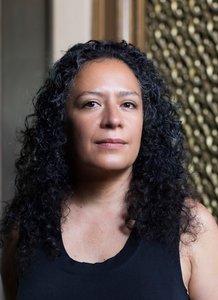
The Archaeology of Memory: The Art of Mariana Castillo Deball
Born in the vibrant, historically layered landscape of Mexico City in 1975, Mariana Castillo Deball has emerged as a profound voice in contemporary art, one that refuses to accept history as a static or singular narrative. Her practice is not merely an act of creation but a deep, investigative excavation into the very fabric of how we remember and how we are remembered. To encounter her work is to enter a space where the boundaries between science and art, between the tangible object and the ephemeral ghost of the past, begin to dissolve. She does not simply present art; she orchestrally arranges fragments of reality to challenge our perceptions of cultural heritage and the authority of the archive.
Her artistic formation provided the intellectual scaffolding for this complex inquiry. After honing her foundational skills at the Universidad Nacional Autónoma de México, she moved to Europe to pursue postgraduate studies at the prestigious Jan Van Eyck Academie in Maastricht. It was during this period that her aesthetic sensibilities were deeply influenced by the pioneering spirit of Eduardo Paolozzi. From him, she inherited a fascination with the power of juxtaposition—the idea that by layering disparate elements, such as photographic reproductions and sculptural forms, one can generate entirely new, often contradictory, meanings. This mastery of collage-like thinking became a cornerstone of her methodology, allowing her to treat history itself as a medium to be cut, pasted, and recontextualized.
The Methodology of the Investigator
What distinguishes Castillo Deball from many of her contemporaries is her commitment to a process that mirrors the rigorous disciplines of archaeology, ethnography, and the history of science. She does not approach the studio as a solitary creator, but rather as a researcher immersed in archives, geological specimens, and textual histories. Her work often involves a painstaking process of cataloging and preserving materials, treating objects with the same reverence and scrutiny as a paleontologist might treat an Ediacaran fossil. This meticulousness allows her to explore the biographies of things—the itinerant lives of museum objects that have wandered through collections, losing or gaining meaning as they move across borders.
In her large-scale installations, she weaves together a kaleidoscopic array of media, including:
- Sculpture and Installation: Creating immersive environments that force the viewer to navigate physical and historical layers.
- Photography and Print: Utilizing imagery to bridge the gap between documented fact and artistic interpretation.
- Textile and Materiality: Using unique prints on fabric to explore the tactile nature of memory and identity.
- Editorial Projects: Producing books and publishing projects that extend her research into the realm of literature and shared knowledge.
Through these mediums, she explores themes of fragmentation and reconstruction. She often draws upon indigenous imagery, such as the majestic yet fractured figure of the Aztec deity Coatlicue, to examine how ancient symbols persist and transform within modern globalized contexts.
Legacy and Global Resonance
The significance of Mariana Castillo Deball’s work lies in its ability to initiate a dialogue between contemporary art and the institutional weight of museums and ethnographic collections. By bringing the "forgotten" into new, provocative relationships, she creates alternative readings of history that allow for a more polyphonic and inclusive understanding of our shared past. Her recognition has been widespread, marked by prestigious honors such as the Preis der Nationalgalerie für Junge Kunst in 2013 and major exhibitions at institutions like the Hamburger Bahnhof in Berlin, the Guggenheim in New York, and the Biennale of Sydney.
As she continues to live and work in Berlin, her practice remains a vital interrogation of what survives the passage of time. She asks us to consider: What happens if we read contemporary art as future archaeology? In doing so, she ensures that her work is not just a reflection on what has been lost, but a profound investigation into how new territories of meaning can be discovered within the ruins of the old.



 Zobraziť v interiéri
 Objednať ručne maľovanú reprodukciu
 Odoslať
 Zdieľať
 Podrobnosti
 Príručkovo

 Stiahnuť
 Podobné položky
 RTG skúška
 Prehliadanie diapo\]
 Štatistiky

 Prečítať si viac






































 Možnosť skla je dostupná len pri rozmeroch pod 110 cm